This Historical Figure: A Mysterious and Legendary Master in Chinese Art History
Bada Shanren: A Mysterious Legend of Great Master in Chinese Art History
In the brilliant river of Chinese artistic history, Bada Shanren is undoubtedly an exceptionally unique megastar radiating mysterious brilliance. His artistic style stands alone, and his life experiences are full of legendary colors, attracting the attention and inquiry of countless posterity.
A Tumultuous Life: The Vicissitudes of an Imperial Descendant
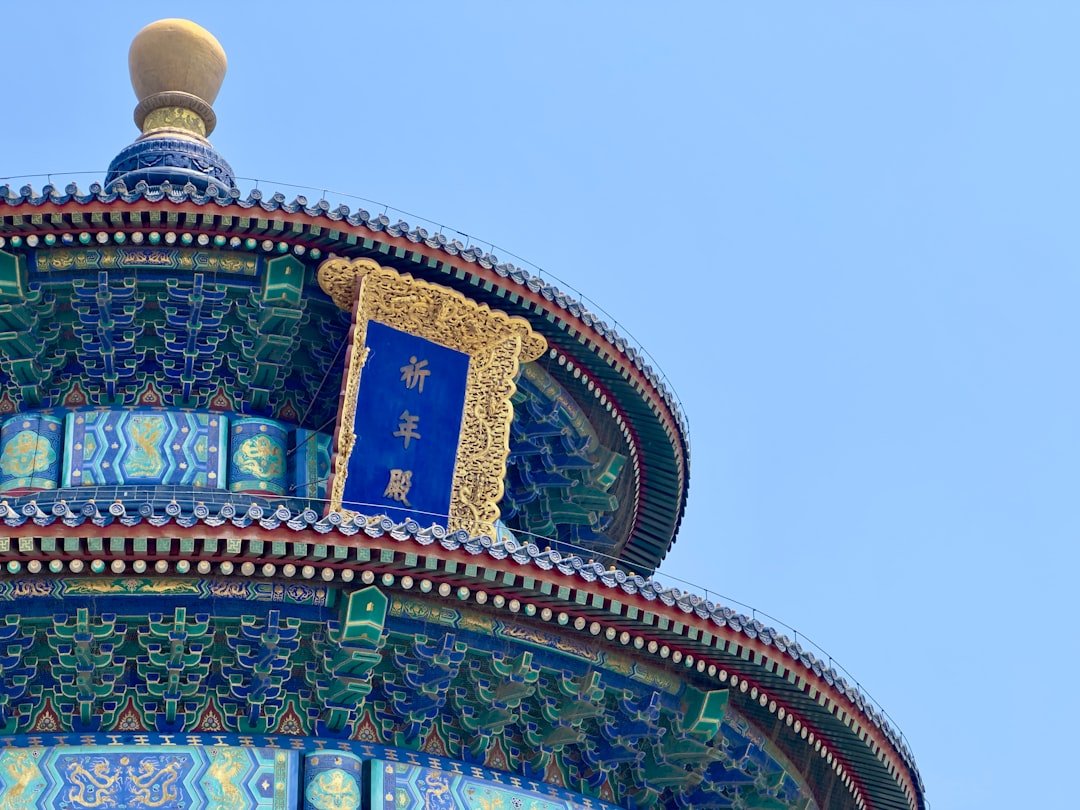
Bada Shanren, whose real name was Zhu Da, was the ninth-generation descendant of Zhu Quan, the Prince of Ningxian and the seventeenth son of Ming Taizu Zhu Yuanzhang. He was born in Nanchang, Jiangxi during the late Ming Dynasty and grew up in a privileged imperial family environment, receiving excellent cultural and artistic education. The young Zhu Da was exceptionally clever and displayed extremely high artistic talent, showing prowess in poetry, calligraphy, and painting. He was held in high hopes by his family and gained considerable renown locally.
However, fate's great wheel underwent a shocking reversal when he was in his early teens. In the late Ming Dynasty, with political corruption, social turmoil, and endless internal strife and external threats, the dynasty finally collapsed in 1644 when Li Zicheng breached Beijing and Emperor Chongzhen hanged himself. Subsequently, the Qing army entered the pass and began their rule over the entire nation. As a descendant of the Ming imperial family, Zhu Da's family instantly fell from the clouds to the valley, becoming a target of vigilance for the new regime. His family suffered tremendous upheaval, relatives were scattered, and riches and glory disappeared like fleeting clouds.
To escape persecution by the Qing army, Zhu Da was forced to hide his true identity and begin a life of displacement and wandering. This tremendous drop from imperial nobility to a destitute fugitive profoundly affected his life trajectory and artistic creation. Against this backdrop, his heart was filled with pain, indignation, and helplessness, and these complex emotions gradually became infused into his later artistic works.
Becoming a Monk: The Beginning of Artistic Transformation
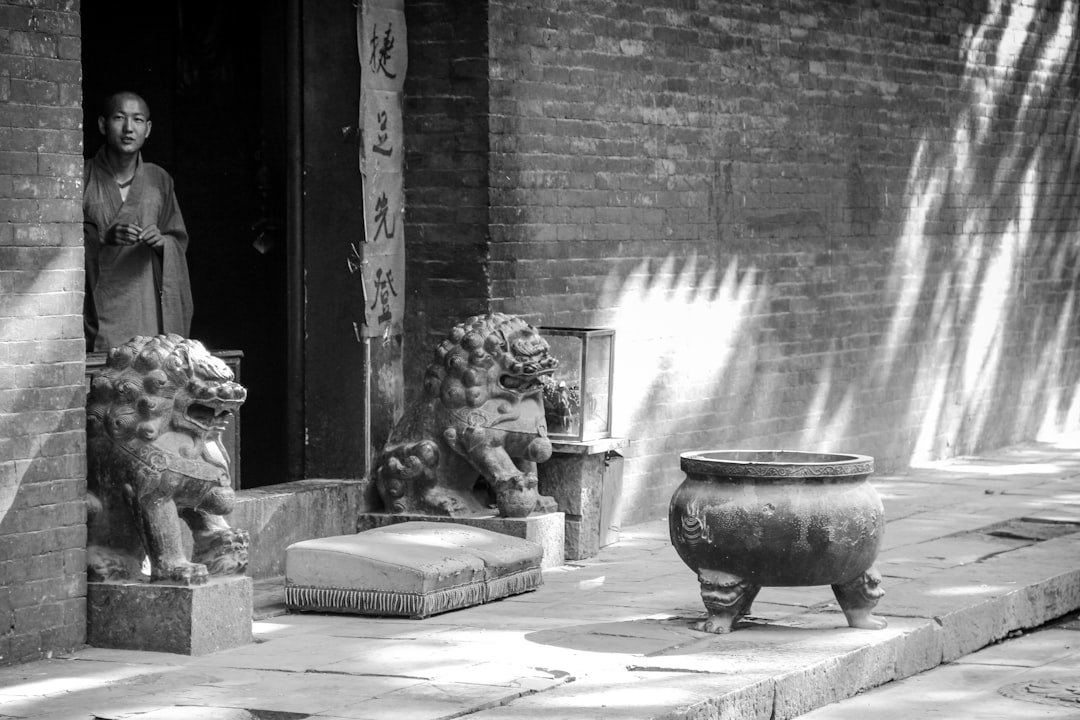
After experiencing life's tremendous upheavals, Zhu Da sought inner peace and to escape external turmoil. At age twenty-three, he chose to become a Buddhist monk with the dharma name Chuanqi. During his monastic life, he devoted himself to studying Buddhist philosophy while never abandoning his pursuit of art.
During this period, his painting style underwent significant transformation. Influenced early on by family culture and contemporary artistic trends, his works possessed relatively refined and meticulous qualities. However, after taking monastic vows, his paintings gradually incorporated more Buddhist thought and a sense of transcendence. He began focusing primarily on flowers and birds as subject matter, and the images in his works often carried a quality of loneliness and coldness. For example, in some of his works, birds often stand on a single leg with cold eyes, as if gazing upon this world full of suffering.
In calligraphy, he also continuously explored and innovated. He studied the calligraphic techniques of ancient masters while combining them with his own state of mind, forming a unique calligraphic style. His calligraphic strokes are simple and flowing, yet contain an inner strength that echoes with his paintings, together displaying his unique artistic personality. This period in the monastery was an important transformation period for his artistic style, laying a solid foundation for his eventual emergence as an artistic master of his generation.
After Returning to Secular Life: The Peak Flourishing of Artistic Creation
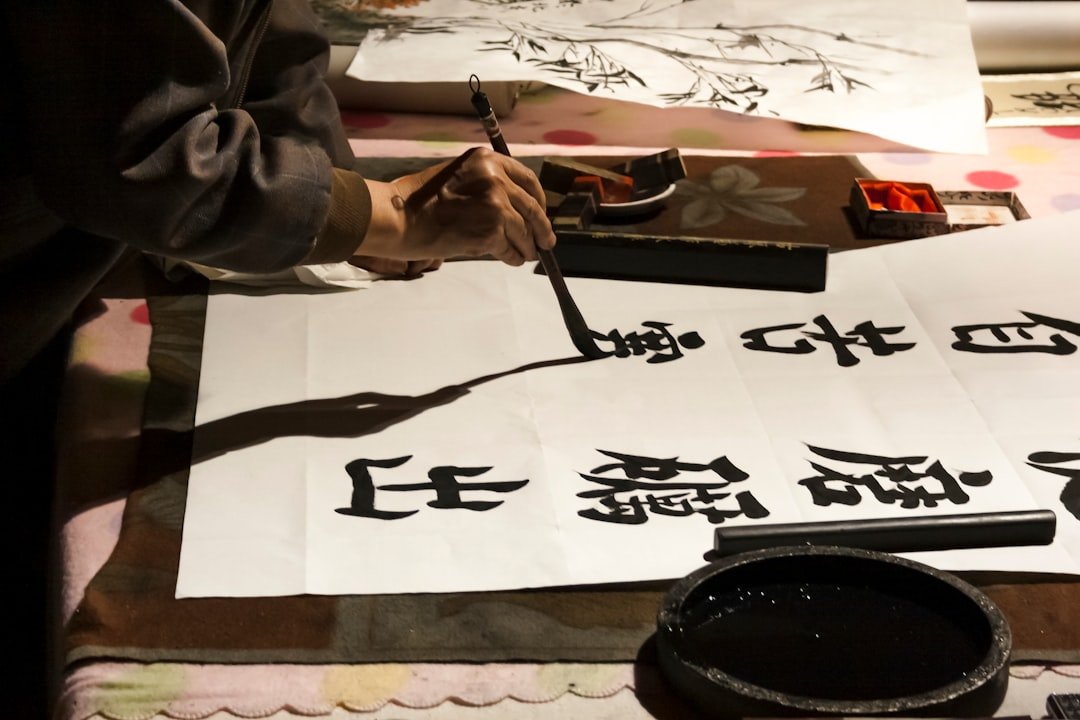
In the seventeenth year of Kangxi's reign (1678), at age fifty-five, Zhu Da ended his monastic life of more than thirty years and chose to return to secular life. After his return, he did not resume a life of worldly luxury but continued to support himself through selling paintings, living a modest yet focused life of artistic creation.
During this period, his artistic creation reached its peak. His painting style became increasingly mature and unique, with even more concise and bold brushwork, and imagery of greater profundity. The flowers, birds, fish, and insects in his works often appeared in exaggerated and grotesque forms, yet vividly conveyed profound emotions. For instance, in his representative work "Fish and Duck Scroll," the fish and ducks have peculiar forms—the fish's eyes roll upward, as if expressing disdain and resistance toward reality; the ducks appear languid, seeming lost in contemplation. These images, though appearing bizarre, were truthful manifestations of his inner world.
In painting technique, he boldly employed brushwork and ink, sketching rich imagery with minimal strokes, achieving the artistic realm of "sparse brushwork, complete form." His ink usage was also remarkably subtle, with natural variations between dense and light, dry and wet, giving his paintings strong layering and three-dimensionality. His calligraphy during this period also reached consummate skill, complementing his paintings perfectly and forming the distinctive "Bada Style." His works not only received praise during his lifetime but also exerted profound influence on subsequent painting development. Many later painters drew inspiration from his works and learned his unique methods of artistic expression.
Artistic Influence: Profound Charm Transcending Time and Space

Bada Shanren's artistic achievements were not only notable in his own time but have produced far-reaching influence in later generations. His painting style played an important role in promoting the development of Qing Dynasty and modern painting.
During the Qing Dynasty, painter groups such as the "Eight Eccentric Painters of Yangzhou" were influenced by him. Among the Eight Eccentrics, painters like Zheng Xie and Li Shan borrowed certain characteristics from Bada Shanren in conception, composition, and brushwork application. They similarly used unique artistic styles to express their views of social reality and personal emotions, standing alone in the art world of their time.
Into the modern era, Bada Shanren's artistic charm remained undiminished. Qi Baishi held Bada Shanren in extremely high regard, once saying: "The paintings of Qingteng (Xu Wei), Xuegetian (Bada Shanren), and Dazizi (Shitao) can be freely painted with bold strokes; my heart greatly admires them." Qi Baishi's painting style was inspired by Bada Shanren in the simplification of brushwork and the construction of imagery. Furthermore, numerous painters including Zhang Daqian and Pan Tianshou also gave high praise to Bada Shanren's art and absorbed his artistic essence in their own creations.
Bada Shanren's artistic works also went beyond national borders, receiving attention from the international art world. His unique artistic expression and profound cultural connotation amazed Western artists. His works became a brilliant name card of Chinese traditional cultural art, showcasing to the world the profundity and unique charm of ancient Chinese painting.
Mysterious Legend: Endless Inquiry Behind the Art
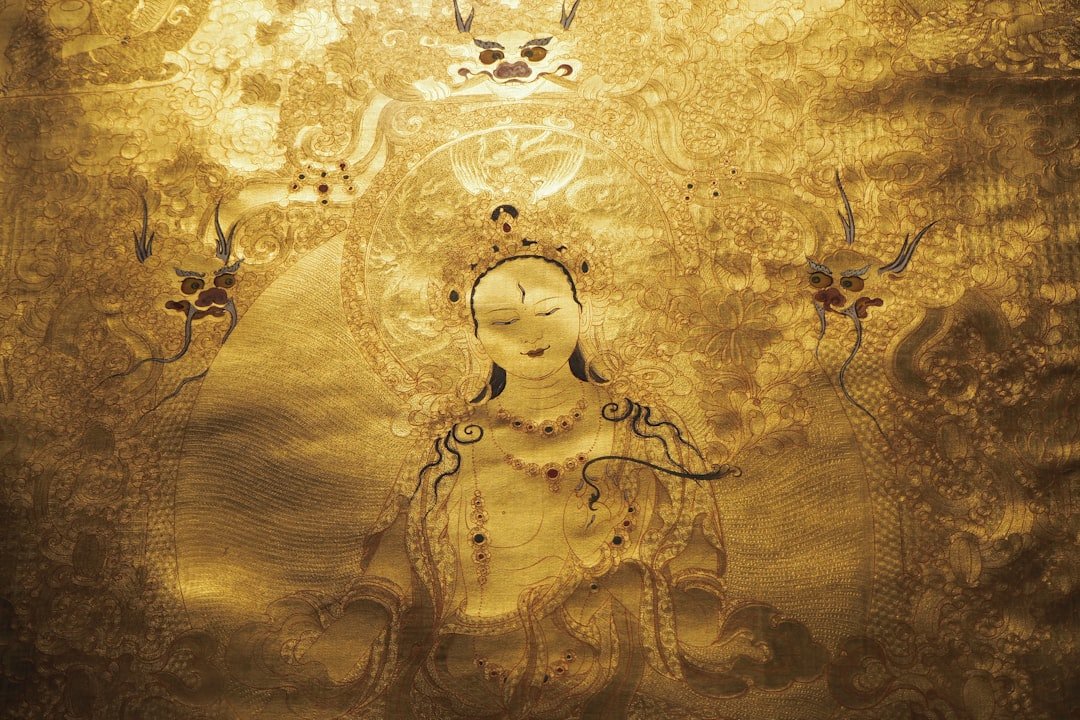
Bada Shanren's entire life was shrouded in mystery. His family background, the evolution of his artistic style, and the complex emotions contained within his works have all provoked endless inquiry from posterity.
Why did he so often express emotions through grotesque imagery in his artistic creation? What kinds of pain and struggle lay deep within his heart? These questions have long been focal points of art historical research. From his works, we can sense his nostalgia for the Ming Dynasty, his dissatisfaction with reality, and his profound reflections on human life. However, since most of his works lack explicit textual explanation, we can only infer and interpret his inner world through the imagery in his paintings and brushwork techniques.
His artistic creation was intimately connected with his life experiences. He used art to express his inner emotions, infusing his personal suffering, his anguish over the fate of his homeland, and his grief into his works. His creations were not merely beautiful paintings but rather silent epics of the spirit, allowing us to appreciate the aesthetic beauty of his art while also sensing the turbulent times of his era and the legendary life experiences of the individual.
Bada Shanren, with his unique artistic style and legendary life experiences, left thick and vivid marks in Chinese art history. His artistic works transcended the boundaries of time and space, continuing to radiate infinite charm. He is an artistic master worthy of our perpetual, in-depth research and appreciation, and his artistic spirit will continue to inspire generation after generation of artists to continuously explore and innovate, pursuing ever higher realms of art. His mystery and legend will continue to attract countless people to unveil layer after layer of veils and seek the deeper secrets behind his art.
📝 本文来自抖文 www.douwen.me ,转载请保留出处。
原文链接:https://douwen.me/archives/647/
💬 评论 (5)
This is fascinating! I've always been curious about Bada Shanren but never knew where to start. The way this article describes him as a "megastar" of Chinese art really captures why he's so captivating. Can't wait to read more about his tumultuous life.
The writing here is a bit flowery for my taste—"mysteriously brilliant" and all that—but I appreciate that it's attempting to convey the complexity of his character. I do wish the excerpt included more concrete historical details though. What exactly made his life so tumultuous?
Bada Shanren's work represents such a critical turning point in literati painting. Beyond just his art, his life reflected the turbulent transition between dynasties, which I think deserves deeper exploration. Hoping this article will address how his personal struggles influenced his artistic evolution.|
Honestly, the title feels a bit over-the-top. "Megastar"? But I'm intrigued enough to want to know more. Is he really that important in the broader context of world art history, or just within Chinese traditions? This excerpt makes me want answers!
There's something almost poetic about how the author describes him as radiating "mysterious brilliance." As someone who loves contemplative art, Bada Shanren has always felt like a bridge between the visible and invisible worlds. Really looking forward to understanding more about his legendary status.|