Unveiling Geographic Wonders: The Extraordinary Journey of Explorers
Unveiling Geographic Wonders: The Extraordinary Journey of Explorers
The Pioneer Era of Exploration: Opening the Door to the Unknown
Throughout the long river of human history, explorers have shone like brilliant stars, guiding us to continuously expand our understanding of the world. As early as the 4th century BCE, Alexander the Great's eastern campaign was a magnificent exploration expedition. Alexander the Great led a vast army from Macedonia, traveling eastward, crossing the Balkan Peninsula, Asia Minor, the Middle East, and reaching the Indus River valley. His exploration was not merely military conquest, but an investigation into unknown geography and culture. During this journey, his army created maps of vast new territories, recording the local terrain, climate, and customs. Alexander the Great's expedition greatly expanded the geographical horizons of the Greeks of that era, enabling profound fusion between Mediterranean civilization and Eastern civilization.
In the 13th century, Marco Polo's journey to the East was equally significant. This Italian merchant departed from Venice and traveled eastward along the Silk Road, enduring countless hardships before eventually reaching the Yuan Dynasty's capital of Dadu (present-day Beijing). In his work, "The Travels of Marco Polo," he provided detailed descriptions of prosperous Eastern cities, abundant resources, and unique cultural customs. His records caused tremendous excitement in Europe, inspiring countless Europeans with longing for the East and laying the groundwork for the subsequent Age of Exploration. Marco Polo's expedition was not merely a personal achievement but an important bridge for cultural exchange between East and West, allowing Europeans to experience the charm of the Eastern world for the first time in such a vivid manner.
The Age of Exploration: Warriors Conquering the Seas
From the 15th to the 17th centuries, the advent of the Age of Exploration elevated human exploration to a new pinnacle. Portuguese navigator Vasco da Gama was an outstanding representative of this era. In 1497, da Gama led a fleet from Lisbon, Portugal, rounded the Cape of Good Hope, and established a new sea route to India. During this voyage, he faced harsh oceanic climates, threats of disease, and challenges posed by uncharted waters. However, da Gama, with his unwavering faith and superior maritime skills, successfully reached the port of Calicut in India. This achievement broke the monopoly of Arab and Venetian merchants on trade between East and West, initiating direct trade between Europe and India, bringing enormous economic benefits to Portugal while bringing the world closer together.
Another great navigator, Ferdinand Magellan, led an expedition that accomplished humanity's first circumnavigation of the globe. In 1519, Magellan departed from Spain, crossed the Atlantic Ocean, rounded Cape Horn at the southern tip of South America, entering the Pacific Ocean. During the lengthy Pacific voyage, the fleet encountered food shortages and fresh water scarcity, yet they persevered. In 1522, Magellan's fleet successfully returned to Spain. Although Magellan himself perished in the Philippine Islands, his fleet completed the remarkable feat of circumnavigation, proving the scientific fact that the Earth is round and fundamentally changing human understanding of world geography with epoch-making significance.
The Glorious Chapters of Land Exploration: Venturing into Continental Interiors
Following the Age of Exploration, explorers turned their attention toward the interiors of continents. In the 19th century, the African continent became a popular destination for explorers. British explorer David Livingstone was among the most outstanding. Beginning in 1840, Livingstone ventured deep into the African interior, conducting multiple expeditions. He crossed vast grasslands and dense jungles, discovering Victoria Falls on the Zambezi River, naming it after the British queen. Livingstone's exploration was not merely geographical investigation but also a study of African culture and society. He established friendly relations with local tribes, recording their lifestyles, languages, and religious beliefs. Livingstone's expeditions drew European attention to Africa, accelerating the colonization of Africa while promoting scientific research into African nature and humanities.
Simultaneously, American explorer John Wesley Powell's expedition into the Grand Canyon also attracted significant attention. In 1869, Powell led an expedition team down the Colorado River aboard wooden rafts, traversing the Grand Canyon. During this expedition, they faced turbulent river rapids, steep canyon walls, and harsh natural environments. Powell's team meticulously documented the Grand Canyon's geological structure, fauna and flora resources, and other information, providing invaluable data for subsequent geological and biological research. His exploration also made the Grand Canyon famous worldwide, attracting countless tourists and scientists to explore it.
Modern Exploration: Challenging Extreme Environments
Entering the 20th century, explorers began challenging even more extreme environments. Antarctica became a new target for explorers. Norwegian explorer Roald Amundsen was the first person to reach the South Pole. In 1911, Amundsen's expedition departed from Whale Bay, and with meticulous planning and outstanding polar survival skills, successfully reached the South Pole on December 14th. His success was not merely personal glory but a challenge to human limits. Amundsen's expedition laid the foundation for subsequent Antarctic scientific research, promoting human scientific investigation of the Antarctic region.
In the Arctic region, American explorer Robert Peary also made outstanding contributions. Peary undertook numerous Arctic expeditions, and after years of effort, he claimed to reach the North Pole on April 6th, 1909. Although his achievement remains somewhat controversial, it is undeniable that Peary's explorations greatly advanced human understanding of the Arctic region. His experiences also inspired subsequent explorers to continually challenge themselves and explore the unknown.
Contemporary Explorers' Mission: Balancing Science and Protection
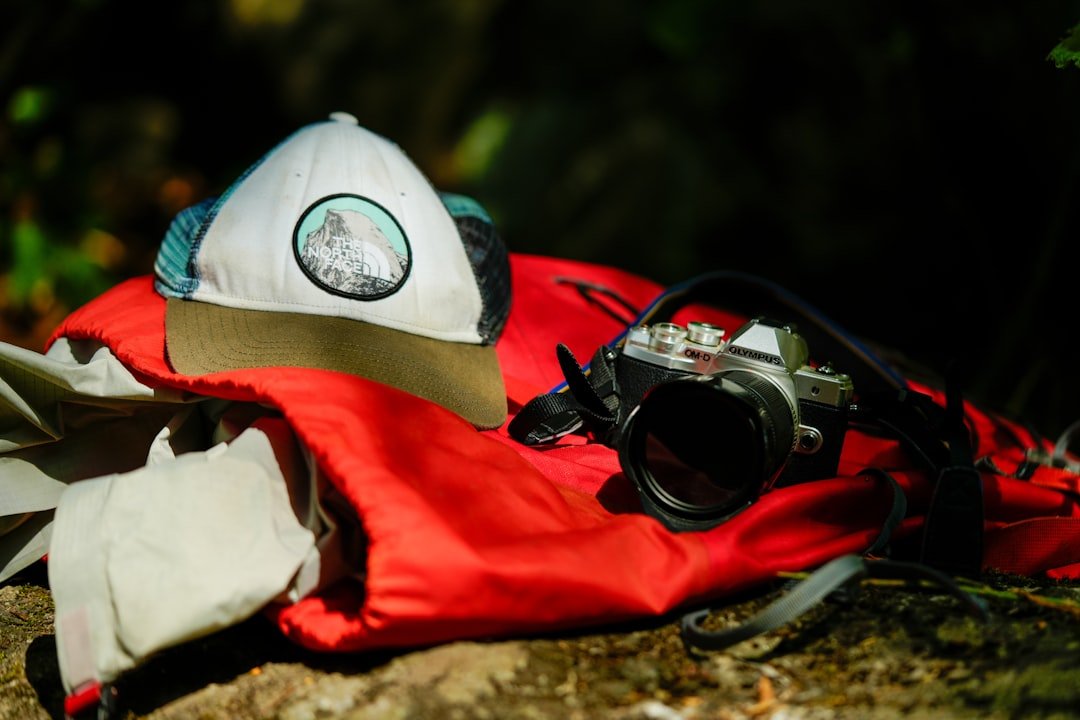
In contemporary times, explorers' missions extend beyond mere exploration of the unknown to encompass scientific research and environmental protection responsibilities. Many explorers collaborate with scientists, venturing into remote regions for scientific surveys. For example, in the Amazon rainforest, explorers work alongside biologists to investigate and research fauna and flora species, discovering many new species. Their work is crucial for protecting biodiversity and maintaining ecological balance.
Simultaneously, explorers actively participate in environmental protection activities. In glacier regions, explorers document glacier melting, raising public awareness about climate change impacts. Their actions have drawn attention to environmental issues, advancing global environmental protection efforts. Contemporary explorers interpret the balance between exploration and responsibility through their actions, contributing to humanity's sustainable future development.
The extraordinary journeys of explorers have spanned throughout human history. With fearless courage and unwavering determination, they continuously expanded the boundaries of human knowledge about the world. From ancient land and maritime expeditions to modern challenges of extreme environments, explorers' footsteps have never ceased. Their expeditions have not only changed our understanding of the geographical world but also promoted cultural exchange and fusion between different civilizations. In contemporary times, explorers shoulder the missions of scientific research and environmental protection, contributing to humanity's sustainable development. Their spirit inspires us to continually pursue the unknown, bravely face challenges, and explore this rich and colorful world.
📝 本文来自抖文 www.douwen.me ,转载请保留出处。
原文链接:https://douwen.me/archives/635/
💬 评论 (8)
This is exactly what I needed to read today. There's something truly magical about explorers who risked everything to map the unknown. Alexander the Great is just the beginning of this incredible story!
Wait, but the article cuts off mid-sentence about Alexander. Is this complete? Hard to judge the full argument when it's unfinished. 😕
Brilliant opening! The metaphor of explorers as "brilliant stars" really captures the inspiration they provided. Can't wait to see how this develops beyond the 4th century BCE. More content, please!
I've always wondered about the psychological drive that made these explorers push forward despite not knowing what lay ahead. Fear of the unknown would paralyze most people today. What was different about them?
Reading this gives me goosebumps. My grandmother used to tell me stories about explorers when I was little, and this article just brought all those childhood memories flooding back. Thank you for this ✨
The article promises "extraordinary journeys" but seems to focus heavily on the romanticized narrative. I'd be interested in seeing discussions of the ethical complexities and impacts on indigenous populations these explorations had.
Short but engaging hook! Definitely makes me want to keep reading. Though I do hope future sections have more concrete examples and less flowery language.
This resonates deeply with me as someone planning my own expedition next year. Understanding the historical context of what came before us helps frame our modern exploratory missions in perspective. Excellent starting point!