The Club Ownership Landscape: Football Capital from Saudi Arabia to America
The Club Ownership Landscape: Football Capital from Saudi Arabia to America
On September 1, 2008, Abu Dhabi royal Sheikh Mansour bin Zayed Al Nahyan acquired Premier League side Manchester City for 210 million pounds. It was the first time a foreign sovereign fund formally acquired a Premier League club. From that day, the global football capital landscape began to be reshuffled. 17 years later, about half of the top clubs in the Premier League, La Liga, Serie A, and Ligue 1 are controlled by foreign capital.
Football ownership changes reflect shifts in global capital flows. From 1990s domestic billionaire owners, to Russian oligarchs rising in the 2000s, to Middle Eastern sovereign funds invading in the 2010s, to American private equity dominating in the 2020s, the capital landscape of each era is different. The capital banquet has changed football's essence, turning it from pure sport into a global capital arena.
The Abramovich Era Begins

Russian oligarch Roman Abramovich acquired Chelsea for 140 million pounds in July 2003. It was the first large-scale foreign acquisition of a Premier League club. Abramovich was 37, a Russian oil magnate worth about 15 billion dollars and Britain's second-richest man at the time.
Abramovich pumped 2 billion pounds into Chelsea on signings. The investment took Chelsea from Premier League mid-table to European elite. From 2004 to 2024 Chelsea won 5 Premier League titles, 2 Champions League titles, and 2 Europa League titles. The short-term success showed other countries' tycoons and sovereign funds the opportunity. Russian oil money, Arab oil money, and US financial capital flowed in.
The UAE's Full Commitment at Manchester City

After Sheikh Mansour took over Manchester City in 2008, investment went far beyond Abramovich's. Over 17 years City received about 3 billion pounds, the largest single-club investment in football history. The money lifted City from mid-table to Premier League hegemon. From 2018 to 2024 City won 5 of 6 Premier League titles.
Sheikh Mansour did not just invest in City. Through City Football Group he acquired 10+ clubs globally, including MLS side New York City, Australia's Sydney FC, India's Mumbai City, Japan's Yokohama F. Marinos, and Brazil's Bahia. The global club network gives Emirati capital influence across all five continents. It is the first global capital empire in football history.
Qatar's PSG Model
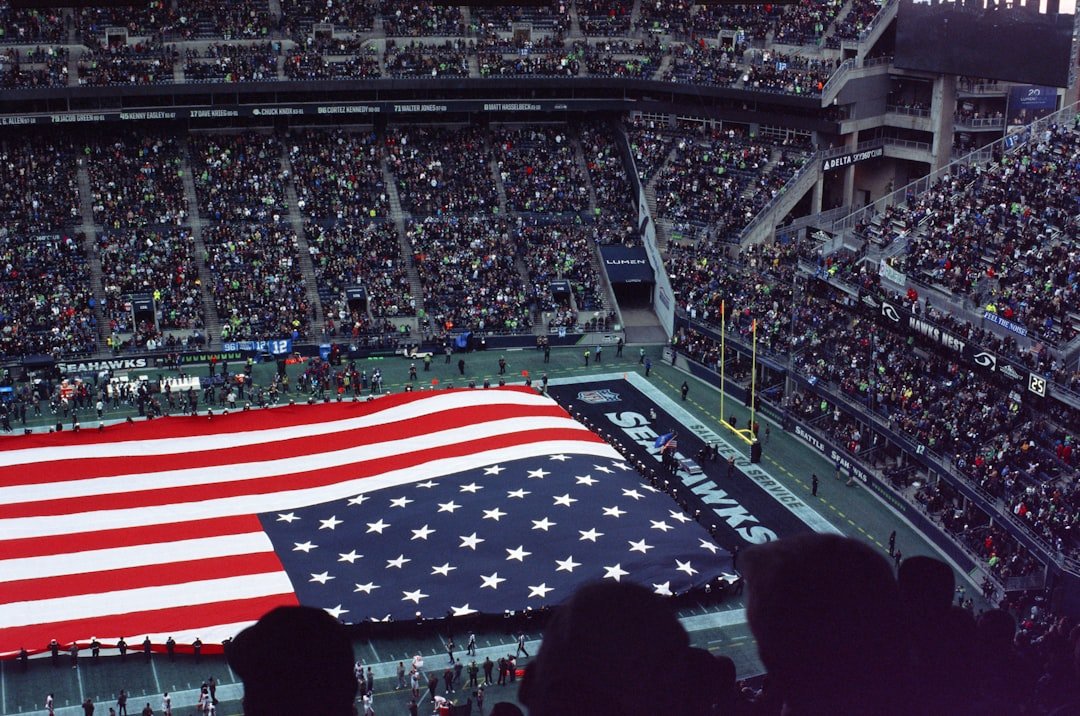
After QSI bought PSG in 2011, investment was also aggressive. As written above, PSG spent 2 billion euros over 14 years. Qatar's strategy differs from the UAE's. The Emirates care more about results; Qatar cares more about national brand.
Through PSG, Qatar showcases its modern image globally. Every PSG match is a Qatari ad. The 10 years before the 2022 World Cup made PSG the stage for Qatar. The mix of politics and sport turned a football club into a vehicle for national soft power.
Saudi Arabia Enters at Newcastle
In October 2021 the Saudi Public Investment Fund (PIF) acquired Newcastle for 305 million pounds. It marked Saudi capital's entry into the Premier League. PIF manages about 800 billion dollars, one of the world's largest sovereign funds.
Newcastle began spending heavily post-acquisition. From 2022 to 2025 they spent about 600 million pounds to sign Bruno Guimaraes, Isak, Lascelles, Tonali, and other stars. Newcastle went from relegation zone to Champions League regulars. The rapid rise has other Premier League clubs worried about a new City-style monopoly. The Saudi goal at Newcastle is similar to Qatar's at PSG: national brand growth.
The Full Invasion of American Capital
In the late 2010s American capital began entering European football at scale. Fenway Sports Group acquired Liverpool in 2010, RedBird Capital acquired AC Milan in 2017, GBM private equity acquired AS Roma in 2018, the Kroenke family increased its Arsenal stake in 2021, RedBird Capital acquired AC Milan in 2022, and Sycamore Partners acquired Leicester in 2024.
American capital is private-equity in style. They use debt to acquire clubs and aim to exit in 10-15 years through asset appreciation. The short-termism is the opposite of UAE and Qatari long-termism. American capital does not care if the club wins trophies; they care whether valuation rises. That attitude has fundamentally changed how Premier League, La Liga, and Serie A clubs operate.
The Brief Wave of Chinese Capital
From 2015 to 2018 Chinese capital flooded European football briefly. Wanda invested in Atletico Madrid and several Bundesliga clubs. Suning acquired Inter Milan. Fosun acquired Championship side Wolves. Evergrande invested in multiple European clubs. The wave totaled about 3 billion euros.
But in 2018 China's government began restricting overseas investment, particularly irrational sports investment. Chinese capital was told to retreat. From 2019 to 2022 most pulled out. Wanda sold Atletico shares. Suning sold Inter to American capital. Fosun sold Wolves to a Morgan Stanley-linked fund. The retreat left a brief 5-year footprint of Chinese capital in European football.
The Disappearance of Traditional Ownership
A side effect of foreign capital is the disappearance of traditional ownership models. In the 1990s Premier League clubs were mostly owned by domestic families or members. The model was gradually replaced by foreign capital from 2000 to 2020. In 2024 only 3 to 5 of 20 Premier League clubs, including Bournemouth and Brentford, are non-foreign owned.
The Bundesliga is the exception, with 50+1 keeping local control. But other European leagues have been overrun by foreign capital. The change fundamentally alters the relationship between clubs and local fans. Some older English fans protest publicly, but change is irreversible. It is the unavoidable price of football globalization.
Sovereign Funds vs. Private Equity
Foreign capital itself has rivalries. Middle Eastern sovereign funds and US private equity represent entirely different football-capital logics. Sovereign funds have patience and accept long-term returns of 10-20 years. Private equity lacks patience and must exit within 5-10 years for financial returns.
The logic gap shapes how clubs are run. Manchester City and PSG are sovereign-fund-controlled and can lose hundreds of millions annually without their owners caring. AC Milan and Roma are PE-controlled and must reach financial balance, with strict caps on transfer fees. Middle East-owned clubs have better results; American-owned clubs are more financially stable.
UEFA's Financial Fair Play
UEFA launched Financial Fair Play (FFP) in 2010 to cap losses. Clubs may not accumulate losses over any 3-year period of more than 30 million euros. The aim was to prevent foreign capital from making small clubs rich overnight through unlimited injection.
But FFP enforcement has been uneven. Manchester City have been accused of breaches multiple times, and in 2024 UEFA decided to investigate over 100 charges. The final outcome may not come until 2026 or 2027. City have publicly said they will sue UEFA if punished. The legal and regulatory battle reflects the complex relationship between UEFA and capital-owned clubs.
Fan Collective Ownership Pushback
Fans have begun organizing against foreign capital. After the 2021 European Super League event, several Premier League clubs saw fan protests demanding ownership changes. The most famous is Manchester United fans' protest against the Glazer family, repeatedly blockading Old Trafford.
Fan protests have limited practical effect. Capital ownership, once established, is legally hard to overturn. Fans can only keep up the pressure to shape club PR. United began considering selling some equity to British local investors in 2024 as a response. But such compromise is incremental and will not fundamentally change ownership.
The Future of the Capital Era
Football's capital era will not end but deepen. Trends for the next decade include large-scale acquisitions before Saudi 2034, MLS brand upgrades around US 2026, Middle East capital continuing into East Asian leagues, and the upheaval from AI and crypto in football commerce.
Every change touches clubs, players, and fans. Capital reshapes football from a community sport into a global commodity. The process is irreversible, no matter how older fans protest. The new generation already accepts this commodified football. They care about results and star performance but no longer about ownership. That is the real meaning of football's capital era. It has won, and it will keep winning.
📝 本文来自抖文 www.douwen.me ,转载请保留出处。
原文链接:https://douwen.me/archives/966/
💬 评论 (0)
还没有评论,来说两句吧 ✍️