How Yellow and Red Cards Came to Be
On May 31, 1970, at the Estadio Azteca in Mexico City, the opening match of the Mexico World Cup pitted the host nation against the Soviet Union. Somewhere in the second half, after a robust challenge from a Soviet player, the referee Kurt Tschenscher reached into his pocket, produced a bright yellow card and held it high above his head. Many fans in the stadium were puzzled at first, and television viewers around the world paused for a few seconds to take in what they had just seen. This small gesture felt unfamiliar then, yet the meaning of that little piece of cardboard would soon be obvious everywhere. It was the first formal yellow card in football history, and from that instant the game entered the age of red and yellow cards.
Today, in any official match anywhere in the world, whether it is a World Cup final or a village amateur league fixture, and whether the referee speaks English, Spanish, Arabic or Chinese, two cards travel in his pocket. Yellow stands for a warning, red for a dismissal. This almost absurdly simple visual signal has become the core disciplinary tool of football and a shared language for fans across every continent. The system feels so natural now that few people stop to ask where it came from, why these two colours were chosen and what story sits behind the choice. Let us walk through that story step by step.
How Football Handled Misconduct Before Cards
Many younger fans assume that football has always had yellow and red cards, but before 1970 the pitch was completely card-free, and the way referees enforced the rules was rather primitive. The roots of modern football rules trace back to the founding of the English Football Association in 1863, and even then matches were largely policed by the two team captains negotiating between themselves. The role of an on-field referee with full authority only emerged firmly in the 1870s.
In that era, misconduct was generally handled in three ways. First, a verbal warning, with the referee running over to a player to shout a few words and write the name down for a written report after the match. Second, an outright dismissal, with the referee pointing towards the touchline or walking up and escorting the player off. Third, post-match sanctions, including fines, suspensions and bans from future competitions. This way of officiating had one fatal weakness, which was that spectators in the stands and viewers at home had no way of understanding what had just happened, leading to scenes of players being inexplicably sent off, coaches throwing up their arms in confusion and crowds left in the dark. The problem became especially severe in international matches, where foreign referees might be saying things that local players simply could not follow, with communication reduced to gestures and guesswork.
The 1966 World Cup Chaos That Sparked Reform
On July 23, 1966, the quarterfinal of the England World Cup was played at Wembley Stadium in London, with the host nation facing Argentina. The match had been tense from the opening whistle. South American and European playing styles already clashed in those days, and on top of that lay a real language gap between English and Spanish. Somewhere around the 36th minute, the referee Rudolf Kreitlein, a German official, decided to send off Argentina's captain Antonio Rattin after two earlier warnings.
The trouble was that Kreitlein did not speak Spanish, Rattin spoke neither German nor English, and the referee's hand signal for a dismissal was refused. Rattin stood his ground on the pitch, repeatedly demanding a translator and an explanation, while his teammates surrounded the referee in protest and spectators struggled to make sense of the situation. The standoff lasted by public accounts around eight minutes, and in the end it took stadium officials and even police on the turf to escort Rattin off. Argentina's delegation lodged a strong protest after the match, and the international football community began to reflect on a deeper question. The way referees and players communicated had to be reformed, and it could no longer depend on shared language.
Ken Aston, the English former referee then chairing the FIFA Referees Committee, witnessed all of this in person. In later interviews he often returned to that match as the moment that started his search for a way to make refereeing decisions instantly understandable in any country, in any language, by anyone watching.
The Traffic Light on Kensington High Street
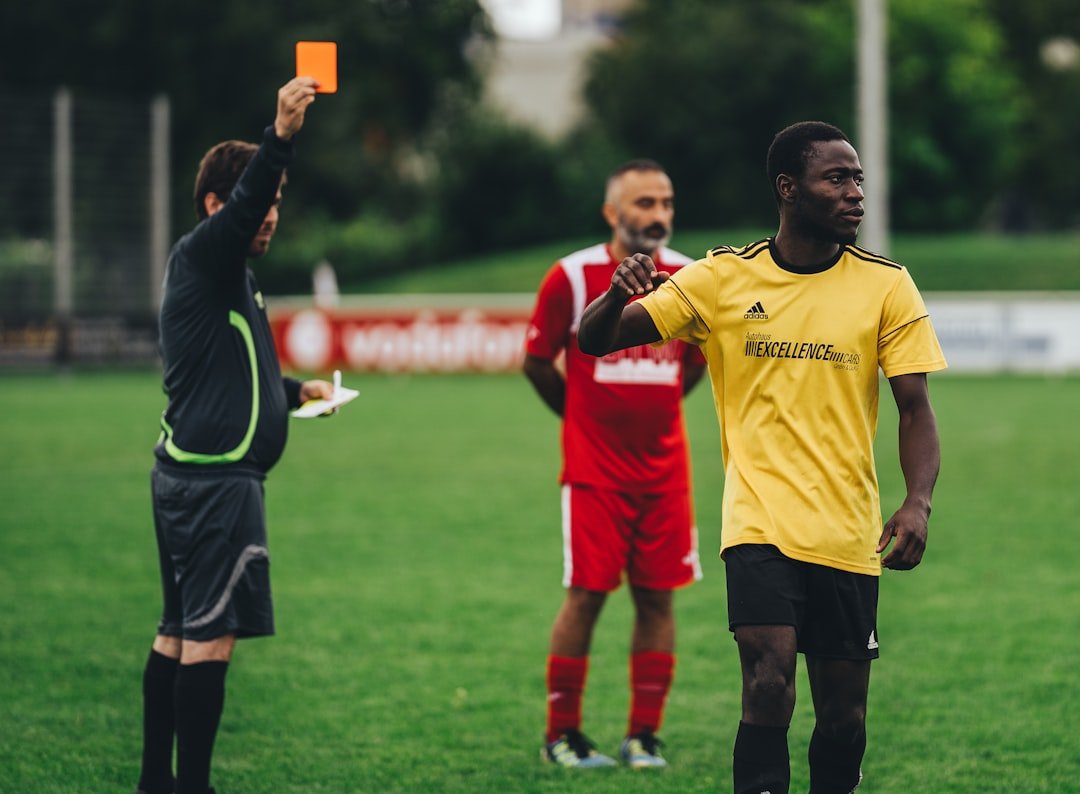
A few days after the 1966 World Cup ended, Ken Aston was driving home along London's Kensington High Street, a busy thoroughfare lined with traffic lights. He stopped at a junction, watched the signal cycle from green to yellow and then to red, and a thought struck him. This simple colour signal worked in any city on any street regardless of the language people spoke or the culture they came from. Yellow meant slow down, red meant stop, and everybody understood. What if the same logic could be applied on the football pitch.
He went home and told his wife Hilda about it, and she made a key contribution. The colours had to stand out clearly against a grass background. Green was out, since it would blend into the turf, blue did not contrast enough either, and black felt too oppressive. Red and yellow were the most visible, and in most cultures they already carried strong psychological associations with warning and prohibition. Aston refined the proposal and submitted it to FIFA and to the International Football Association Board, the body responsible for the Laws of the Game.
After roughly two years of discussion and trials, FIFA formally approved the proposal in 1968, and the 1970 Mexico World Cup became the first major tournament to use yellow and red cards. From that moment on, the kind of awkward standoff caused by language barriers virtually disappeared from the world stage.
The First Yellow Card at the 1970 Opening Match
On May 31, 1970, the Mexico World Cup opened with the host nation against the Soviet Union. The match itself ended in a fairly subdued goalless draw, but somewhere in its middle phase the referee Kurt Tschenscher showed a yellow card to the Soviet player Kakhi Asatiani, the first time a referee had used a yellow card in a formal competitive fixture. The bright square of cardboard stood out vividly in the sunlight and television cameras carried the image to hundreds of millions of viewers around the world.
After the tournament, the card system spread quickly through domestic leagues. English football began applying yellow and red cards in the mid-1970s, and other major European leagues followed in turn. It is worth noting that while red cards were technically available at the 1970 World Cup as the visual signal for a dismissal, by public record no player was actually sent off using one at that tournament. The first true red card dismissal in World Cup history came at the 1974 West Germany World Cup, when the Chilean player Carlos Caszely was sent off for a retaliatory foul on the German defender Berti Vogts, and that red card duly entered the World Cup record books.
The Specific Rules and Accumulation System
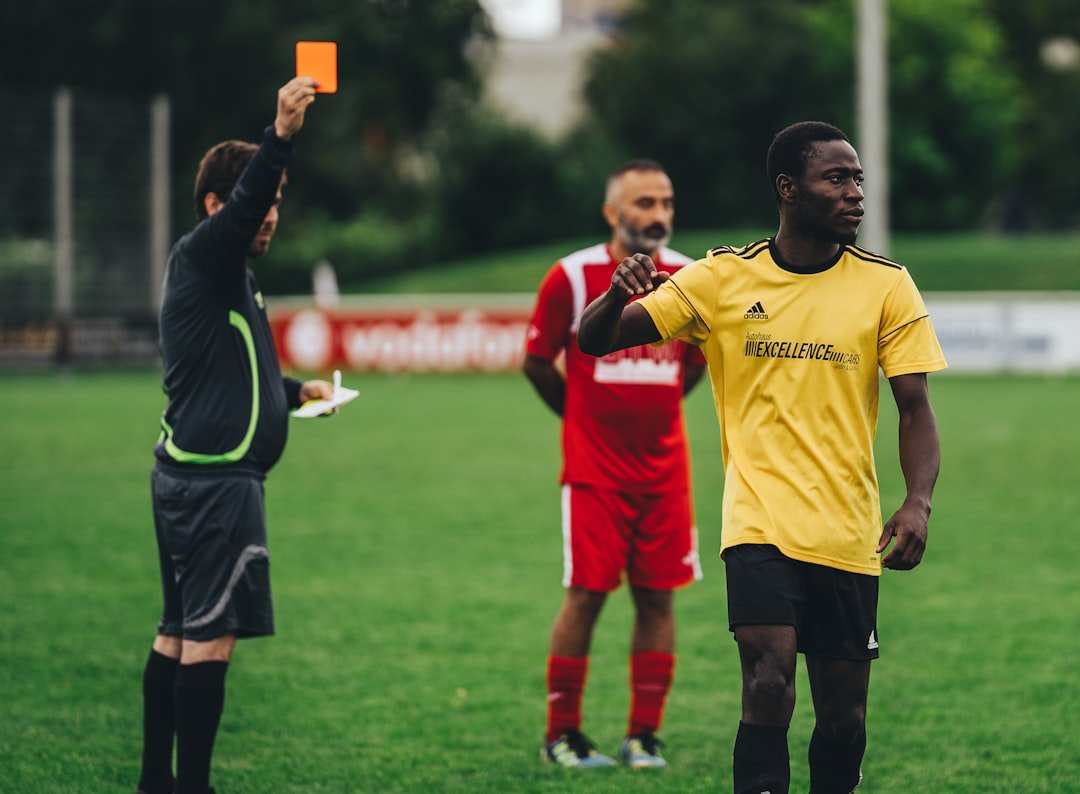
Cards look simple on the surface, but the rules behind them are detailed, and the International Football Association Board fine-tunes them every year. Take the yellow card first. A yellow card is essentially a caution, typically issued for unsporting behaviour, dissent expressed by word or action, persistent infringement of the Laws, delaying the restart of play, failure to respect the required distance at a corner, free kick or throw-in, or entering and leaving the field of play without permission. A deliberate handball that does not deny a clear scoring chance is also usually handled with a caution.
A red card is a sending-off, typically issued for serious foul play, violent conduct, spitting at an opponent or any other person, denying an obvious goalscoring opportunity through a deliberate handball, denying an obvious scoring opportunity by an offence, and using offensive, insulting or abusive language or gestures. Once a player receives a red card he must immediately leave the field of play and the technical area, and his team cannot bring on a replacement, finishing the match a player short.
The accumulation rules are another point of constant fan debate. In most professional leagues, two yellow cards in a single match are equivalent to a red card and produce the same dismissal. Across separate matches the rules vary by competition. At the World Cup, under FIFA's typical regulations, two yellow cards accumulated across the group stage and early knockout stage will trigger an automatic one-match ban, while the slate is generally wiped clean at some point before the latter knockout rounds so that a single yellow does not cost a team a key player in the final. National leagues each set their own accumulation thresholds. The Premier League traditionally uses tiers around five, ten and fifteen yellow cards to trigger increasing suspensions, and La Liga, Serie A and the Bundesliga apply their own variations on the same logic.
Special Card Situations for Goalkeepers
The goalkeeper is the most distinctive position on the pitch, and the card rules around keepers include several unique points. The first typical situation is handling, where a keeper may normally use his hands inside his own penalty area, but if he handles a ball deliberately kicked back to him by a teammate, the action is treated as an infringement and usually punished with an indirect free kick rather than a card. The second situation is handling outside the area, where a keeper who steps beyond the penalty box becomes effectively an outfield player and faces a straight red card if his handball denies a clear scoring chance.
The third situation is dangerous play, such as rushing out with a high boot and striking a forward in the head, which under the Laws can also warrant a red card. Refereeing of goalkeepers used to be markedly lenient, but as the Laws have evolved, modern keepers face essentially the same standard for red and yellow cards as anyone else on the pitch. An interesting downstream point is that when a keeper is sent off, the team must bring on a substitute keeper, and if substitutions have been used up, an outfield player has to pull on the gloves and stand between the posts. This sight is uncommon but not rare in the professional game and often becomes a defining dramatic moment of a match.
Famous Red Card Moments in History
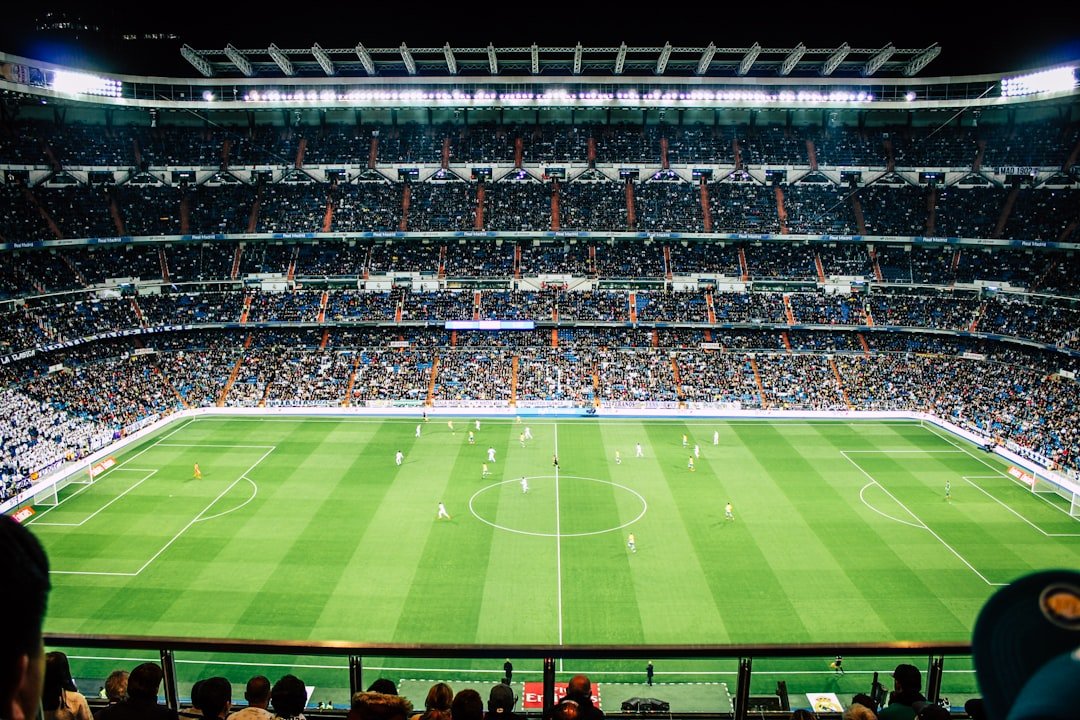
Over more than fifty years of the card system, countless dismissals have become unforgettable, and several have crossed over from sports news into wider popular culture. The most iconic is surely the 2006 Germany World Cup final between France and Italy, when in extra time Zinedine Zidane head-butted the Italian defender Marco Materazzi in the chest. The referee Horacio Elizondo did not initially see the act, but the fourth official communicated the information to him and Zidane was sent off. That was the last professional match of Zidane's career, and the way he ended a legendary playing life created an entire cultural category that fans now refer to as retiring with a red card.
At the 2010 South Africa World Cup quarterfinal, Uruguay played Ghana, and in the closing seconds the Uruguayan forward Luis Suarez used his hand on the goal line to stop a certain Ghanaian goal. The referee showed a straight red, Ghana were given the penalty but missed it, and Uruguay went on to win the subsequent shoot-out. For Ghana the moment was a tragedy and for Uruguay an act of heroism, while Suarez himself has been argued over as hero and villain ever since.
Beyond Zidane, the English midfielder David Beckham was sent off in the 1998 France World Cup round of sixteen against Argentina for a retaliatory kick, and the English press subjected him to weeks of intense criticism. The media storm sparked by that single red card illustrates the unique place dismissals hold in football culture, where a card is not just a disciplinary measure but a flashpoint for collective emotion.
Retiring With a Red Card
Football history has produced a specific phenomenon that fans sometimes call retiring with a red card, where a player's final professional match ends with a dismissal. Zidane in the 2006 World Cup final is the most famous example, leaving the game in his final fixture without the dignified farewell most stars expect. The dramatic contrast has made the topic a recurring subject of fan discussion, with some viewing it as tragedy and others as a romantic image of a warrior at the end of his road.
Similar stories crop up in many domestic leagues. Some veterans lose composure in their farewell game thanks to old rivalries flaring up, while others step over the line trying to leave behind one final fierce challenge as a memory. Whichever the case, these red-card farewells often become unavoidable scenes in a player's career documentary and cautionary tales for younger professionals who follow.
How VAR Changed Card Decisions

At the 2018 Russia World Cup, FIFA formally introduced the Video Assistant Referee system, known as VAR. Its arrival has had a substantial impact on yellow and red card decisions, with consequences both positive and negative. The first positive effect is the rise in accuracy, since fouls that the main referee could not see from a single vantage point can now be reviewed and corrected, and violent acts taking place outside his line of sight can almost no longer escape punishment.
The second positive effect is greater transparency, with players, coaches and fans able to watch replays on the stadium screens, which has noticeably increased acceptance of decisions and reduced post-match arguments over contentious calls. VAR has also been criticised, however. Some main referees have become more hesitant, worried that being overturned undermines their authority, and that hesitation can slow decisions down. Other critics point out that VAR disrupts the flow of the game, with players celebrating a goal only to wait several minutes for confirmation, and that disruption affects the spectacle of football itself.
On balance, red card decisions in the VAR era are more precise than before, but controversy has not disappeared, it has simply taken on new forms.
Strictness Across Different Levels of Football
Although the card system is a single international rule, the strictness with which it is applied varies considerably across levels. In top professional leagues, enforcement is at its strictest, with referees under pressure from VAR, television broadcasts and media scrutiny, and every decision examined under the microscope. The Premier League is known for tight enforcement on physical contests, Serie A for nuanced calls on tactical fouls, La Liga for high standards on player conduct and dissent, the Bundesliga for accuracy, and Ligue 1 for a relatively relaxed overall rhythm.
Adult amateur leagues apply the card system more flexibly, with referees often calibrating to the atmosphere of the match and the attitude of the players in order to keep the game enjoyable rather than over-officiated. Youth football carries its own considerations rooted in child welfare, and many countries embed educational steps into youth card protocols, such as asking a player to step aside for a brief conversation with the referee, so that a young player who has been dismissed actually understands what went wrong. This layered enforcement shows how flexible the card system can be when adapted to different contexts.
The Card System's Influence on Other Sports
Ken Aston's inspiration at that London traffic light has shaped far more than football alone. Rugby was among the earliest sports to borrow the card mechanism, and both rugby union and rugby sevens today use yellow and red cards as their visible warning and dismissal signals, with the twist that a yellow card in rugby normally sends a player to the sin bin for ten minutes rather than acting as a purely verbal caution.
Field hockey uses red and yellow cards too, and adds a green card as the lightest level of warning, forming a three-tier colour system. Handball's card rules are very close to football's, with a red-carded player's team having to play a man down for the rest of the match. Water polo uses similar coloured signals as warning and exclusion markers. Even basketball, which relies primarily on the accumulation of technical fouls, has in some leagues started experimenting with colour-coded visual cues for officiating decisions.
Cricket, volleyball, athletics and even some rules in competitive video gaming carry traces of the same card spirit. It is fair to say that the moment on Kensington High Street in 1966 has reshaped officiating culture across virtually all of global sport.
Iconic Red Card Moments in Fan Culture
Cards are not only a regulatory mechanism, they have become a central thread in fan culture and media storytelling. In the social media era a red card moment can travel around the world in minutes, dressed up in memes, reaction images and inside jokes that form a shared vocabulary among supporters. The image of Zidane and Materazzi has been reproduced as art again and again, and even some public installations in Paris draw on the scene.
Fan culture has also produced something one might call red card economics, where certain players actually gain a reputation as hard men because of their frequent dismissals and attract a loyal following on that basis. The media gladly play along, with documentaries, retrospectives and long-form features all treating red cards as one of football's most reliable high-traffic topics. The vast cultural ecosystem that has grown around a small piece of coloured cardboard is something Ken Aston could never have foreseen.
How the Card System Changed Football
Looking back over more than fifty years, the impact of the card system on football has been wide-ranging. The first change is a revolution in communication, since referees no longer need words to express a decision and a single card can outweigh paragraphs of speech, which has made international officiating clearer than ever before. The second change is a major civilising effect on matches, with the deterrent of cards driving down physical confrontations and verbal abuse, so that today's football has an atmosphere quite different from that of the 1960s.
The third change is the enrichment of football culture, with red cards and yellow cards becoming core terms in the football vocabulary, anchor points for media narratives and outlets for fan emotion. The fourth change is the steadying of refereeing authority, since a visual tool means that a referee's intention can no longer be easily misread or deliberately misunderstood, and the dignity of officiating is now institutionally protected. The fifth change is the paving of the way for further technological integration, with the visual card model providing a precedent for VAR, goal-line technology, semi-automated offside and other systems that came later.
Today, when we look back at the London traffic light on Kensington High Street that gave Ken Aston pause in 1966, what it changed was not only the two cards in a referee's pocket but the entire face of world football and the broader culture of officiating across global sport. That is the elegance of the yellow and red card system. Simple, intuitive, effective, capable of bridging language and culture, and arguably one of the most graceful inventions in the history of football.
When was the first yellow card shown
According to FIFA and public historical records, the first formal yellow card was shown on May 31, 1970 at the opening match of the Mexico World Cup. The referee was Kurt Tschenscher of Germany, and the cautioned player was from the Soviet Union. This was also the first time the card system was applied in a top-level competitive fixture.
Who invented the red and yellow card system
The red and yellow card system was proposed by the English former referee Ken Aston, who at the time chaired the FIFA Referees Committee. The idea came to him after the 1966 World Cup while he was waiting at a traffic light on Kensington High Street in London. FIFA formally approved the proposal in 1968 and it was first implemented at the 1970 Mexico World Cup.
Do two yellow cards always equal a red card
Within a single match, two yellow cards are equivalent to a red card and the player must leave the field immediately, with his team unable to bring on a replacement. Accumulation across separate matches varies by competition. At the World Cup two yellow cards usually trigger a one-match ban and the slate is wiped clean at a defined stage of the tournament, while national leagues each set their own specific thresholds that need to be read alongside the competition's disciplinary code.
Can goalkeepers be sent off with a red card
Yes, goalkeepers can be sent off with a red card, and the rules apply to them in essentially the same way as to outfield players. When a keeper is dismissed, the team must bring on a substitute keeper, and if all substitutions have been used an outfield player has to put on the gloves and take the position. This situation is uncommon in professional football but is far from unheard of.
Can VAR overturn the main referee's red card
The role of VAR is to assist the main referee in reviewing key decisions, specifically red cards, goals, penalties and mistaken identity. VAR can recommend that the referee consult the pitchside monitor for a review, but the final decision still rests with the main referee. Strictly speaking, VAR therefore does not overturn a red card on its own, but rather guides the main referee through a process that helps him arrive at a more accurate ruling.
📝 本文来自抖文 www.douwen.me ,转载请保留出处。
原文链接:https://douwen.me/archives/884/
💬 评论 (0)
还没有评论,来说两句吧 ✍️