Explorers Trapped in Arctic Ice for Years: The True Stories of Extreme Survival
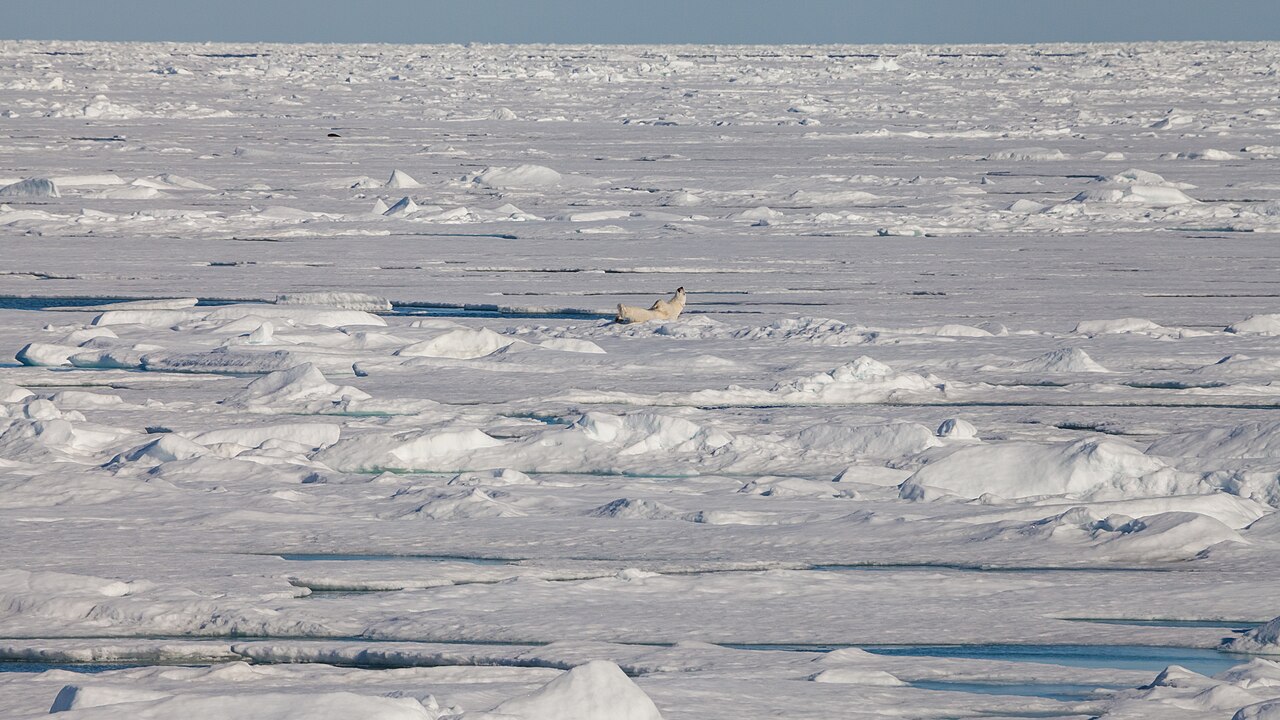
Explorers Trapped in Arctic Ice for Years: The True Stories of Extreme Survival
In the Arctic ice field, temperatures plunge to minus 50 degrees, polar nights stretch for months on end, and the ice beneath your feet can crack open without warning. Any one of these could kill you. Yet throughout history, a remarkable handful of explorers were trapped in the Arctic ice for years — and survived through sheer willpower and ingenuity.
These are not novels or movie scripts. They are real accounts of human survival at its most extreme.
I. Nansen's Insane Plan: Deliberately Freezing His Ship in Arctic Ice for Three Years

An Idea Everyone Called Suicide
In 1893, Norwegian explorer Fridtjof Nansen made a decision that the entire scientific establishment considered suicidal — he would deliberately allow his ship, the Fram, to become frozen in Arctic pack ice, then drift with the ice across the North Pole.
When Nansen presented this plan to the Norwegian Geographical Society, nearly every expert voted against it. British polar authority General Adolphus Greely called it "an irresponsible scheme destined to end in disaster." After all, previous expeditions trapped in Arctic ice had almost universally ended in death — most famously Sir John Franklin's 1845 expedition, in which all 129 men perished.
But Nansen had evidence on his side.
The Jeannette's Revelation
In 1881, the American exploration vessel USS Jeannette was crushed by ice and sank near Siberia. Three years later, in 1884, wreckage from the Jeannette — clothing, documents, and equipment — washed ashore on the southwest coast of Greenland, over 3,000 kilometers away.
This discovery led Nansen to a bold hypothesis: a transpolar current flows beneath the Arctic ice, carrying everything from the Siberian side toward Greenland. If his ship was strong enough to withstand the crushing pressure of the ice, he could ride this "ice highway" across the Arctic.
To this end, Nansen designed the Fram with a rounded hull cross-section, shaped like a smooth bowl. When ice squeezed inward, instead of being crushed, the ship would be pushed upward — like a bar of soap squeezed between wet fingers. This ingenious design would ultimately save every life on board.
Over 1,000 Days Trapped in Ice
In June 1893, the Fram departed Norway carrying 13 crew members and enough supplies to last six years — Nansen had prepared for the worst-case scenario.
On September 22, the Fram became locked in pack ice north of the New Siberian Islands. From that day forward, they began their long drift.
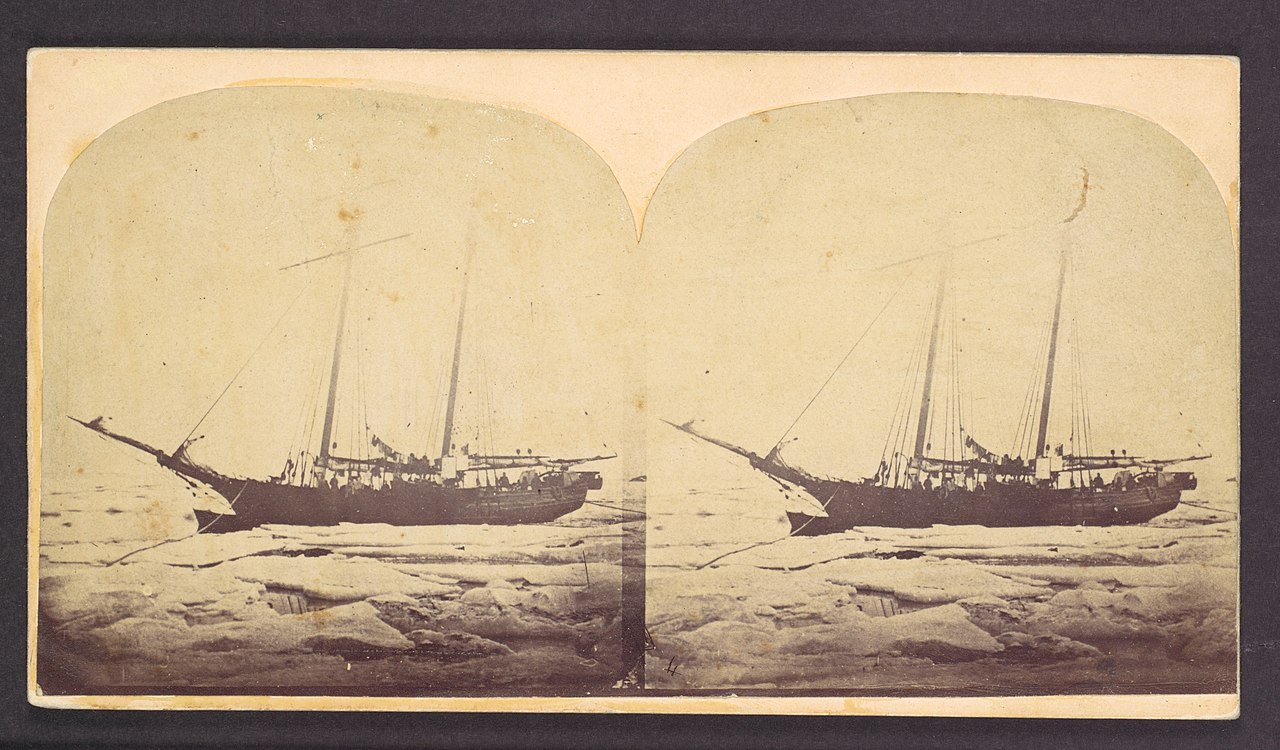
The first months were the most harrowing. The ice constantly squeezed the hull, producing enormous groaning and cracking sounds, as if some great beast were trying to devour the ship. Everyone was prepared to abandon ship at a moment's notice. But the Fram's rounded hull performed exactly as designed — each time the ice pressed inward, the ship rose gently upward, settling safely on top of the ice.
Then came the polar night. From late October to February, the sun never rose. Months of total darkness took a devastating psychological toll — historically, many polar expeditions fell apart mentally during this period.
Nansen had planned for this meticulously:
- Strict daily routines: Fixed times for waking, meals, work, and recreation
- Scientific duties: Regular measurements of ocean depth, currents, temperature, and ice thickness gave everyone purpose
- Cultural life: The ship carried an extensive library; the crew organized reading groups, musical performances, and holiday celebrations
- Proper nutrition: Fresh polar bear and seal meat provided vitamin C, effectively preventing scurvy
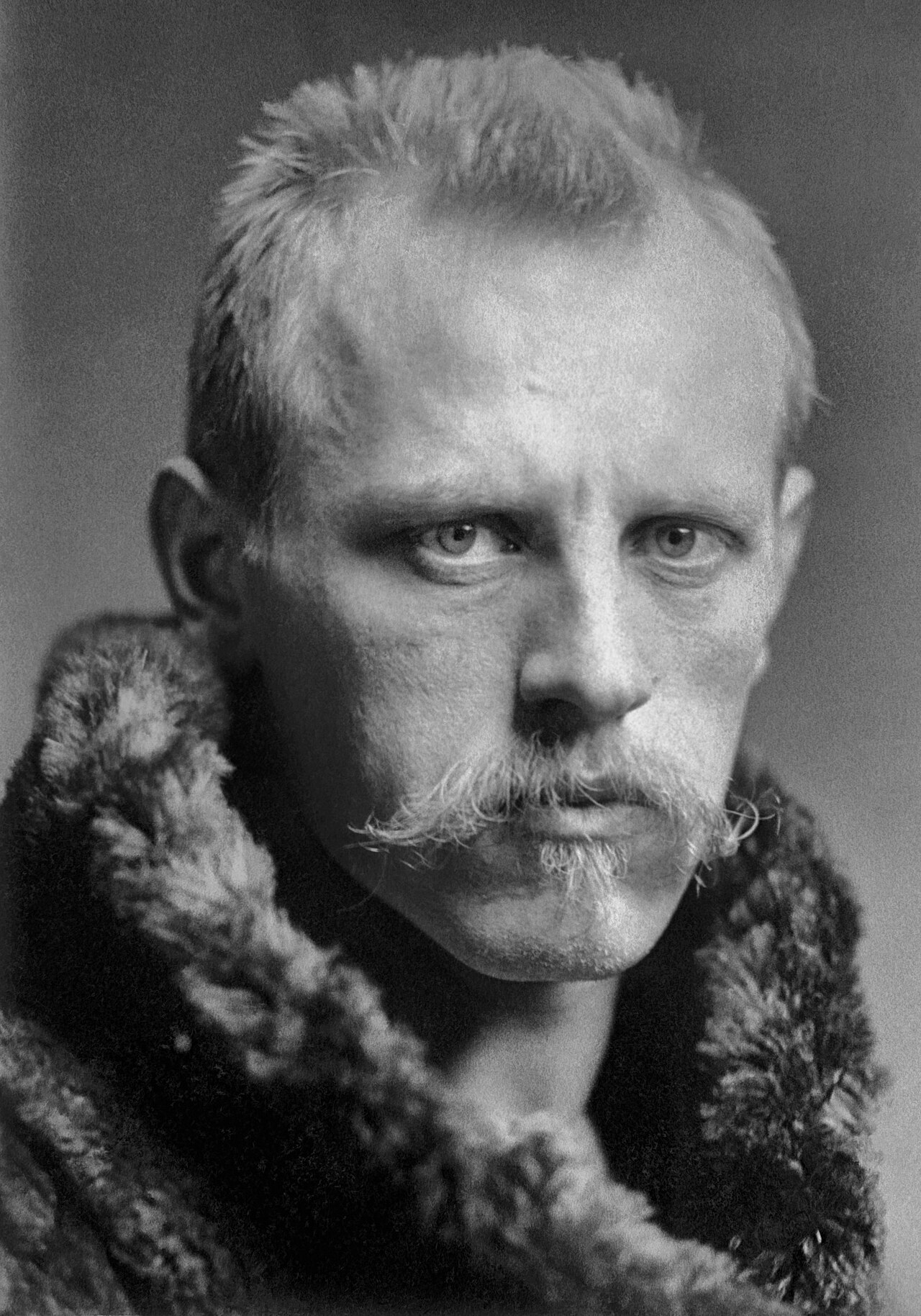
The Dash for the Pole and 16 Months of Wilderness Survival
By early 1895, after eighteen months of drifting, the Fram had reached approximately 84°N. Nansen realized the current would not carry them directly over the Pole. On March 14, 1895, he made another bold decision: he and companion Fredrik Hjalmar Johansen would leave the ship and make a dash for the North Pole by dog sled and kayak.
The two men set out with 28 sled dogs, 3 kayaks, and 100 days' worth of food, battling across a chaotic landscape of towering ice ridges, open water leads, and shifting cracks. They often had to drag their heavy sleds through waist-deep snow.
On April 8, they reached 86°14'N — just 400 kilometers from the North Pole, the farthest north any human had ever traveled. But conditions were deteriorating rapidly, and pressing on meant certain death. Nansen made the decisive call to turn back.
The return journey was the true test. Their sled dogs died one by one or were slaughtered for food. Both men's watches stopped, leaving them uncertain of their exact longitude. In August 1895, they reached a small island in the Franz Josef Land archipelago and decided to overwinter there.
They built a crude shelter from stones and walrus hides, surviving on polar bear and walrus meat. Through the entire winter, the two men huddled in sleeping bags, warming themselves by walrus-oil lamps. Nansen later wrote:
"We lived like cavemen, covered in grease and soot, our clothes in tatters."
On June 17, 1896, when spring returned, a miracle occurred — they encountered British explorer Frederick Jackson and his survey party on the island. Jackson initially failed to recognize the ragged, filthy figure before him as the famous Nansen.
And what of the Fram and its remaining 11 crew members? After drifting in the ice for 35 months, the ship broke free in August 1896 and returned safely to Norway.
Thirteen men, trapped in Arctic ice for three years. Not a single casualty.
Nansen returned to Norway to a hero's welcome, with hundreds of thousands lining the streets. He later devoted himself to humanitarian work, winning the 1922 Nobel Peace Prize for his efforts to help refugees after World War I. His "Nansen passport" helped over 450,000 stateless refugees obtain legal identity.
II. Ada Blackjack: The Inuit Woman Abandoned on an Arctic Island
An Expedition Doomed from the Start
If Nansen's success was built on brilliant planning and thorough preparation, Ada Blackjack's survival was a miracle born of pure desperation.
In 1921, Canadian explorer Vilhjalmur Stefansson — a man skilled at self-promotion but who never risked his own neck — organized an expedition to Wrangel Island in the Arctic. This desolate island, located 200 kilometers north of Siberia and covering about 7,600 square kilometers, is one of the most remote in the Arctic Ocean. Stefansson claimed to be asserting Canadian sovereignty over the island, though it was more a political gamble than a serious expedition.
The team consisted of four young white men: Allan Crawford (20), Fred Maurer (28), Lorne Knight (28), and Milton Galle (19). The fifth member was a 23-year-old Inuit woman — Ada Blackjack — hired to sew clothing and cook.
Ada didn't want to go. She was a young single mother; her 5-year-old son Bennett was seriously ill and needed expensive medical treatment. It was solely to earn the money for his care that she accepted the job at $50 per month.
In September 1921, the five were deposited on Wrangel Island with the understanding that a supply ship would return for them in one year.
The Supply Ship Never Came
In the summer of 1922, everyone anxiously awaited the supply ship. But the entire summer passed with no sign of it. Unusually severe pack ice had blocked all approaches to the island.
A second winter began. Food grew scarce. They depended on hunting — mainly seals and Arctic foxes — but game was unpredictable. Worse, Knight developed severe scurvy, his body steadily weakening.
On January 28, 1923, Crawford, Maurer, and Galle made a fateful decision: they would cross the ice on foot, walking over 200 kilometers to the Siberian mainland for help. They took most of the sled dogs and food, leaving the ailing Knight and Ada to tend the camp.
The three men walked into the vast Arctic ice and were never seen again.
They likely fell through the ice or were caught in a blizzard. Their bodies were never found.
A Woman Who Had Never Learned to Survive
Ada now faced a nearly hopeless situation: alone on an Arctic island with a gravely ill companion, inadequate food, and no idea when — or if — rescue would come.
She had never fired a gun before.
But Ada showed remarkable adaptability. She taught herself to shoot, failing repeatedly at first — seals would dive at the slightest sound. But she persisted and gradually improved. She learned to set traps for Arctic foxes and birds. She sewed warmer clothing and boots from animal hides.
On June 23, Knight died after months of suffering. Ada was now completely alone on the island.
Facing Arctic solitude, she wrote in her diary:
"I pray to God to help me. I am all alone now."
But she didn't give up. She continued hunting, stockpiling food, and even learned to repair her wind shelter. She had to fend off polar bears — on one occasion, a bear walked straight into her camp, and she was forced to drive it away with gunfire.
Rescue and Forgetting

On August 19, 1923, a rescue ship called the Donaldson finally reached Wrangel Island. The crew found Ada not only alive but in remarkably good condition — she had stockpiled ample seal meat and fox pelts, and her camp was well-maintained. The photograph above shows Ada on the ship, holding Vic, the cat that had been her companion throughout the ordeal.
Ada Blackjack spent nearly two years on Wrangel Island, the last two months entirely alone.
Her story caused a brief sensation — newspapers dubbed her "the female Robinson Crusoe of the Arctic." But public attention quickly moved on. Ada used her expedition earnings to pay for her son's treatment, then lived quietly in Alaska for the rest of her life. She died in 1983 at the age of 85.
Only in recent years, with growing interest in women's exploration history, has Ada Blackjack been recognized as one of the toughest survivors in Arctic history. In 2003, author Jennifer Niven published Ada Blackjack, bringing this incredible survival story to a wider audience.
III. Wegener's Greenland Expedition: Scientists' Survival Beneath the Ice
The Last Expedition of the Father of Continental Drift
Alfred Wegener — the very same German scientist who proposed the theory of continental drift. In 1912, he argued that Earth's continents had once been joined together and had gradually drifted apart to their present positions. The mainstream scientific community ridiculed his theory for decades, until plate tectonics was established in the 1960s and vindicated him.
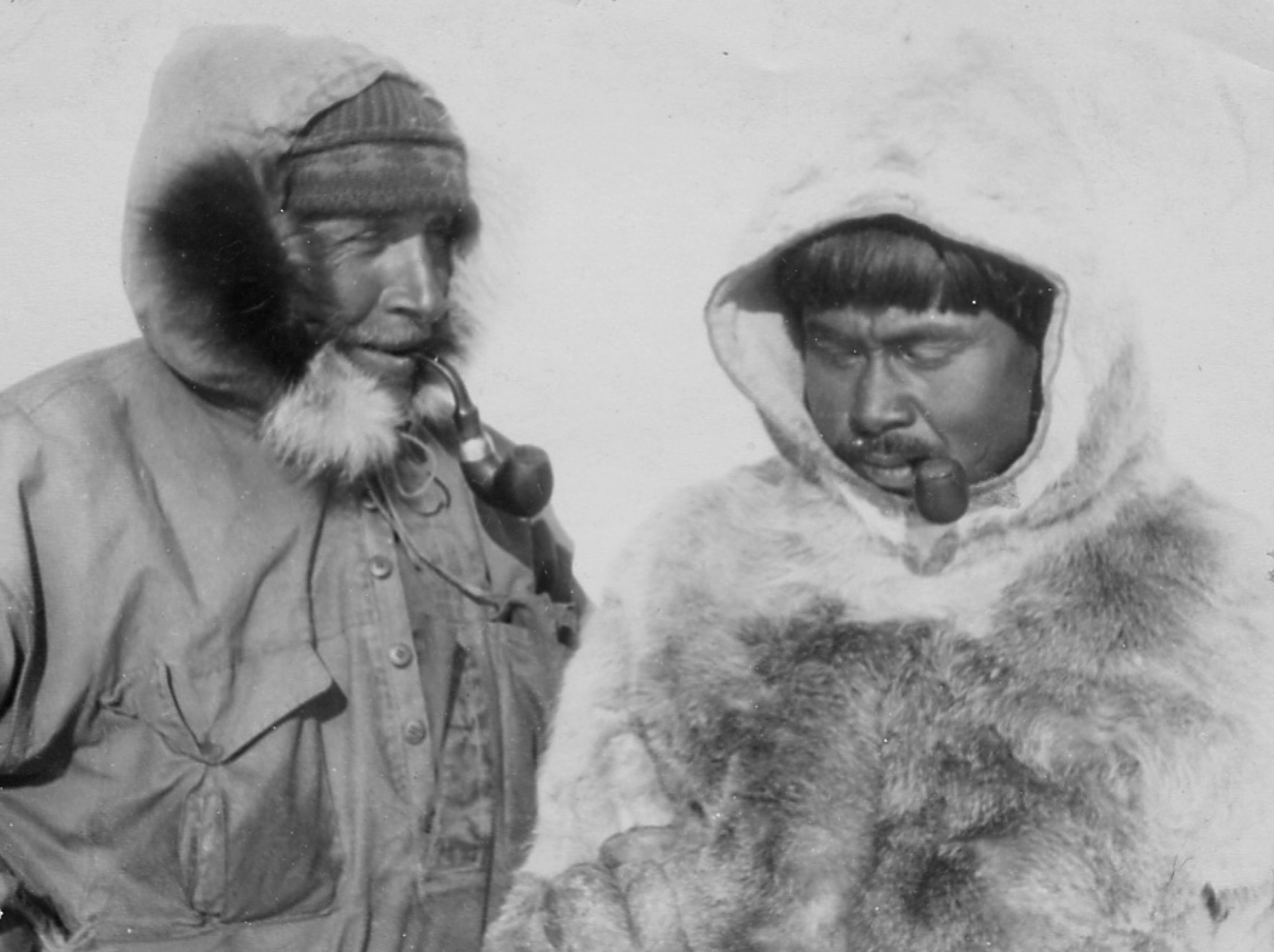
In 1930, the 50-year-old Wegener led a 14-person expedition to the Greenland ice sheet to carry out an ambitious meteorological observation program. In the photo above, Wegener stands on the right in dark clothing; on the left is his companion Rasmus Villumsen — this image may be one of the last ever taken of Wegener.
The expedition established three stations across the Greenland ice sheet: "West Station" on the west coast, "East Station" on the east coast, and the critical "Eismitte" (Mid-Ice Station) at the center. Eismitte sat at the highest point of the Greenland ice cap, at 3,000 meters elevation and 400 kilometers from the nearest coast — the most remote scientific outpost humans had ever established in the Arctic.
Two young scientists — Johannes Georgi and Ernst Sorge — were stationed at Eismitte to conduct year-round, uninterrupted meteorological observations.
The Supply Crisis and Wegener's Death
The summer of 1930 was brutally harsh, with frequent blizzards and terrible snow conditions. Sled teams attempting to resupply Eismitte from the West Station were forced to turn back again and again. By late September, Eismitte had received only a fraction of its planned supplies.
In late October, Wegener made a fateful decision: he would personally lead one final resupply mission.
On October 24, 1930, Wegener and Villumsen set out from West Station, traveling through blizzards at temperatures below minus 50 degrees. After an agonizing trek, Wegener reached Eismitte on November 1. He brought some supplies, but far less than what was needed for the entire winter.
Wegener stayed at Eismitte for just two days before starting the return journey. He never made it back.
The following May, a search party found Wegener's body on the ice sheet — neatly buried in the snow, properly dressed, his hands crossed over his chest. This indicated that Villumsen had stopped to bury him before continuing alone. Villumsen's body was never found — likely entombed forever within the slowly moving Greenland ice cap.
Six Months Beneath the Ice
Georgi and Sorge's situation at Eismitte was dire. They had to strictly ration their meager food supplies — their daily caloric intake fell far below normal, let alone what the human body demands in minus 60-degree conditions.
They excavated ice caves for shelter and built crude insulation from ice blocks. While the caves didn't reach the extreme temperatures of the surface, they remained consistently below freezing. The two men crammed into the tiny space, kept barely warm by a dwindling supply of fuel oil.
The worst torment wasn't the cold or hunger — it was the endless waiting in polar darkness. From November to February, four solid months without sunlight. They didn't know whether Wegener had made it safely to West Station, whether a rescue team would come, or whether the outside world even remembered they existed.
Yet even in this extremity, Georgi and Sorge never missed a single day of scientific observation. They faithfully recorded temperature, barometric pressure, and wind speed, and launched weather balloons for upper-atmosphere data. These records later proved invaluable to our understanding of polar climate.
When the rescue team finally reached Eismitte in May 1931, they found the two scientists emaciated but alive — with their observation logs complete and intact. Trapped at the heart of the Greenland ice sheet for over six months, they had not only survived but completed every scientific task assigned to them.
IV. De Long and the Jeannette: Escape from Arctic Ice
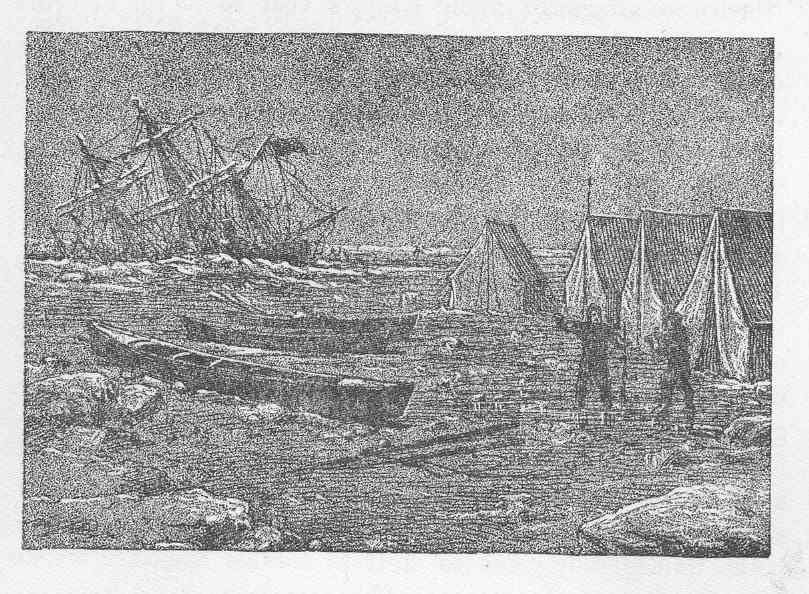
The Jeannette Frozen In
In 1879, US Navy officer George Washington De Long sailed the USS Jeannette from San Francisco, attempting to enter the Arctic Ocean through the Bering Strait in search of the mythical "Open Polar Sea" — a popular but entirely mistaken theory that the area around the North Pole was a warm, ice-free ocean.
The Jeannette became trapped in pack ice almost immediately upon entering the Arctic. De Long and his 32 crew members spent 21 months imprisoned in the ice. They tried to maintain routines — scientific observations, religious services, holiday celebrations — but the hull was slowly deforming under relentless ice pressure.
On June 12, 1881, the ice finally broke through the Jeannette's hull (as depicted in the illustration above). De Long ordered the ship abandoned, and all 33 men evacuated onto the ice with three small boats, tents, and supplies.
Dragging Boats 800 Kilometers Across the Ice
What followed was a three-month nightmare of survival. Thirty-three men had to drag heavy boats and supplies across a chaotic landscape of ice ridges, open water, and shifting floes toward the Siberian coast, hundreds of kilometers away.
Ice ridges several meters high had to be hacked through with picks. Open water channels required launching the boats, rowing across, then hauling them back onto the ice. Most maddening of all, the ice itself was drifting — sometimes after an entire day's brutal march, ocean currents had actually carried them farther from their destination.
By mid-September, they finally reached open water near the New Siberian Islands and took to their three boats. But a violent storm scattered the flotilla.
One boat carrying 8 men was never seen again. De Long's boat, carrying 14 men, reached the Lena River delta in Siberia — but this desolate frozen tundra was uninhabited. They wandered through ice and snow searching for settlements; ultimately only 2 men survived to reach a Yakut village. The third boat, carrying 11 men, was the luckiest — they reached an inhabited village and all survived.
The Jeannette's Legacy
The Jeannette survivors brought back invaluable Arctic data and hard-won lessons. And it was precisely the Jeannette's wreckage drifting from Siberia to Greenland that inspired Nansen to conceive his Fram drift plan — history coming full circle.
This reminds us that even expeditions ending in tragedy can light the way for those who follow. Franklin's disaster warned future explorers; the Jeannette's drift inspired Nansen. In the history of Arctic exploration, no departure was ever in vain.
V. Why Did They Survive the Arctic Ice?
Looking across these stories of Arctic survival, several key principles emerge:
1. Adapt to the Environment — Don't Fight It
Nansen systematically studied Inuit survival techniques — wearing fur clothing, eating raw meat for vitamins, traveling by dog sled. Ada drew on her Inuit heritage to quickly become self-sufficient on the ice.
The counter-example is Franklin's expedition: they brought fine silver cutlery and tinned food into the Arctic, attempting to live as English gentlemen on the ice. All 129 men died. Later investigations revealed that the tin cans were sealed with lead solder, causing chronic lead poisoning that hastened their deaths.
2. Mental Toughness Matters More Than Physical Strength
Loneliness during the polar night, endless waiting, fear of death — these psychological pressures killed more people than the cold ever did. Nansen maintained his team's mental health through strict schedules and meaningful scientific work. Georgi and Sorge held on through their dedication to their scientific mission. Ada was sustained by thoughts of her sick son waiting for her back home.
3. Always Prepare for the Worst Case
Nansen carried six years' worth of supplies for a three-year mission. He designed a hull that could withstand ice pressure. Every seemingly "excessive" preparation could ultimately be the thing that saves your life.
4. Know When to Turn Back
Nansen turned around 400 kilometers from the North Pole rather than risking everything. De Long ordered an orderly ship abandonment before the hull was breached. Coming back alive matters more than reaching the destination — this was the consensus of every explorer who survived.
Arctic Exploration Timeline
| Year | Event | Time Trapped | Outcome |
|---|---|---|---|
| 1845 | Franklin Expedition (Northwest Passage) | ~3 years | All 129 perished |
| 1879–1881 | USS Jeannette Expedition | 21 months | 11 of 33 survived |
| 1893–1896 | Nansen's Fram Drift | 35 months | All 13 survived |
| 1921–1923 | Wrangel Island Expedition | ~2 years | 1 of 5 survived (Ada) |
| 1930–1931 | Wegener's Greenland Expedition | 6+ months | 2 survived at Eismitte; Wegener perished |
Conclusion
The Arctic ice is never merciful — but it never turns away those who are truly prepared.
These survival stories span more than a century, from Nansen's meticulous planning to Ada's desperate resilience, from Wegener's team and their devotion to science to the Jeannette's harrowing escape. Each story speaks to the same truth: before nature, humans are both insignificant and powerful. Insignificant because we cannot conquer nature; powerful because we can learn to coexist with even the most extreme environments.
Today, as we read these stories from the warmth of our homes, the wind still howls across the Arctic ice. The footprints frozen in those ice fields will forever bear witness to humanity's most primal and noble instinct — to survive.
Image credits: Wikimedia Commons. All images are in the public domain.
📝 本文来自抖文 www.douwen.me ,转载请保留出处。
原文链接:https://douwen.me/archives/87/
💬 评论 (14)
Bookmarked this for later reading
Ada's story brought me to tears
Fun fact: Nansen also won the Nobel Peace Prize
Shackleton's story is incredible too, though that was Antarctic
Beautifully written, every story is stunning
The Fram — three years, zero casualties. Unbelievable
Nansen was an absolute genius — that plan was insane
Isn't Wegener the one who proposed continental drift?
This is what real exploration spirit looks like
Human survival instinct is truly incredible
Shared this with friends. Excellent writing
The key to polar survival really is mental toughness
The Greenland ice sheet section was brutal
Learned so much! Had no idea there were so many Arctic survival stories