This European King: The Mysterious Behind-the-Scenes Decision Maker Who Rewrote History
Charles V: The Mysterious Behind-the-Scenes Decision-Maker Who Rewrote History
In the vast river of European history, there was a king whose extraordinary influence and mysterious behind-the-scenes decisions profoundly altered the course of history. This was Charles V of the House of Habsburg. Charles V lived in the 16th century, an era of dramatic change, full of transformation and conflict.
Heir to a Vast Empire
Born in Ghent in 1500, Charles V was heir to the vast power accumulated by his family, the House of Habsburg, through intricate political marriages and territorial inheritance. His grandfather, Maximilian I, was Holy Roman Emperor, and through marriage to Mary of Burgundy, daughter of Charles the Bold, Duke of Burgundy, he brought the wealthy Duchy of Burgundy into the family holdings. Charles V's father, Philip the Handsome, was the heir to the Duchy of Burgundy, while his mother was Joanna of Castile, daughter of Queen Isabella I of Castile and King Ferdinand II of Aragon. In 1516, Charles V inherited his mother's thrones of Castile and Aragon, becoming King of Spain as Charles I. Subsequently, in 1519, he was elected Holy Roman Emperor as Charles V. Thus, he ruled a vast empire encompassing Spain, the Low Countries, parts of Italy, Austria, and numerous German principalities—territories so extensive that none in contemporary Europe could compare. The vast legacy Charles V inherited provided a solid foundation for his subsequent influence on the European and world stage.
Choices in the Tide of Religious Reformation
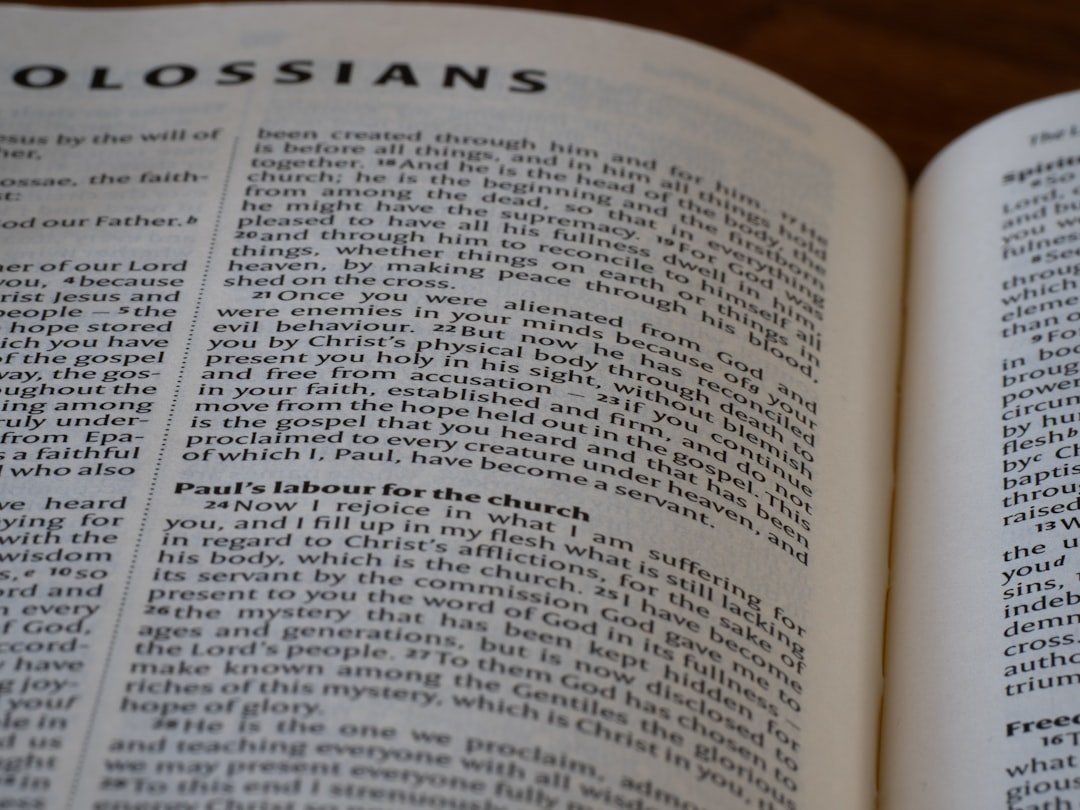
In the early 16th century, the Protestant Reformation initiated by Martin Luther swept across Europe like a raging tide. Luther's fierce criticism of the Catholic Church's corruption and doctrine sparked widespread social and religious upheaval. As a steadfast defender of Catholicism and ruler of a vast empire, Charles V faced an extraordinarily complex situation. On one hand, he needed to maintain the orthodox position of Catholicism to ensure religious harmony and stability within his empire; on the other hand, he had to confront the divisive tendencies the Reformation triggered within his realm. At the 1521 Diet of Worms, Charles V issued the Edict of Worms, declaring Martin Luther a heretic and forbidding the spread of his ideas throughout the empire. However, the Reformation advanced with tremendous momentum, and numerous German princes increasingly supported Protestantism, creating a situation of confrontation with Catholic forces. Charles V launched multiple wars against Protestant princes, most famously the Schmalkaldic Wars. Although he achieved some early military victories, prolonged religious conflict left the empire deeply fractured, consuming vast resources and energy. Charles V's decisions and actions amid the tide of religious reformation profoundly influenced the religious landscape and political development of Europe.
The Struggle for Supremacy with France

During Charles V's reign, the Kingdom of France was his formidable rival on the European continent. King Francis I of France was determined to break the Habsburg encirclement of France, and the two engaged in fierce competition for European hegemony. From 1521 to 1544, Charles V and Francis I fought four Italian Wars. These conflicts involved territorial disputes over Italy and the balance of power on the European continent. At the Battle of Pavia, Charles V's forces achieved a decisive victory, capturing Francis I himself. Francis I was forced to sign the Treaty of Madrid, ceding territory and paying enormous indemnities. However, France did not surrender; after his release, Francis I continued to oppose Charles V and even allied with Ottoman Sultan Suleiman the Magnificent, attempting to attack the Habsburg dynasty from both east and west. Through his struggle for supremacy with France, Charles V not only demonstrated his military and political talents but also profoundly changed the political map of Europe and the landscape of international relations.
Promoter of Overseas Expansion

Under Charles V's rule, Spain achieved tremendous success in overseas expansion. In 1519, with Charles V's support, Ferdinand Magellan led an expedition that began circumnavigating the globe. Although Magellan himself was killed in the Philippines, his fleet successfully completed the voyage around the world, confirming the scientific theory that the Earth is round, while also opening new trade routes and overseas colonies for Spain. Furthermore, Spanish colonial activities in the Americas reached their peak during Charles V's reign. Hernán Cortés conquered the Aztec Empire, and Francisco Pizarro conquered the Incan Empire, bringing enormous wealth and vast colonial territories to Spain. Charles V's support and promotion of overseas expansion made Spain one of the world's most powerful colonial empires of the time, extending its influence to the Americas, Asia, and Africa, profoundly affecting the development of world history.
Abdication and Historical Echo
In 1556, Charles V, exhausted from years of rule and various conflicts, made a decision that shocked Europe—he abdicated. He passed the throne of the Holy Roman Empire to his brother Ferdinand I and the Spanish crown to his son Philip II. Charles V chose to spend his remaining years in a monastery and died in 1558 at the Monastery of Yuste in Spain. Charles V's abdication marked the end of an era; although the vast empire he had ruled remained powerful after his death, it faced new challenges and transformations.
As a European monarch, Charles V's life was filled with legendary elements. His decisions and actions in numerous domains—religious reformation, European power struggles, and overseas expansion—exerted profound and lasting influence on European and world history. Although the vast empire under his rule faced numerous challenges and crises, it also maintained to a certain degree the balance of power and order in Europe. Charles V's history prompts us to contemplate how a ruler's decisions and actions in complex and changing historical circumstances shape the course of history, and how vast empires navigate survival and development when confronting internal contradictions and external challenges. His story has become a brilliant pearl in Europe's historical treasure trove, continuously attracting people to explore and interpret it.
📝 本文来自抖文 www.douwen.me ,转载请保留出处。
原文链接:https://douwen.me/archives/643/
💬 评论 (7)
This is a fascinating overview! Charles V truly was one of history's most consequential figures. His reign spanned from 1519-1556 and his empire stretched across Europe, the Americas, and beyond. The "behind-the-scenes" framing is intriguing—I'd love to see the article explore specific decisions that shaped history.|
Honestly, calling him "mysterious" feels a bit clickbaity. Charles V was pretty well-documented for his time. But I'm interested to learn more about what the author considers his most influential hidden decisions.|
The Habsburg dynasty's influence cannot be overstated! Charles V inherited territories from both his parents and became one of the most powerful rulers of his age. Can't wait to read the full article!|
Why is the title so vague? "Rewrote history"—doesn't every major historical figure rewrite history to some degree? I want concrete examples, not mysterious mystique.|
Perfect! I'm using this for my European History unit next semester. The 16th century is such a complex period with the Reformation happening simultaneously. My students will love learning about the man who tried to hold it all together.|
The term "behind-the-scenes decision-maker" intrigues me. Was Charles V truly pulling strings secretly, or is this more about his quiet diplomacy compared to flashier contemporaries? The contrast between public image and private influence would be worth exploring.|
I don't know much about Charles V, but this hook definitely got me! He sounds important. The Holy Roman Empire stuff always confuses me though—hope the article breaks that down in simple terms.|