Digital Shock: Edison Illuminated the World in Just 7 Months
Numerical Shock: Edison Illuminated the World in Just 7 Months
In the vast river of human civilization, scientific and technological progress shines like brilliant stars, illuminating the path forward. Thomas Alva Edison is undoubtedly the most radiant among them. Throughout his lifetime, he held 1,093 patents and brought countless groundbreaking inventions to the world, including the electric light, the phonograph, and the motion picture camera. Among these, the invention of the electric light holds epoch-making significance. What is little known is that Edison illuminated the world in merely 7 months. Behind this number lies an endless story and a shocking achievement.
Historical Context: A Yearning in Darkness

In the 19th century, the Industrial Revolution was unfolding vigorously, transforming human society beyond recognition. Factory machines thundered day and night, cities expanded continuously, and the pace of human life accelerated ever faster. However, in the field of lighting, progress remained at a relatively primitive stage. At that time, people primarily relied on kerosene lamps and gas lamps for illumination. Kerosene lamps produced weak and unstable light, easily generating soot that not only polluted the environment but also harmed human health. Although gas lamps offered improved brightness, they posed explosion hazards, raising serious safety concerns. With social development, people developed an intense longing for safer, brighter, and more stable lighting solutions.
Edison lived in such an era. As an inventor with keen innovation instincts and an exploratory spirit, he recognized society's needs. He was determined to tackle the lighting challenge and provide people with an entirely new form of illumination.
Difficult Exploration: The Preparation Before 7 Months
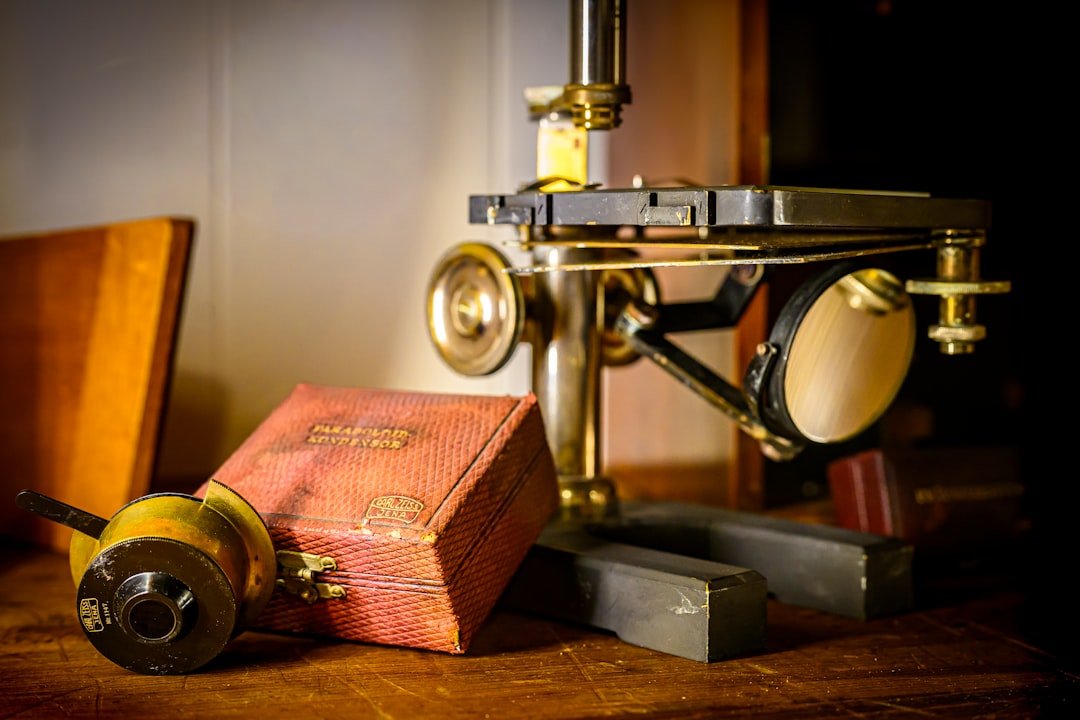
Before beginning his electric light research, Edison had already achieved considerable success in the field of invention. His work on the telegraph and the phonograph had accumulated rich experience and financial resources. However, inventing the electric light was no simple task. Many scientists and inventors had attempted it before, but none had achieved substantial breakthroughs.
Edison assembled his own research team and began lengthy and arduous exploration in his laboratory in Menlo Park, New Jersey. He understood that finding suitable filament material was the key. Thus, he and his team conducted experiments on thousands of materials—from metals to plant fibers, from common substances to rare ones—testing virtually every material imaginable at the time. Each experiment consumed vast amounts of time and effort, requiring the construction of experimental apparatus, observation of material properties, and careful data recording. The slightest error could lead to failure. Yet Edison and his team never gave up. They continuously summarized experience from failures and sought new directions.
The 7-Month Miracle: The Journey to Illuminating the World
In 1879, Edison entered the critical period of electric light invention. Beginning in October of that year and extending through April of the following year, in just 7 months, he accomplished a major breakthrough from theory to practice in electric light technology.
During these 7 months, Edison and his team worked almost around the clock in the laboratory. Their experiments with filament materials entered a white-hot phase. Finally, after countless attempts, Edison discovered that carbonized bamboo filament could produce continuous light for more than 1,200 hours inside a vacuum glass bulb. This discovery was undoubtedly a tremendous breakthrough, demonstrating that the practical application of the electric light had been vastly improved.
On October 21, 1879, Edison successfully illuminated the first practical incandescent light bulb in his laboratory. This day is regarded as the milestone moment of electric light invention. When that soft yet brilliant light filled the laboratory, everyone cheered with joy. Subsequently, Edison made a series of improvements to the light bulb's structure and performance, making it more stable and durable.
To ensure that electric lights could truly enter people's daily lives, Edison needed to solve problems of power generation and transmission. He designed a direct current power generation system and established the world's first direct current power plant on Pearl Street in New York. On September 4, 1882, the power plant officially began operations, providing electrical lighting service to parts of New York City and its users. From that moment forward, electric lights gradually replaced traditional lighting tools, illuminating countless homes.
Far-Reaching Impact: An Invention That Changed the World
The invention of the electric light produced extraordinarily profound effects on human society. From the perspective of daily life, it greatly improved the quality of people's lives. Nights were no longer dark and monotonous; people could read, work, and entertain themselves under bright light, making their lives far richer and more colorful. The hours available for activities within families extended, promoting communication and interaction among family members.
In the economic sphere, the invention of the electric light advanced the development of the electrical power industry. Power plant construction, power line installation, and electrical equipment production and related industries sprouted like mushrooms after rain, creating abundant employment opportunities and driving economic growth. Meanwhile, electric lights facilitated nighttime factory production, increased production efficiency, and promoted further industrial development.
From a social perspective, the popularization of electric lights transformed the appearance of cities. Night-time cities became resplendent with brilliant illumination; streets became safer, and crime rates decreased. Urban nightlife gradually flourished, with theaters, restaurants, and shops operating normally at night, promoting the prosperity of urban culture and commerce.
Spiritual Legacy: Edison's Lessons
The story of Edison illuminating the world in just 7 months is not merely a technological miracle, but a symbol of spirit. His innovative thinking, unwavering perseverance, and devoted pursuit of science are worthy of study by each and every one of us.
When facing thousands of failed experiments, Edison never retreated an inch. He said: "I have not failed. I've just found 10,000 ways that will not work." This optimistic and resolute attitude was crucial to his success. His team's collaborative spirit also sets an example for us. In the research process, everyone had clear roles and worked cooperatively to overcome difficulties together.
Today, we live in an era of rapid technological advancement, where innovation has become the core driving force of social progress. Edison's story inspires us to continuously explore and boldly attempt in our respective fields, unafraid of failure, striving toward our dreams and advancing social development.
Edison illuminated the world in 7 months. Behind this number lies countless sweat, wisdom, and perseverance. His invention changed the course of human history and made our lives vastly better. We should remember his contributions, inherit his spirit, and continue advancing along the path of technological innovation.
📝 本文来自抖文 www.douwen.me ,转载请保留出处。
原文链接:https://douwen.me/archives/642/
💬 评论 (8)
Wow, 1,093 patents?! That's absolutely incredible. Edison really was a genius of his era. I had no idea he accomplished so much in such a short timeframe!
Wait, the title says "7 months" but that seems wildly inaccurate. Edison's work with electric lighting took years, not months. Did the author mean something else, or is this just clickbait?
Pretty impressive stuff. Always been fascinated by how people back then could invent so much without computers.
This is a well-written piece that captures Edison's importance, though I wish it went deeper into his lesser-known inventions beyond the lightbulb. Also, a small note: we should acknowledge both his brilliance AND the fact that he sometimes took credit for others' work.
The "7 months" claim is definitely wrong. I just checked, and developing the practical incandescent bulb took much longer. This article needs a fact-check before anyone shares it further.
Edison absolutely revolutionized modern life. Can you imagine a world without electric lighting? This guy basically shaped civilization as we know it. Truly remarkable!
Great overview! But what challenges did Edison face during his experiments? I'm interested in learning about his failures too—I've heard he had thousands of unsuccessful attempts before success.
I have some original Edison phonograph records from the 1890s. Reading about his innovations makes me appreciate these artifacts even more. A true visionary who changed everything.