Iran's Revolution: Why It Couldn't Escape the Republican-Era Trap — How China Broke Through

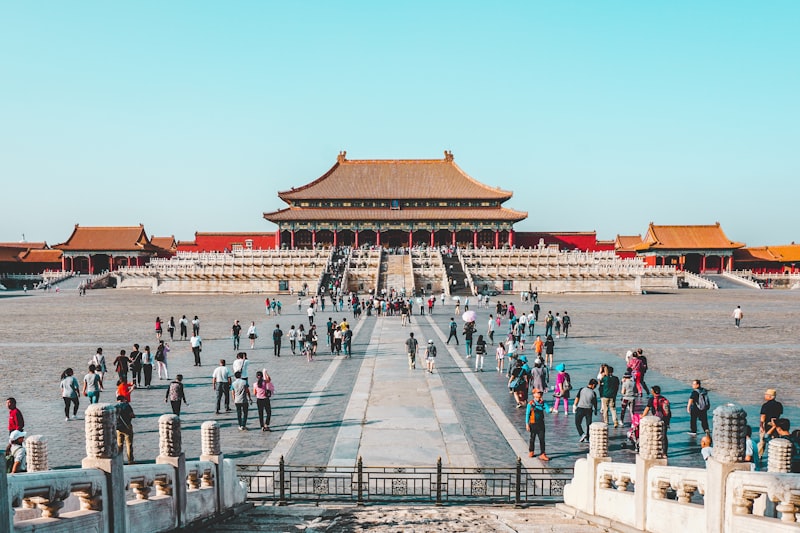
Both sought to overthrow corrupt puppet regimes, shake off foreign manipulation, and launch revolutions to save their nations and people. Yet after decades of struggle, Iran remained trapped in internal-external divisions and a developmental deadlock—a modern version of China's Republican-era predicament. China, meanwhile, shattered the shackles of the old order entirely, achieving national independence and people's liberation. Why did their paths diverge so drastically?
An Unfinished Revolution
In most people's understanding, Iran's 1979 Islamic Revolution was a complete redemption—overthrowing the pro-American Pahlavi dynasty and ending decades of Western control over Iran. But a careful examination of history reveals that Iran's revolution never escaped the fatal development cycle of China's Republican era: it appeared to change the regime, but in substance, nothing truly changed.
Iran's Republican-Era Trap
The Pahlavi dynasty was strikingly similar to the Beiyang Government and Chiang Kai-shek's regime during China's Republican era—surviving on American support and blindly copying Western development models.
On the surface, they vigorously pursued modernization: constructing skyscrapers, promoting Western education. Behind the scenes, they recklessly sold out national sovereignty: the enormous profits from the oil industry were divided between American capital and the Iranian royal family, while ordinary people lived in hunger and cold, with shocking wealth inequality.
The royal family relied on secret police to suppress dissidents, constantly intensifying social tensions. This was remarkably similar to the warlord infighting and bureaucratic capitalist exploitation of the Republican era.
After the Revolution: Deeper Divisions
Even after the revolution achieved surface-level success, Iran did not achieve true national liberation but instead fell into deeper social rifts.
After Khomeini's religious forces took over, they established a theocratic system under the banner of opposing the West and preserving tradition:
- On one hand, harshly suppressing leftist progressive forces and purging reformists
- On the other, continuously facing comprehensive American sanctions
- External blockades intertwined with internal factional struggles, with conservatives and reformists locked in endless tug-of-war
- Economic development stagnated, livelihood issues remained unresolved
Just as various factions fought for power during China's Republican era, the people remained caught in social turmoil, and the nation could not form a unified development force.
Root of the Trap: New Shell, Same Core
The fundamental reason Iran couldn't escape its developmental predicament was identical to the root cause of Republican China's failure:
They merely overthrew the external form of the old regime without uprooting the fundamental foundations of internal and external oppression. There was only factional power-grabbing, never a thorough social revolution.
The driving force behind Iran's revolution was religious factions, not the broadest base of ordinary people. Foreign influence was never fully purged, the old interest structures were never dismantled, and a unified national will and popular consensus were never established. Religious ideology replaced secular governance logic—seemingly breaking free from Western control, but actually falling into a self-enclosed developmental trap.
Like Republican-era China: either dependent on foreign powers or blindly xenophobic, never finding a development path suited to its own conditions.
How Did China Break Through?
Looking at China, its ability to completely escape the Republican-era predicament was not a matter of luck, but the result of a thorough social revolution that addressed the core contradictions of development at their roots.
Republican-era China faced circumstances remarkably similar to Iran's: surrounded by foreign powers, fragmented by warlords, dominated by bureaucratic capital, with people living in misery. The Self-Strengthening Movement, the Hundred Days' Reform, the Xinhai Revolution—all were merely patches on the old order, unable to address the fundamental problems of a semi-colonial, semi-feudal society.
It was only when the Chinese Communist Party emerged that this historical deadlock was finally broken.
The CPC consistently upheld independence and self-reliance, refusing to depend on any foreign power, firmly carrying the banner of anti-imperialism and anti-feudalism:
- Uniting the broadest masses of workers and peasants
- Establishing the people's own armed forces and political system
- Not only overthrowing Chiang Kai-shek's reactionary regime, but thoroughly abolishing the unequal treaties imposed by foreign powers
- Purging all domestic reactionary forces
- Implementing land reform, distributing land to peasants
- Nationalizing state resources, ensuring the country truly belonged to its people
Crucially, China never fell into the trap of factional infighting and ideological fragmentation. Through a unified leadership core and unified development vision, it consolidated the strength of the entire nation. Neither blindly copying Western models nor closing itself off, China forged a development path suited to its own conditions, completely ending the Republican-era pattern of national disunity and social instability.
The Fundamental Difference
Ultimately, the fundamental difference between Iran and China comes down to this:
Iran's revolution was a power grab among minority factions; China's revolution was a liberation movement of the entire people.
Iran could never shake off the interference of external forces and the constraints of internal interest groups—just like the various factions of the Republican era, all pursuing their own interests at the expense of national development and popular welfare. China, relying on the power of the people, completely shattered the shackles of internal and external oppression and built an independent, self-reliant national system.
Lessons from History
To this day, Iran continues to exhaust itself amid sanctions and internal divisions, while China long ago rose to stand tall among the nations of the world.
History has already proven: if a nation's development merely pursues superficial economic prosperity, copies external development models, avoids core contradictions like land issues and grassroots livelihoods, and lacks leadership rooted in the grassroots, it will inevitably fall into a Republican-era trap.
Only by truly serving the people, relying on the people, thoroughly uprooting all sources of oppression, awakening the agency of the grassroots masses, and persisting on a path of independent development, can a nation escape the trap and achieve its true rise.
📝 本文来自抖文 www.douwen.me ,转载请保留出处。
原文链接:https://douwen.me/archives/56/
💬 评论 (0)
还没有评论,来说两句吧 ✍️