The latest experiment of AI plus delivery workers, 2026 Meituan and Ele.me use AI to reshape the delivery industry in 5 major directions
Since the second half of 2025, Meituan, Ele.me, and JD Daojia have successively embedded AI into every stage of food delivery. The rider app has a built-in AI assistant that plans routes in real time, the merchant side has AI that automatically accepts and assigns orders, and the backend has AI dispatching millions of orders. This article looks at the 5 directions that actually went live in 2026 to tell you what "AI plus delivery riders" is really changing, whether ordinary riders' incomes have risen, and whether ordinary users' delivery experience has improved. This article avoids citing highly volatile specific percentages and absolute numbers, discussing only directional changes.
Direction One: Smart Route Planning

Riders used to plan their delivery routes based on experience and maps. During a peak period, a rider might be holding several orders at once, and which to deliver first depended entirely on memory and intuition, with detours common.
Meituan and Ele.me successively rolled out smart route assistants based on real-time traffic, order time limits, merchant prep speed, and user location. The rider app directly shows the recommended route, on average saving a non-trivial amount of time per order; the exact improvement varies greatly with each city's traffic conditions, so refer to the platforms' official public data.
Even smarter is dynamic adjustment. If a rider picks up a new order en route or a merchant is slow to prepare food, the system automatically recalculates the route, reacting almost in real time.
Actual benefit: in pilot cities, riders' average daily order volume and working hours are both trending toward "more orders, with hours flat or down," which is the most direct benefit of AI route planning.
Direction Two: AI Order Acceptance and Assignment on the Merchant Side

Merchant-side AI tools went live successively in the second half of 2025. They do three things.
First is order consolidation. If multiple orders all come from the same residential complex, the system automatically prompts the rider to pick them up all at once, reducing back-and-forth.
Second is prep-time estimation. Based on order complexity, kitchen load, and historical data, it predicts each order's prep time and tells the rider "ready for pickup in a few minutes" or "wait a little longer."
Third is anomaly alerts. If a merchant runs over the prep time for several orders in a row, the system automatically prompts riders to hold off on accepting new orders from that merchant, or notifies the dispatch center.
Pilot merchants broadly report improved on-time prep rates and fewer rider complaints about waiting for food; refer to the joint reviews disclosed by platforms and merchants for specific numbers. This is a win-win-win for merchants, riders, and users.
Direction Three: The Smart Dispatch Center

The dispatch center is the central nervous system of the platform's backend, and it used to rely on manual work plus simple algorithms. Since 2025, mainstream platforms have all upgraded to AI-driven dispatch systems.
The dispatch AI does three things: order matching, finding the optimal rider for a new order within seconds based on rider location, load, and ability; supply-demand regulation, predicting a surge in orders in an area and automatically issuing dispatch-fee incentives to attract riders there; and anomaly handling, automatically reassigning orders without affecting overall timeliness when a rider falls ill, a vehicle breaks down, or a rainstorm closes a road.
Both dispatch time and order-overrun rate metrics have improved fairly noticeably; the specific degree of improvement differs in each platform's public data, so refer to official disclosures.
Direction Four: The Rider AI Assistant
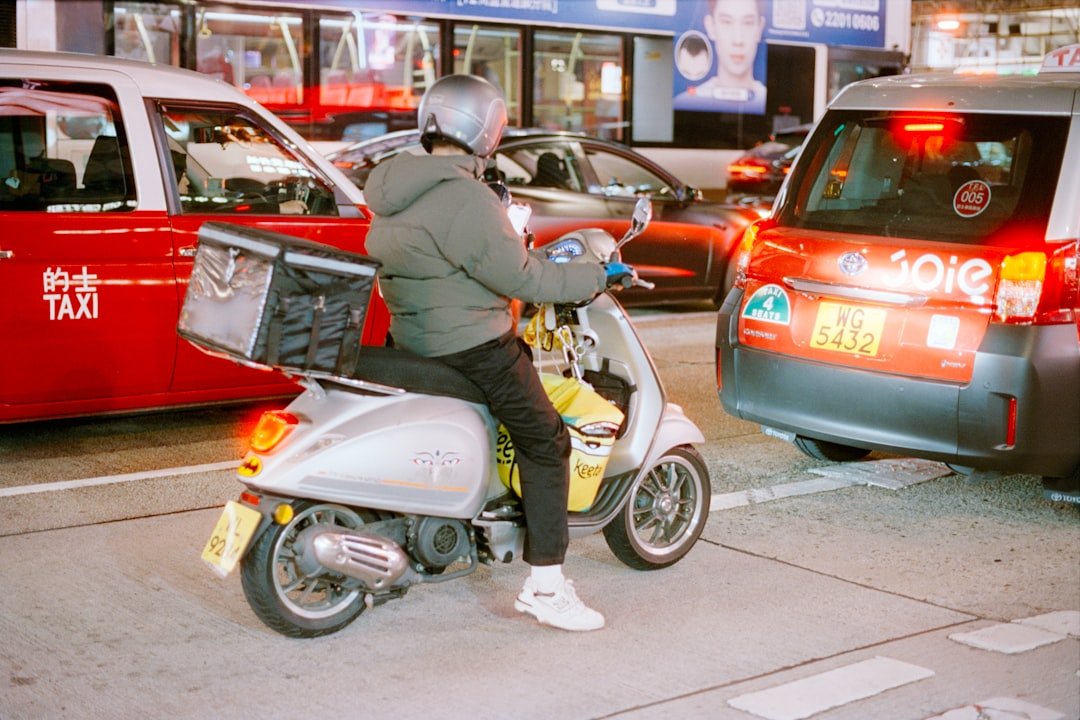
The rider's personal AI assistant is the most imaginative direction in 2026. Beyond route planning, it can do three things.
First is income-optimization advice. The AI analyzes a rider's historical order data and suggests which time slots and which areas yield the highest returns; top riders report room for higher monthly income.
Second is health monitoring. The rider app can connect to heart-rate watch data, and the system monitors the rider's status, automatically suggesting a rest after a stretch of continuous high-intensity delivery.
Third is a training assistant. After a new rider joins, an AI assistant gives them one-on-one guidance, answering questions about delivery rules, merchant distribution, and customer preferences, ramping up familiarity noticeably faster than the old approach of veterans mentoring newcomers.
Feedback from the rider community is broadly positive, with the majority of riders willing to keep using the AI assistant; refer to community surveys for the specific satisfaction rate.
Direction Five: AI Plus Driverless Delivery
This is the most distant direction but already in pilot. Meituan's driverless vehicles have been piloted in Beijing, Shenzhen, Guangzhou, and elsewhere for several years; refer to official disclosures for the current order count and share they cover.
A driverless vehicle's AI system includes three modules: autonomous navigation, cargo recognition, and anomaly handling. But in the short term, driverless vehicles won't replace riders at scale, due to three constraints: the cost of a whole vehicle is still high, and the depreciation cost isn't necessarily favorable compared to labor; route constraints mean they can only run in enclosed scenarios like parks, campuses, and university towns, while city streets remain challenging; and last-leg delivery, where the vehicle drops off at the building entrance, still needs a rider or a locker to cover the final 50 meters.
For many years to come, driverless vehicles are expected to collaborate with riders: the vehicles run the long-distance main roads, and riders handle the last kilometer.
Does AI Raise or Lower Riders' Incomes?
Riders in different tiers feel it differently.
First, top riders' incomes rise. AI route planning plus AI income-optimization advice gives top riders fairly steady room for higher monthly income; the exact extent varies greatly with city and order density.
Second, median riders' incomes hold steady. Average daily order volume rises but the per-order price drops slightly, so overall income fluctuates little.
Third, new riders improve markedly. The AI training assistant gets newcomers up to speed quickly, and their first-month income is noticeably higher than the same period under the old veteran-mentoring approach.
Overall, AI widens income divergence among riders, with quick adapters earning more and those who can't keep up still struggling.
How the Delivery Rider's Profession Is Changing in the AI Era
Three obvious changes.
First, working hours trend shorter. Riders' average daily working hours used to be generally long; after introducing AI, output per unit time rises, leaving room to compress total hours while keeping order volume the same.
Second, accident rates fall. AI route optimization and health monitoring reduce fatigued driving, and delivery accident rates in major cities have declined in recent years; refer to public statistics from traffic-management departments for specific data.
Third, more transition options. Riders can choose to become AI dispatchers, trainers, operations specialists, or merchant BD; demand for these roles keeps growing. Being a rider is no longer a "no-growth" profession; AI has opened an upward path for riders.
What Changes Have Ordinary Users Felt?
Three changes.
First, delivery times have shortened. The average delivery time in major cities has dropped noticeably over the past two years; refer to platforms' annual public reports for specific minutes.
Second, on-time rates have improved. Meituan's and Ele.me's on-time-rate data keep trending up.
Third, anomalies are handled fast. When an order has a problem, such as a merchant missing an item or a rider delivering to the wrong address, AI customer service's response time has shortened significantly, with average handling time noticeably shorter than before. Users' overall satisfaction with the delivery experience is improving.
The Next Step for AI in Food Delivery in 2026
Three directions yet to break through.
First is pre-order AI. Based on a user's order history and current life rhythm, it prompts the user in advance that "it's time to order lunch"; this is already in testing.
Second is health AI. Based on analyzing a user's orders for dietary structure, it proactively recommends healthy options; this involves privacy controversy.
Third is merchant selection AI. Based on the local area's user preferences, it helps merchants automatically adjust their menus; this is in small-scale pilot.
Overall, AI plus food delivery is one of the directions with the most potential for scaled deployment in AI's adoption to China's local scenarios, affecting riders, merchants, and users alike, and it's a structural upgrade for the job market rather than simple replacement.
Frequently Asked Questions (FAQ)
Will AI delivery systems put riders out of work?
Not on a large scale in the short term, with some replacement in the long term. A rider's core value is the last kilometer plus emotional labor, two things AI can't replace in the short term. But simple order consolidation, order inquiries, and customer-service tasks will be replaced by AI, and these account for a sizable share of a rider's working hours. Once driverless-vehicle technology matures, enclosed scenarios like university towns and office park complexes will replace some riders, but city main roads still need riders. The overall forecast is that the total number of riders will contract somewhat over the medium to long term, but won't collapse drastically.
Is AI dispatch fair, or does it favor specific riders?
Platforms officially say the algorithm is fair to all riders, but the rider community reports a hidden bias. Three types of riders actually earn more: high-acceptance-rate riders, high-on-time-rate riders, and new-area riders. This bias has efficiency-based rationale but is unfair to veteran riders, sparking community controversy. Regulators in some cities have already required platforms to disclose algorithm logic, pushing for algorithmic transparency.
What data does the delivery AI assistant collect?
It collects a lot. Location data, order history, delivery tracks, heart-rate watch data (if connected), all click records inside the rider app, and conversation records with customers are all collected. Besides being used to optimize the AI algorithm, this data is also used for rider profiling and tiering. Since 2026, the Personal Information Protection Law has stricter requirements on platforms collecting rider data, and platforms must clearly state the data's purpose and retention period.
Does AI make food delivery cheaper?
Not cheaper in the short term, possibly lower in the long term. In the short term, the average delivery price still rises with overall prices. But AI dispatch efficiency gains lower the platform's operating costs, and that saved money currently goes mainly to platforms and shareholders, not fully passed on to consumers. In the long term, after driverless delivery rolls out at scale, delivery fees are expected to drop further, possibly lowering the final price.
Does AI make riders' work harder or easier?
Easier on the data, more complex in real feeling. By the data, working hours shorten, accident rates fall, and income percentiles rise, all pointing to better. But riders' real feeling is more complex: AI monitoring leaves almost zero room to "slack off"; the AI algorithm keeps optimizing, so yesterday's best route is outdated today and you have to keep learning; and AI makes order volume denser, so although total hours drop, the intensity per unit time is higher. Overall, riders who adapt to the AI rhythm feel it's easier, while those who can't keep up feel more pressure.
Inspired by: Ruan Yifeng's "Tech Lover's Weekly" Issue 386 https://www.ruanyifeng.com/blog/2026/02/weekly-issue-386.html
📝 本文来自抖文 www.douwen.me ,转载请保留出处。
原文链接:https://douwen.me/archives/1112/
💬 评论 (9)
Solid breakdown, very useful.
Practical tips not fluff.
Loved the FAQ section.
Stats really back it up.
Clear and to the point.
Step-by-step is gold.
Best summary I've read on this.
Easy to follow.
Great resource.