Roosevelt, the "Rich - Man's Benefactor": The Man Who Reaped the Wealthy and Pivoted America's Destiny
Transfer 95 yuan out of every 100 yuan to me. You know my methods. Don't spend the remaining 5 yuan randomly. Transfer 4.8 yuan to me in the evening, and don't touch the remaining 0.2 yuan either. I still need it the day after tomorrow.
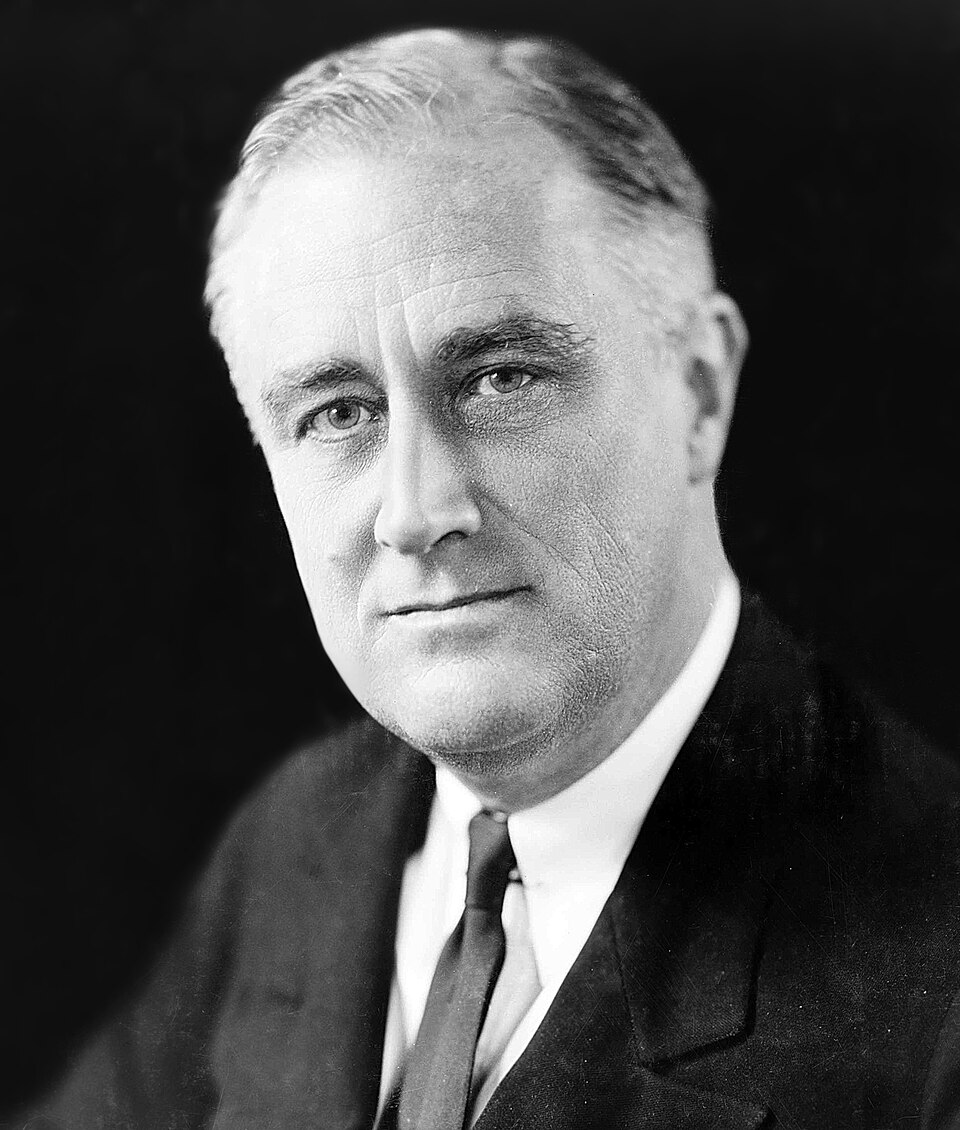
Standing in front of you now is the top - tier rich second - generation capitalist in the United States, the strictest father, the terminator of the Great Depression, the creator of the New Deal, the patron saint of hundreds of millions of American civilians, and the only four - term top - level leader of the United States - Franklin D. Roosevelt.
I. A Living Hell: The Savior in a Wheelchair
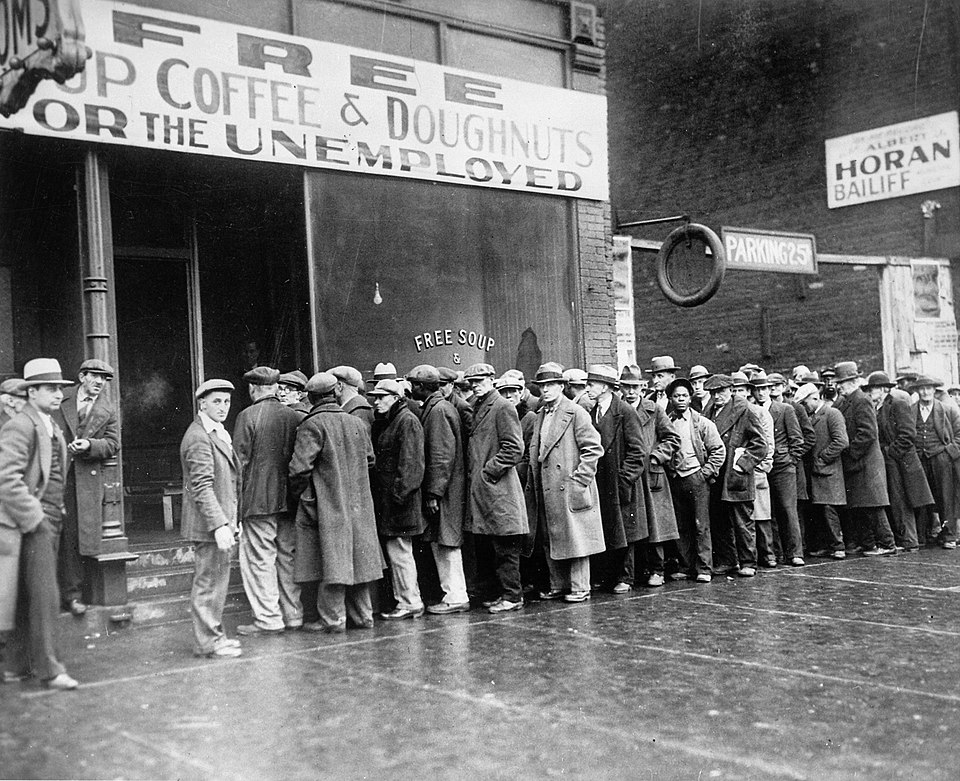
When Roosevelt took the oath of office in a wheelchair on March 4, 1933, the United States was no longer a country but a giant living hell. The Great Depression seemed to have riddled the entire United States like a sieve. More than 10,000 banks went bankrupt, a quarter of the people were unemployed, factories closed, farms went bankrupt, there were homeless people everywhere on the streets, and many people even starved to death on the streets.
And what were the rich in the United States doing during this crisis? They were frantically transferring their assets. They were vying with each other to exchange their money for gold and then using various means to transport the gold to Switzerland, the United Kingdom, and France. In short, the message was clear - this broken - down country is going to the dogs, and I'm getting out of here.
Roosevelt in the wheelchair looked at all this and immediately understood one thing: the biggest problem in the United States at that time was not the lack of money, but that the money was in the hands of a few people, and these people were unwilling to take it out to save the country. So what to do? It was simple - if you were unwilling to take it out, then I would take it for you.
II. Locking up Capital: Bank Holidays and Gold Confiscation
The first thing Roosevelt did after taking office was a major move - he announced a four - day holiday for all banks across the country. It was euphemistically called giving the banks a breather, but in fact, it was to figure out exactly how many banks could still survive. Then he introduced the Emergency Banking Act, stipulating that only those banks with healthy assets could reopen, and those that were in extremely bad shape, sorry, were directly closed.
This move left many rich people dumbfounded. You know, they were relying on these banks to transfer their assets. Now that the banks were closed just like that, their money was suddenly locked up.
But this was just the appetizer. The real main course was yet to come.
Then, on April 5, Roosevelt signed Executive Order 6102, historically known as the "Gold Confiscation Order." The content was simple: all American citizens and enterprises must turn in all the gold, gold coins, gold bars, and gold certificates in their hands to the Federal Reserve Bank before May 1 and exchange them for an equivalent amount of paper money. Violators would be severely punished with a fine of $10,000 and an additional 10 - year imprisonment. You know, in those days, $10,000 could buy two villas, and this punishment was extremely harsh.
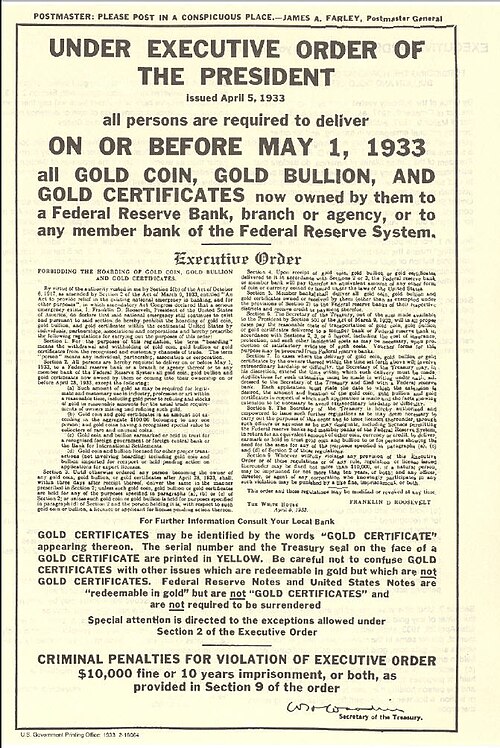
As soon as the news came out, the rich people across the United States were in an uproar - was this still the United States where capitalists could live a comfortable and carefree life? What did "nationalization" mean? This was blatant robbery!
But they soon found that making a fuss was useless. Because Roosevelt had the army, the FBI, and, more importantly, the support of tens of millions of hungry American people. If you dared to oppose him, you would be labeled as "unpatriotic" and "profiteering from the national disaster" in no time. So most of the rich people finally obediently handed over their gold.
But did you think it was over? No, this was just the beginning.
III. Pulling the Rug Out: Dollar Depreciation and Wealth Shrinkage
In January 1934, Roosevelt signed the Gold Reserve Act, announcing that the dollar depreciated by 40.94% against gold. What did this mean? It meant that if you could exchange one ounce of gold for $20.67 yesterday, you could exchange it for $35 today. It might seem like an appreciation? No, this was depreciation because the purchasing power of the dollar itself was declining.
This move was extremely ruthless. It was equivalent to saying that when you exchanged your gold for dollars last year, those dollars were still valuable, but now, the purchasing power of those dollars had directly shrunk by 40%. It was as if Roosevelt had cut the wealth of the rich by nearly half with just one piece of paper.
But Roosevelt's blow to the rich was not over yet. What he did next made the American capitalists truly understand what despair was.
IV. A 94% Tax Rate: Making the Rich Doubt Their Lives
In 1935, Roosevelt pushed Congress to pass the Revenue Act of 1935. This act raised the top - bracket individual income tax rate from 63% to 79% in one go. Note, this was not the final version. By 1941, in order to raise funds for World War II, the tax rate jumped to 81%; in 1942, it was raised to 88%; and in 1944, it was directly raised to 94%.
You heard it right, 94%. It meant that if you earned $1 million a year, $940,000 of it had to be handed over, and you could only keep $60,000 for yourself.
What's even more ruthless is that this tax rate was not for everyone, but specifically for the super - rich in the United States. Roosevelt designed a very complex progressive tax system - ordinary people basically didn't have to pay taxes, the middle - class paid a little, the rich paid more, and the extremely rich paid until they doubted their lives. For example, for those with an annual income of less than $50,000, the tax rate might be only about 20%, but for those with an annual income of more than $200,000? Sorry, a 94% tax rate was waiting for them. And in those days, those with an annual income of more than $200,000 were basically the top - tier rich in the United States.
How crazy was this tax rate? Let me give you an example: Suppose you were a big entrepreneur, and your company earned $10 million a year. According to the tax law at that time, after deducting all kinds of reasonable business costs and deductions, you might only get a few hundred thousand dollars in the end.
Moreover, Roosevelt also blocked all kinds of tax - avoidance channels for the rich. In the past, the rich could avoid taxes by establishing trust funds and charitable foundations. In response, Roosevelt directly introduced laws stipulating that these operations also had to pay taxes, and the tax rate was no lower than the individual income tax rate.
V. Nourishing the People with the Rich: Making Money Flow
So why did Roosevelt do this? Many people said he did it to raise war funds. This statement was right, but not entirely. Because as early as 1935, when the United States had not yet entered the war, Roosevelt had already started to be tough on the rich.
The real reason was actually very simple: Roosevelt believed that the root cause of the Great Depression was the extremely unequal distribution of wealth. Before the stock market crash in 1929, the richest 1% of Americans controlled 40% of the country's wealth. And what did these rich people do with the money? They speculated in stocks, engaged in financial speculation, bought luxury houses and yachts. In short, they did not invest in the real economy and did not give workers raises. As a result, the production capacity in the United States was seriously excessive. Ordinary people had no money in their hands and could not afford to buy things. The goods produced by factories could not be sold. In the end, the economy collapsed, the entire United States was in chaos, and it completely fell into paralysis.
After taking office, Roosevelt realized one thing: to get the American economy running again, money had to flow. And to make money flow, more people had to have money in their hands. How to make more people have money? The most direct way was to take money from the rich and distribute it to the poor.
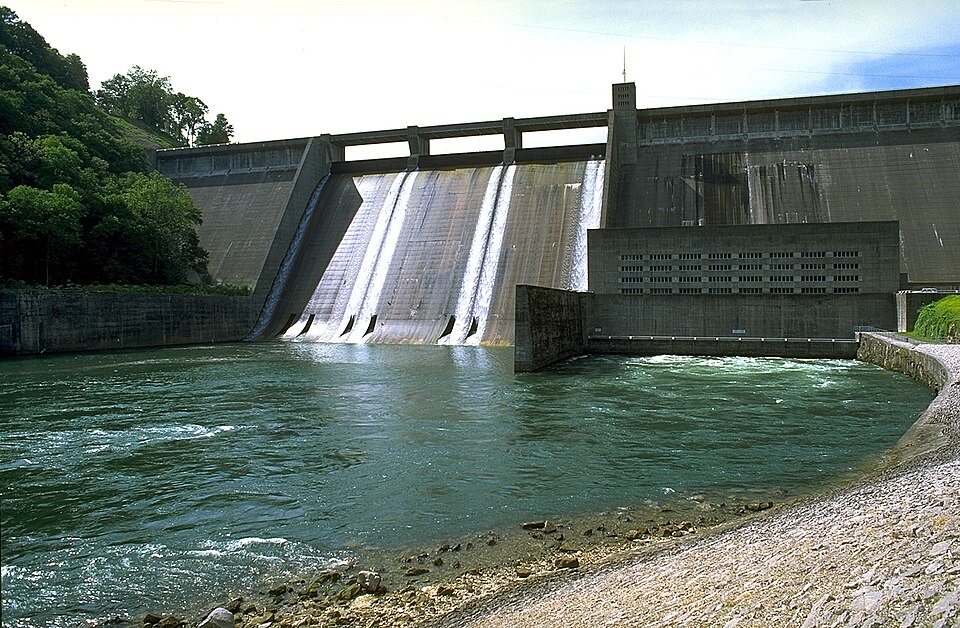
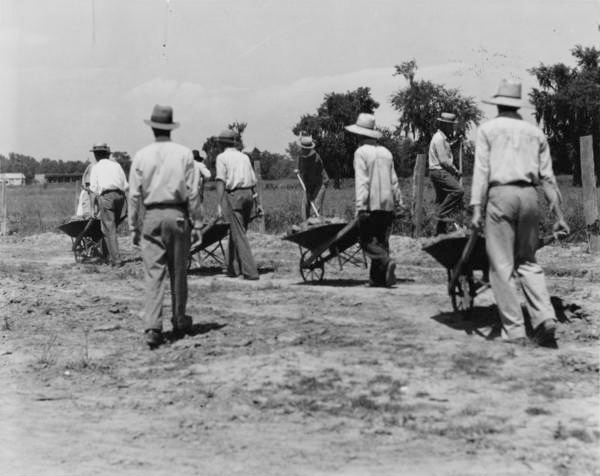
Of course, Roosevelt would not say it so bluntly. His official statement was "for the overall interests of the United States and for social fairness and justice." Through high progressive taxes, Roosevelt used the money collected from the rich to carry out various public works - building roads, bridges, dams, schools, and hospitals. These projects employed millions of unemployed workers and gave them income. With income, they could consume, and if they could consume, factories could sell their products. If factories could sell their products, they could continue production and hire more people, and the economy slowly came back to life.
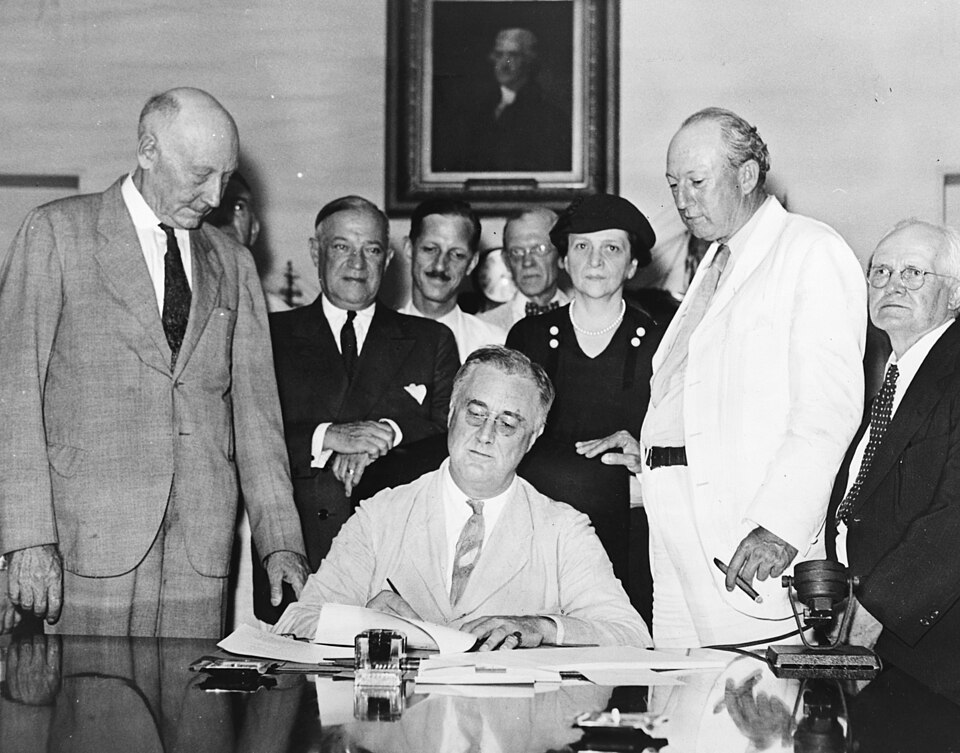
Moreover, Roosevelt also did another thing: he set a minimum wage standard and established a social security system. Where did the money for these policies come from? Still from the rich. So you see, Roosevelt imposed heavy taxes on the rich not because he was jealous of the rich, but because this was the only way to save the United States at that time.
VI. Traitor to the Class: Withstanding the Backlash and Being Re - elected Four Times
But the rich in the United States didn't think so. They thought Roosevelt was a traitor to the class and a madman. You know, Roosevelt himself came from a top - tier financial family.按理说, he should have stood on the side of other rich people, but Roosevelt偏偏 chose to betray his class and tightly imposed sanctions on capitalists, which was unacceptable to many rich people.
So they started to fabricate all kinds of negative rumors about Roosevelt behind his back, saying that he was a dictator and a wolf in sheep's clothing, and they even wanted to hire assassins to take his life. But these attacks had no effect on Roosevelt at all because Roosevelt had the support of the working - class people.
In the 1936 presidential election, Roosevelt was re - elected with an overwhelming advantage, winning 46 out of 48 states at one go and getting a vote - share of more than 60%. This achievement was rare in American history. Why did the common people support Roosevelt so much? Because they truly felt the improvement in their lives - they had jobs, food to eat, and dignity. And all of this was what Roosevelt "robbed" from the rich and distributed to them.
Of course, the rich didn't give up completely. But Roosevelt was no pushover either. He directly used executive orders to restrict the freedom of the media's speech. In 1934, the US Congress passed the Communications Act, which regulated radio, television, cable, wireless, and satellite communications in the states and those related to foreign countries. Some people might say, wasn't this speech control? Yes, it was. But Roosevelt's logic was simple - this was a time of national survival, not a time for you to talk nonsense. Either shut up or get out.
Under Roosevelt's strong suppression, the rich's counter - attacks basically didn't cause much of a stir. In 1940, Roosevelt even broke the tradition that US presidents should not serve more than two terms and was elected President of the United States for the third time. Then, in 1944, he was elected for the fourth time and held on until 1945.
VII. Far - reaching Legacy: The True Cornerstone of the American Dream
In these 12 years, he completely changed the wealth distribution pattern in the United States. When Roosevelt died in 1945, the proportion of wealth held by the richest 1% of Americans had dropped from 40% in 1929 to less than 30%, and the proportion of the middle - class had increased significantly. The United States had become an olive - shaped society instead of a pyramid - shaped one.
After Roosevelt's death, his successor, Truman, continued to maintain high taxes on the rich. Until 1964, the highest tax rate in the United States remained above 90%. What did this mean? It meant that for 30 years, American capitalists were oppressed by Roosevelt's tax policies and could hardly breathe.
But it was also during these 30 years that the United States迎来了历史上最辉煌的时期 - the economy grew rapidly, the middle - class expanded significantly, and the gap between the rich and the poor remained at a relatively reasonable level. American workers could support a family with one job and could also buy houses and cars. The era known as the "American Dream" was precisely built on Roosevelt's heavy taxes on the rich.
Later, in the Reagan era, the highest tax rate had dropped to 28%, but the system left by Roosevelt could never be restored - the social security system, unemployment insurance, the minimum wage standard, and the legal status of trade unions were all retained.
More importantly, Roosevelt changed Americans' perception of the government. Before Roosevelt, Americans believed in a small government and thought that the less the government intervened, the better. After Roosevelt, Americans began to accept that the government should play the role of a regulator in the economy.
Although the United States has now moved towards neoliberalism and the gap between the rich and the poor has started to widen again, every time there is an economic crisis, people still think of Roosevelt. Isn't this his greatest achievement?
In a country where capital is king, there was a president who dared to stand up and say: No, the people are more important than capital. Although the rich people he "robbed" still scold him today, the workers he saved still miss him to this day.
📝 本文来自抖文 www.douwen.me ,转载请保留出处。
原文链接:https://douwen.me/archives/99/
💬 评论 (0)
还没有评论,来说两句吧 ✍️