Why China Can't Even Reach the Asian Cup Quarterfinals
Why China Can't Even Reach the Asian Cup Quarterfinals
At the January 2024 Asian Cup, the China men's national team went 0-1-2 in the group stage with no wins and was unable to advance directly. They lost 0-2 to Saudi Arabia in the quarterfinals and were eliminated. It was China's best Asian Cup result in nearly 10 years. What stunned Chinese fans was not the quarterfinal exit but the fact that such a result is now considered the best. Time has proved China's true Asian Cup level is now second or even third tier in Asia.
The Asian Cup is the AFC's top national team competition, held every four years. China has played in 13 Asian Cups, with the runner-up finishes of 1984 and 2004 being the best results. In the five tournaments since 2007, China has not reached the semifinal even once. From the 1984 runner-up to the 2024 quarterfinal, China's standing in Asian football has steadily fallen. If the World Cup is a faraway dream, the Asian Cup should be within reach. Yet even the Asian Cup ends in quarterfinal exit now.
The Asian Cup Format and Status

The Asian Cup is organized by the AFC; 18 editions have been held since the inaugural 1956 tournament. Participants are 16 to 24 teams selected through qualifying among the 48 AFC member nations. The champion represents Asia at intercontinental and FIFA Confederations Cup events. It is Asia's highest football honor.
The Asian Cup level has clearly risen over the past 40 years. In the 1980s the core powers were China, South Korea, Iran, and Iraq. In the 2020s the core powers are Japan, South Korea, Iran, Saudi Arabia, Qatar, Australia, UAE, Iraq, and Uzbekistan. China has gone from top-tier power to mid-table or lower.
The 1984 Runner-Up Moment
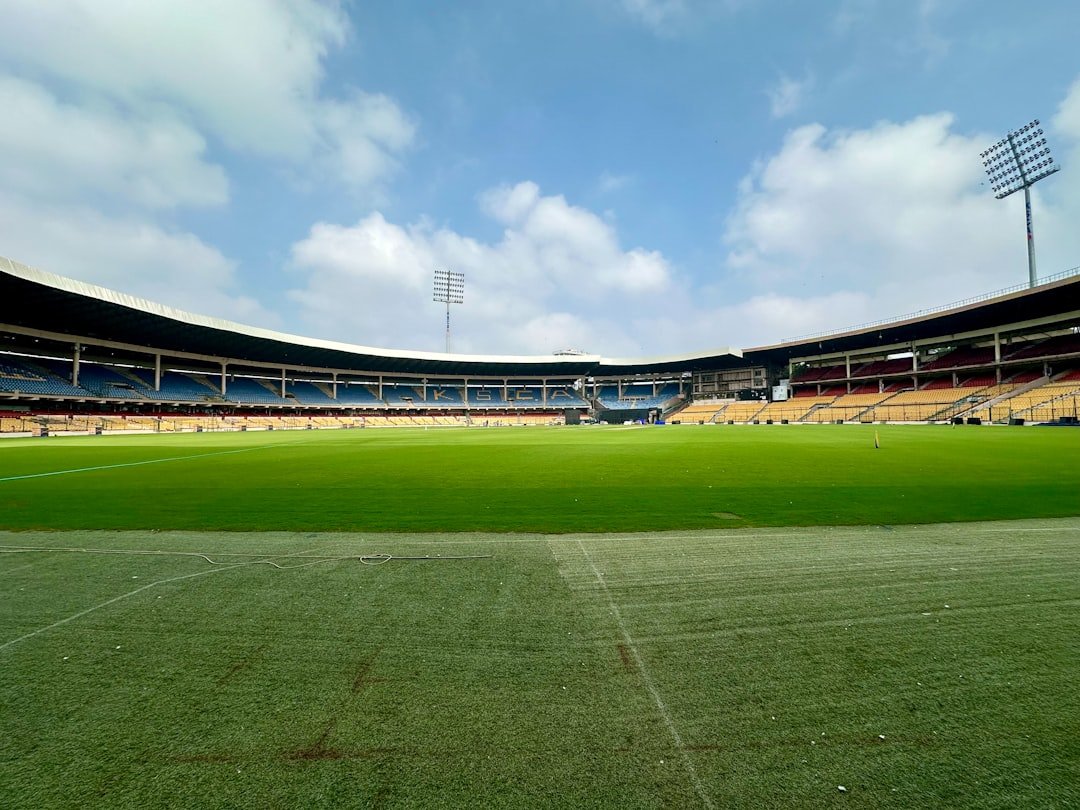
At the 1984 Singapore Asian Cup, China reached the final for the first time. They beat Japan 2-0 in the semifinal. In the final against Saudi Arabia they led 1-0 before losing 2-1. It was China's first official Asian Cup runner-up finish.
The core players included Gu Guangming, Jia Xiuquan, Zuo Shusheng, and Chi Shangbin. The group was among the highest-quality in Asia at the time, refined in technique, physically excellent, and mentally stable. China was one of Asia's real powers then. But that level could not be sustained, and the slide began in the late 1980s.
The Waterloo of 1988
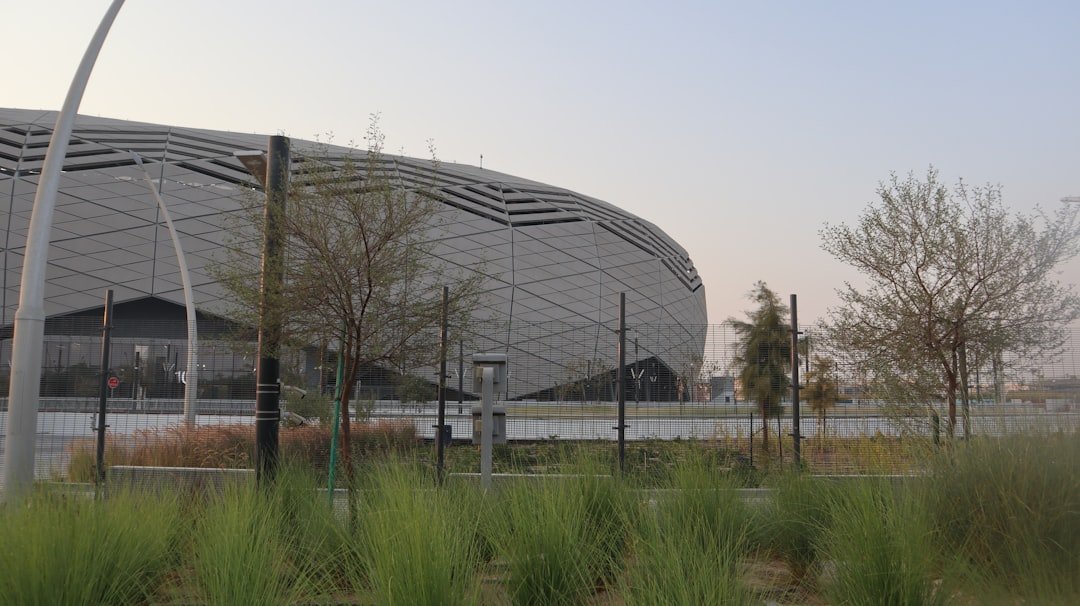
At the 1988 UAE Asian Cup, China exited at the group stage. It was the first group-stage Asian Cup exit for China in nearly 30 years. From 1984 runner-up to 1988 group exit took only four years. The rapid slide alerted the CFA to the problem.
The 1988 issues included aging players, lack of talent in the new generation, and outdated training methods. The CFA pushed youth reforms with limited effect. The 1992 Asian Cup brought a bronze, the 1996 Asian Cup a semifinal, and the 1998 Asian Games a gold. The brief revival made people think China was back on track.
The 2004 Home Final

In 2004 China hosted the Asian Cup. They made it all the way to the final, where they faced Japan at home. The final was dramatic, with Japan scoring in the 22nd minute and Li Tie equalizing in the second half. In extra time Japan scored again in the 65th minute and finished 3-1.
The 2004 home runner-up is China's most glorious Asian Cup moment in nearly 20 years. The core players included Li Tie, Sun Jihai, Zheng Zhi, Shao Jiayi, Zhao Junzhe, and Zhang Yuning, a golden generation. But after that generation retired, China has been stuck in continuous low form to this day.
The Slide That Began in 2007
At the 2007 Asian Cup, China exited at the group stage, the second group-stage exit. From the 2004 runner-up to the 2007 group exit took only three years. The volatility reflects China's instability.
From 2007 to 2024 across five Asian Cups, China's best result was the 2015 quarterfinal. But even then they lost 0-2 to Australia, a routine result. They reached the 2019 quarterfinals and the 2024 quarterfinals. Over 10 years China's ceiling is the quarterfinal, and it cannot be broken.
The Strength Hierarchy at the Asian Cup
At the 2024 Asian Cup the top sides by FIFA ranking were Japan 18, Iran 20, Korea 22, Australia 26, Saudi Arabia 56, Iraq 55, Uzbekistan 68, and Qatar 63. China at 90 was among the lowest-ranked teams in the tournament.
The ranking gap makes Chinese losses at the Asian Cup the norm. China even needs luck to take points from weaker teams like Tajikistan, the Philippines, and India. The status leaves China in an awkward place in Asian football. Stronger than true minnows but well below Asia's top tier.
The Gap with Japan and South Korea
Japan and South Korea are China's direct competitors. Before the 1990s China was on par with Japan and Korea. At the 1998 World Cup Japan participated for the first time, Korea for the third time, and China's bid failed. From then Japan and Korea pulled away from China.
At the 2024 Asian Cup, about 25 Japanese players and 15 Korean players played in Europe's top five leagues. China had just one player abroad, Li Lei in a Swiss lower division. The overseas gap shows up directly in Asian Cup results. Japan and Korea reach the semifinals steadily; China stops at the quarterfinals. The gap exists and has widened 30 years on.
The Rise of Saudi Arabia and Qatar
Saudi Arabia and Qatar are the new Asian Cup powers. Saudi side Al-Hilal won the 2023 Asian Champions League, and the 2025 Saudi Pro League attracts many European players including Ronaldo, Neymar, Mane, and Benzema. The petrodollar policy has lifted Saudi league and national team levels substantially.
Qatar won back-to-back Asian Cup titles in 2019 and 2023, the first team to do so in Asian Cup history. Qatar's success comes from a late-2010s naturalization policy. Qatar naturalized many African and South American players to strengthen the national team. The policy moved Qatar from underdog to Asian Cup champion.
China's Failed Naturalization
China also tried naturalization from 2019 to 2021. Elkeson, Aloisio, Alan, Fernando, and Tyias Browning were brought in. But all eventually left China, and the national team did not improve significantly.
One reason naturalization failed is FIFA tightening rules. In 2020 FIFA required naturalized players to reside in the country continuously for five years before playing internationally. The rule prevented China from naturalizing quickly. Qatar started its naturalization policy 10 years before China, escaping the tightening, which is why it worked far better.
The Youth Development Gap Behind Asian Cup Results
Asian Cup results reflect countries' youth development. Japan has 800,000 registered youth players, Korea 200,000, Saudi Arabia 150,000, Qatar 80,000, and China just 50,000. The base gap means China has been short of top talent every generation.
The gap is not just numbers but quality. Japanese and Korean youth players begin systematic training at age 7, each child coached by professionals. Chinese youth players mostly train amateurly, with quality far below Japan and Korea. The long-term gap keeps China consistently lower at the Asian Cup.
The Possibilities for 2027
The 2027 Saudi Asian Cup will be China's new test. If China still sits at the quarterfinal level in 2027, the decline of Chinese football will be more obvious. The 2031 Australia Asian Cup is another chance, but predicting four years out is hard.
The more realistic goals are the 2030 and 2034 World Cup qualifying. The Asia slot expanding to 8.5 theoretically gives China a new opening. But the 2024-25 qualifying form has China sitting fifth in its group, close to elimination. With that level, both the World Cup and the Asian Cup semifinals are out of reach.
Why China Can't Even Be Asia's Junior Brother
The real reason China cannot even guarantee a quarterfinal Asian Cup spot is the comprehensive collapse of the football ecosystem. From youth to leagues to the federation to culture, every link has serious problems. They are intertwined and form systemic difficulty.
Other countries' football ecosystems are more complete. Japan has the J League and strong youth development. Korea has the K League and military-service incentives. Saudi Arabia has petrodollars and European stars. Qatar has naturalization. Every Asian power has its ecosystem advantage. China lacks all of these, so even an Asian Cup quarterfinal is hard to guarantee. That is the real reality of failing to be even Asia's junior. The change required is not a single reform but a rebuild of the whole ecosystem. The work is so vast that even doing it by China's standards may take more than a generation.
📝 本文来自抖文 www.douwen.me ,转载请保留出处。
原文链接:https://douwen.me/archives/985/
💬 评论 (0)
还没有评论,来说两句吧 ✍️