The Ajax Youth Academy, How Dutch Football's Greatest School Shaped World Football
In the spring of 1971, Ajax Amsterdam won the European Cup for the first time, beating Panathinaikos in the final at Wembley. The team was led by Johan Cruyff, then just twenty-four years old, and coached by Stefan Kovacs, who had inherited the tactical system built by Rinus Michels. The football they played was unlike anything Europe had seen: fluid, positional, relentless. Every outfield player attacked, every outfield player defended, and the positions on the team sheet bore only a loose relationship to where the players actually appeared on the pitch. The press called it Total Football. What the press did not fully appreciate at the time was that this style of play was not merely the product of a few brilliant individuals. It was the output of a youth development system that Ajax had been quietly constructing for more than a decade, a system that would go on to become the most influential football academy in the history of the sport.
The Ajax youth academy, based at the De Toekomst training complex on the outskirts of Amsterdam, has produced an extraordinary number of world-class footballers over more than six decades. Its influence extends far beyond the players it has graduated. The principles that Ajax embedded in its academy, tactical uniformity from the youngest age groups to the first team, an emphasis on technical skill over physical attributes, and the belief that football intelligence can be systematically developed, have been adopted by elite clubs around the world. To understand how modern football development works, one must first understand how Ajax built the model that everyone else copied.
1. The Roots: Amsterdam, Ajax, and the KNVB
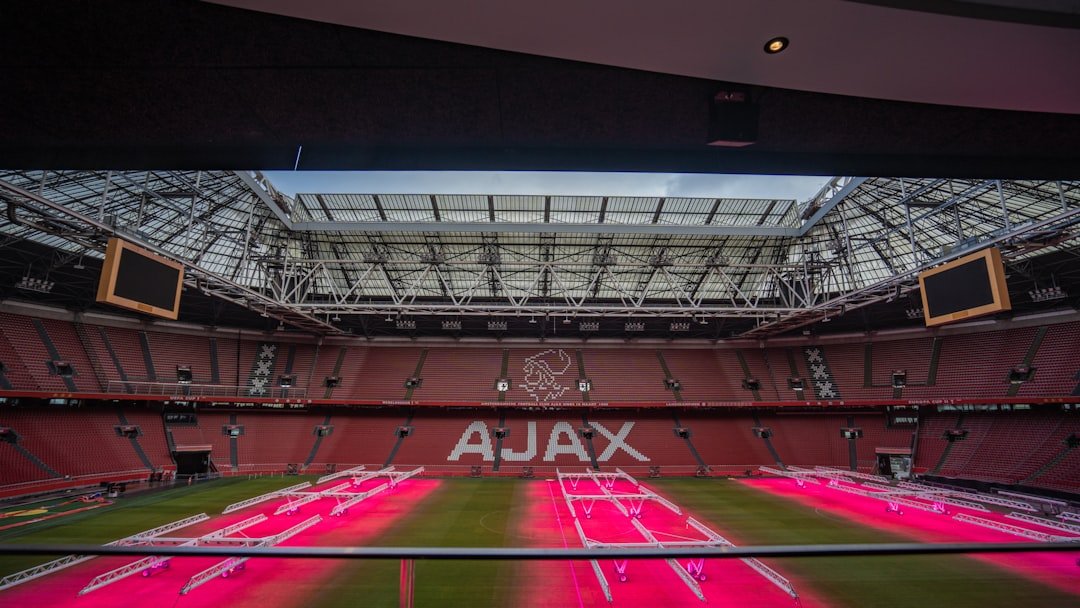
Ajax Amsterdam was founded in 1900 as a modest working-class club in the Dutch capital. For most of its first half-century, it was a respectable but unremarkable participant in Dutch football, competing for domestic titles but rarely making an impact on the European stage. The Netherlands itself was a minor footballing nation. Dutch clubs lacked the resources of their English, Italian, or Spanish counterparts, and the Dutch national team had never qualified for a World Cup final.
The Royal Netherlands Football Association, known by its Dutch acronym KNVB, played an important role in the cultural environment from which Ajax's academy would emerge. The KNVB had long emphasized coaching education and technical development at the grassroots level. The Netherlands, a small country with a relatively small population, could not compete with larger nations on the basis of physical power or sheer numbers. Instead, Dutch football culture gravitated toward skill, intelligence, and creativity. The KNVB's coaching courses, which were among the most rigorous in Europe, produced generations of technically literate coaches who believed that football was fundamentally a game of the brain as much as the body.
This cultural foundation was essential. When Ajax began building its academy in the late 1950s and early 1960s, it was not starting from nothing. It was drawing on a broader Dutch footballing philosophy that valued technique and tactical understanding above brute athleticism. The academy would take that philosophy and formalize it into a comprehensive development system.
2. The Birth of the Academy at De Toekomst
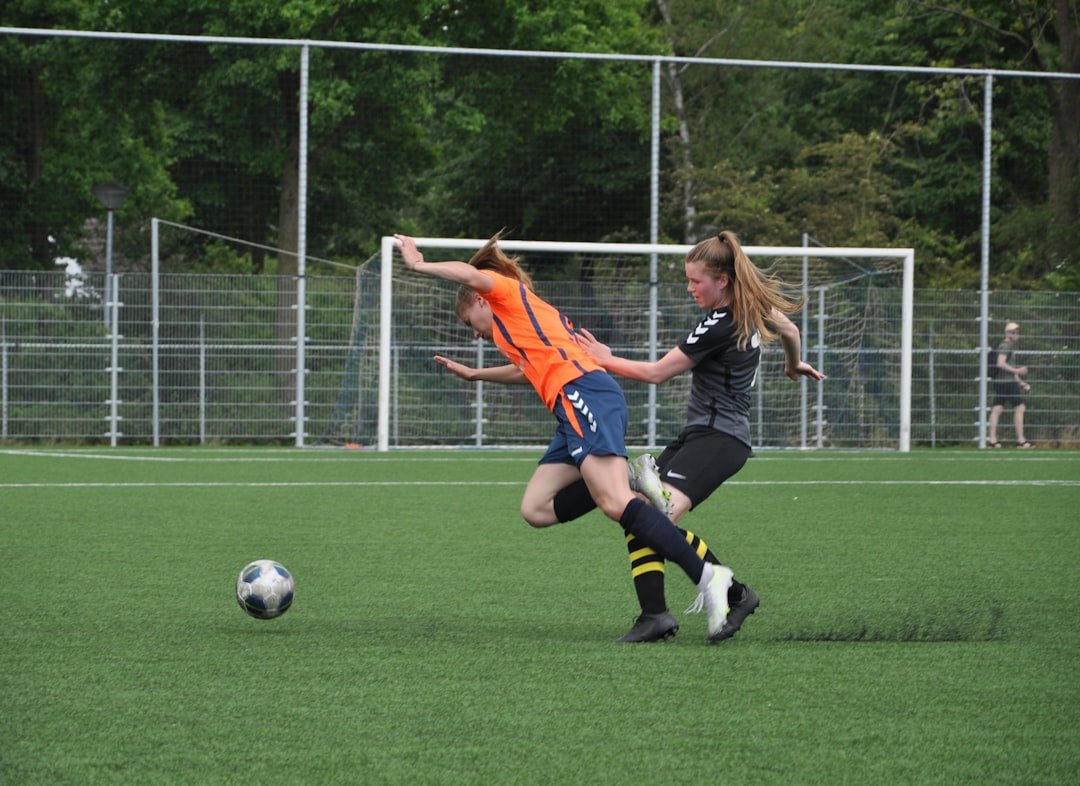
The modern Ajax academy traces its origins to the late 1950s, when the club's leadership decided to invest systematically in youth development. Under the chairmanship of Michel van Praag, Ajax began recruiting and training boys from the Amsterdam area starting at age seven, an extraordinarily early age by the standards of European football at the time. Most other clubs did not begin formal youth development until players were twelve or thirteen.
The rationale was straightforward. If Ajax wanted to produce players who could execute a technically demanding style of football, it needed to begin their development before habits were formed. By starting at seven, the academy could shape a player's touch, movement, and understanding of space during the critical developmental window when motor skills and cognitive patterns are most receptive to training.
The academy was housed at De Toekomst, a training center on the outskirts of Amsterdam that eventually grew to include multiple full-size pitches, smaller training fields, indoor facilities, and dedicated sports science and medical departments. Each age group, from the under-eights through the under-eighteens and the reserve team, had its own coaching staff, conditioning specialists, and performance analysts. The structure was designed to ensure continuity: a player who entered the academy at seven would progress through a unified development pathway, learning the same tactical principles and technical standards at every level.
This whole-age-range development model was far ahead of its time. It meant that Ajax could develop not just skilled individual players but cohorts of players who understood the same system, spoke the same tactical language, and could integrate seamlessly into the first team when the time came.
3. Total Football: Philosophy Forged in the Academy
The concept most closely associated with Ajax is Total Football, the tactical philosophy that emerged in the late 1960s and early 1970s under Rinus Michels and reached its fullest expression under Johan Cruyff, first as a player and later as a coach and club director.
Total Football is often described as a system in which every player can play every position, but that description is somewhat misleading. What Total Football actually demands is that every player understands every position well enough to occupy it temporarily as the shape of the team shifts during the flow of play. Defenders must be comfortable carrying the ball into midfield. Midfielders must be able to finish in the penalty area. Forwards must be willing and able to press and defend from the front. The positions on the pitch are not fixed assignments but fluid zones that players rotate through depending on the situation.
This approach places extraordinary demands on all-round ability. A defender who cannot pass accurately under pressure is useless in a Total Football system. A striker who cannot read the defensive structure and press intelligently is equally useless. Michels recognized early on that these skills could not be taught to senior professionals who had spent their formative years learning a more rigid style. They had to be instilled from childhood.
From the 1970s onward, Total Football became the organizing principle of the Ajax academy. Every age group played the same formation, the 4-3-3 that became the club's tactical signature. Every player at every position was required to practice passing, shooting, defending, and positional play. The goalkeeper was expected to be comfortable with the ball at his feet. The center-backs were expected to be able to split the opposing defense with long passes. The wingers were expected to track back and defend. The uniformity was absolute.
This systemic continuity is widely regarded as the single most important factor in the academy's success. Because every age group played the same way, a player promoted from the under-seventeens to the reserves, or from the reserves to the first team, did not need to learn a new system. He already knew the movements, the spacing, and the responsibilities of every position. The transition was seamless, which is why Ajax has historically been able to integrate teenagers into its senior team more successfully than almost any other club in the world.
4. TIPS: The Framework for Evaluating Talent
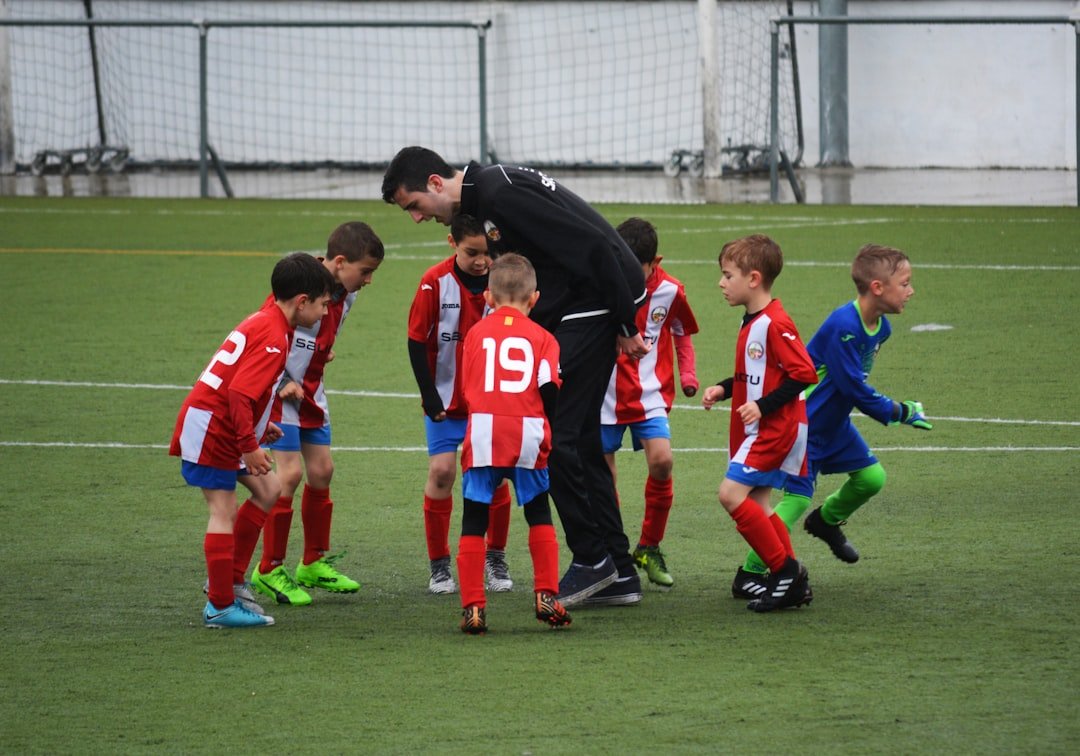
Ajax's approach to talent identification and development is codified in a framework known as TIPS, an acronym for Technique, Insight, Personality, and Speed. Every young player in the academy is evaluated continuously against these four criteria from the moment he enters the system.
Technique refers to a player's ability to control the ball, pass, shoot, dribble, and receive under pressure. Ajax has always placed technique at the foundation of its development model. A player who lacks technical quality will never thrive in the positionally fluid, high-tempo style that Ajax demands.
Insight refers to football intelligence: the ability to read the game, anticipate the movements of teammates and opponents, make correct decisions under pressure, and understand the tactical logic of the system. Ajax coaches evaluate insight not through written tests but through observation during small-sided games and competitive matches, watching how quickly a player recognizes patterns and responds to changing situations.
Personality encompasses mentality, character, and psychological resilience. Ajax looks for players who are self-motivated, who respond constructively to setbacks, who are coachable, and who have the competitive drive to push through the inevitable frustrations of a long development process. Personality is considered especially important because the academy's dropout rate is high, and only players with strong mental qualities tend to survive the journey from under-eight to first-team professional.
Speed refers to quickness in all its dimensions: physical acceleration, speed of thought, speed of execution. Ajax distinguishes between pure sprint speed and the broader concept of playing speed, which includes how quickly a player processes information and acts on it. A player who is physically fast but slow to read the game is considered less valuable than a player who is physically average but exceptionally quick in his decision-making.
The TIPS framework is not a rigid checklist but a holistic model. Ajax coaches use it to identify each player's strengths and weaknesses and to design individualized training interventions. A player with excellent technique but poor insight, for example, will receive extra attention in tactical exercises. A player with outstanding insight but below-average speed will work on acceleration and reaction time. The goal is to produce well-rounded players who are strong across all four dimensions.
5. Small-Sided Games and the Training Methodology
The daily training routine at De Toekomst is built around small-sided games. Coaches design exercises in formats of two against two, three against three, four against four, and five against five, played on reduced-size pitches with modified rules. These games force players to make decisions at extremely high speed in tight spaces, with very little time on the ball and constant pressure from opponents.
The emphasis on small-sided games reflects a core belief of the Ajax philosophy: that the most important skills in football are developed not through isolated drills but through competitive game situations. A player who practices passing by hitting a stationary target learns something very different from a player who practices passing under pressure from a live defender in a confined space. Ajax wants its players to develop the ability to execute technical skills under match-like conditions, which means that almost every training exercise involves some element of competition, decision-making, and spatial awareness.
The reduced dimensions of the playing area are deliberate. By compressing the space, coaches force players to improve their close control, their ability to turn in tight areas, their one-touch passing, and their scanning of the surrounding environment. Ajax graduates are widely recognized for their comfort in congested areas of the pitch and their ability to play their way out of pressure situations. That signature quality is a direct product of the thousands of hours spent in small-sided games during their years in the academy.
Coaches at Ajax are also trained to intervene minimally during these exercises. The philosophy holds that players learn more effectively by solving problems themselves than by being told what to do. A coach might set up the exercise, define the rules, and then step back and observe, offering feedback only during natural breaks in play. This approach develops independent thinking and problem-solving ability, qualities that are essential in a Total Football system where players must constantly make autonomous decisions on the pitch.
6. The Legends: Six Decades of World-Class Graduates

The roll call of world-class footballers produced by the Ajax academy is extraordinary in its depth and duration. No other academy in the history of the sport has maintained such a consistent level of output over such a long period.
Johan Cruyff, who joined the Ajax youth system as a child, became the defining figure of the 1960s and 1970s. He won three consecutive European Cups with Ajax and was awarded the Ballon d'Or three times. Cruyff did not merely play Total Football; in many ways, he was its embodiment, the player whose intelligence, vision, and technical mastery made the entire system work.
In the 1980s, the academy produced Marco van Basten, who would also win three Ballon d'Or awards and scored one of the most celebrated goals in football history, a volleyed strike in the final of the 1988 European Championship. Frank Rijkaard, another product of the Ajax youth system, became one of the finest defensive midfielders of his generation and later a successful coach.
Dennis Bergkamp emerged in the early 1990s as one of the most technically gifted forwards in the world. His later career at Arsenal established him as a player of rare creativity and elegance. Patrick Kluivert, Edgar Davids, Clarence Seedorf, and the de Boer brothers, Frank and Ronald, all came through the Ajax academy during the same period, forming the core of a generation that would dominate Dutch and European football.
Edwin van der Sar, who went on to become one of the most decorated goalkeepers in the history of the game, was another Ajax graduate. His composure with the ball at his feet reflected the academy's insistence that every player, including the goalkeeper, must be technically proficient.
In the twenty-first century, the production line continued. Wesley Sneijder, Rafael van der Vaart, and Christian Eriksen all developed at De Toekomst before moving to major European clubs. The most recent generation has included Matthijs de Ligt, Frenkie de Jong, and Donny van de Beek, all of whom played central roles in the Ajax team that reached the Champions League semifinal in 2019 and subsequently transferred to some of the largest clubs in Europe.
The sheer breadth of this list, spanning more than sixty years and encompassing defenders, midfielders, forwards, and goalkeepers, is a testament to the robustness and adaptability of the academy system. Ajax has not relied on producing one type of player or one type of talent. It has consistently developed complete footballers capable of excelling in multiple tactical environments at the highest level of the game.
7. The 1995 Champions League: An Academy Team on Top of Europe
The 1995 Champions League final stands as perhaps the greatest vindication of the Ajax academy philosophy. In Vienna, Ajax defeated AC Milan one to zero, with a team in which the vast majority of the starting eleven had been developed in the club's own youth system. Edwin van der Sar was in goal. Frank Rijkaard anchored the midfield. Marc Overmars provided pace and width on the flanks. Patrick Kluivert, just eighteen years old, scored the winning goal.
Head coach Louis van Gaal was deeply committed to the academy model and had built his team around homegrown talent supplemented by carefully chosen signings who fit the tactical system. Van Gaal spoke publicly and frequently about the significance of winning Europe's premier club competition with a squad drawn overwhelmingly from the club's own development pathway. For Van Gaal, the trophy was not merely a sporting achievement but a philosophical statement: that a small club from a small league could compete with the wealthiest teams in Europe by developing its own players to the highest standard.
The victory attracted global attention to the Ajax academy. In the years that followed, coaches and administrators from clubs around the world traveled to Amsterdam to study the system, observe training sessions, and consult with Ajax staff about youth development methodology. The pilgrimage continued well into the early 2000s and played a significant role in raising the standard of youth development across European football.
8. The Ajax Model Compared: La Masia, Sporting CP, and Others

The Ajax academy is often compared to other celebrated youth development institutions, most notably Barcelona's La Masia and Sporting CP's academy in Lisbon.
La Masia, which became globally famous during the era of Xavi, Andres Iniesta, and Lionel Messi, was profoundly influenced by Ajax. The connection is direct: Johan Cruyff, after retiring as a player, became coach of Barcelona and later served as a club advisor. Cruyff brought the principles of the Ajax academy to La Masia, including the emphasis on tactical uniformity across age groups, the commitment to technical development over physical attributes, and the use of the 4-3-3 formation as a standard system. Barcelona's famous possession-based style, which reached its peak under Pep Guardiola, is a recognizable descendant of the Total Football philosophy that originated at Ajax.
Sporting CP's academy in Lisbon has also earned a reputation for producing elite talent, including Luis Figo, Cristiano Ronaldo, and more recently Bruno Fernandes and Bernardo Silva. Sporting's model differs from Ajax in several respects. It places somewhat greater emphasis on physical development and operates within a Portuguese footballing culture that has historically valued individual flair and creativity alongside tactical discipline. Sporting has been remarkably successful at producing attacking talent in particular, but its academy has not historically demonstrated the same degree of systemic tactical uniformity that characterizes Ajax.
German clubs, particularly those in the Bundesliga, undertook a major overhaul of their youth development systems in the early 2000s following the German national team's poor performances at international tournaments. The reforms, driven in part by the DFB, drew explicitly on the Ajax model in many respects: earlier recruitment, greater emphasis on technical skills, tactical education from young ages, and systematic coaching pathways. The results were visible within a decade, as Germany produced a new generation of technically accomplished players.
What distinguishes Ajax from all of these is the duration of its influence. La Masia's golden era lasted roughly from the mid-2000s to the mid-2010s. Sporting has been excellent but inconsistent across eras. The German system is still relatively young. Ajax has been producing world-class talent since the 1960s. That sustained consistency, maintained across multiple generations of coaches, directors, and cultural shifts, suggests that the Ajax model is not dependent on any particular individual or moment but is embedded in the institutional DNA of the club.
9. The Financial Model: Necessity as the Mother of Innovation
Ajax operates under a financial reality that sets it apart from the super-clubs of Europe. The Dutch Eredivisie is a relatively small league by European standards, with broadcast revenues and commercial income that are a fraction of what clubs in the English Premier League, La Liga, or the Bundesliga generate. Ajax cannot compete with the transfer budgets of clubs backed by sovereign wealth or global media empires.
This financial constraint has shaped the academy in profound ways. Ajax must develop its own talent because it cannot afford to buy established stars. The academy is not a luxury or a point of pride; it is a survival mechanism. Every few years, the club's best young players are purchased by wealthier clubs, and Ajax must replace them with the next cohort of graduates. This cycle is relentless, and it forces the academy to maintain the highest possible standards of development at all times.
The transfer fees generated by the sale of academy graduates constitute a major portion of Ajax's revenue. The sales of players like Frenkie de Jong, Matthijs de Ligt, Davinson Sanchez, and many others have brought in substantial sums that fund the club's operations, reinvest in the academy, and finance new signings. The model is essentially a development-and-export economy: Ajax produces talent, competes with that talent for as long as it can, and then sells to fund the next cycle.
This economic model has an interesting side effect. Because Ajax knows that its best players will eventually leave, there is no incentive to hoard talent or block the development of younger players. The club is constantly motivated to promote the next generation, to give teenagers competitive minutes, and to trust young players in high-pressure situations. The financial necessity creates a virtuous cycle in which the academy remains central to the club's identity and strategy rather than being sidelined in favor of expensive signings.
10. Crisis and Renaissance: The 2010s and Beyond
The Ajax academy, for all its historical success, has not been immune to periods of difficulty. From the late 2000s into the early 2010s, the academy experienced a notable decline in the quality and quantity of its output. For several consecutive years, the system failed to produce players who could make an immediate impact at the highest level of European football. Ajax's first-team results declined in parallel, and the club ceased to be a regular participant in the Champions League knockout rounds.
The reasons for the slump were debated extensively within the club and in the Dutch football media. Some pointed to increased competition from other academies across Europe, which had adopted many of Ajax's own methods and were now attracting talent that might previously have gone to Amsterdam. Others suggested that the academy's curriculum had become stale, failing to adapt to changes in the modern game such as the increased importance of physical conditioning and data analytics.
In response, Ajax undertook a significant reform of its academy operations. Johan Cruyff, who remained deeply involved in the club's affairs, and Louis van Gaal both contributed to the restructuring. The reforms involved a thorough review of the coaching curriculum at every age level, the introduction of data analytics and sports science methodologies, and a renewed emphasis on the core principles that had made the academy successful in the first place: technical excellence, tactical intelligence, and the development of the whole player rather than just the athlete.
The results were dramatic. By the late 2010s, the academy was once again producing players of the highest caliber. De Ligt, De Jong, and Van de Beek emerged as stars who attracted the attention of Europe's biggest clubs. The 2018-19 Champions League campaign, in which Ajax reached the semifinal with a squad built largely from academy graduates and affordable signings who fit the tactical philosophy, was widely celebrated as a vindication of the reformed academy system.
The renaissance demonstrated something important about the Ajax model: its capacity for self-correction. Unlike systems that depend on a single visionary figure, the Ajax academy has shown that it can recognize its own shortcomings, diagnose problems, implement changes, and restore its performance. That institutional resilience, the ability to adapt without abandoning core principles, may be the academy's most valuable characteristic.
11. The Cultural Legacy: How Ajax Reshaped World Football
The deepest legacy of the Ajax academy is not any individual player or any single trophy but the influence it has exerted on the way football is taught, coached, and played around the world. The idea that a club should have a unified playing philosophy that runs from the youngest age group to the first team, an idea that is now considered obvious and essential at every elite club, was pioneered at Ajax. Before Ajax, most clubs treated youth development as a separate and subordinate activity, disconnected from the first team's tactical approach. Ajax demonstrated that integrating the two produced better players and stronger teams.
The tactical innovations that emerged from the Ajax system have shaped every major school of modern coaching. Cruyff's Total Football directly influenced the possession-based football that Guardiola developed at Barcelona and later at Manchester City. The pressing and counter-pressing systems employed by coaches across the modern game owe a debt to the Ajax tradition of defensive intensity and collective responsibility. Even coaches who do not explicitly reference Ajax are often, whether they realize it or not, working within a framework that traces its origins to the conversations and experiments that took place at De Toekomst in the 1960s and 1970s.
The coaching tree that descends from Ajax is vast. Michels, Cruyff, Van Gaal, Frank Rijkaard, Ronald Koeman, Frank de Boer, Erik ten Hag, and many others all passed through Ajax as players, coaches, or both. The ideas they carried with them spread to clubs and national teams across the globe. The Ajax way of thinking about football, as a game of intelligence, positional play, and collective movement rather than individual physical dominance, has become the dominant paradigm in the sport.
For a club from a small city in a small league, that is an extraordinary achievement. Ajax has never had the financial resources of the European super-clubs. It has never been able to keep its best players for more than a few seasons. Yet through the quality and consistency of its academy, it has shaped the development of world football more profoundly than clubs with ten times its budget. The Ajax youth academy remains, more than sixty years after its founding, the standard against which all other football development systems are measured.
FAQ
What is Total Football and how did the Ajax academy develop it?
Total Football is a tactical philosophy in which every outfield player is expected to be capable of playing in multiple positions, allowing the team's shape to shift fluidly during the course of a match. The Ajax academy developed this concept by training all players in every positional role from as young as seven years old, using a uniform 4-3-3 formation across all age groups. This meant that every graduate understood the responsibilities of every position and could move seamlessly between roles during a game, which was the foundation of the system Rinus Michels and Johan Cruyff made famous in the 1970s.
What does the TIPS framework stand for in Ajax's academy system?
TIPS stands for Technique, Insight, Personality, and Speed. These are the four criteria against which every young player at the Ajax academy is evaluated throughout their development. Technique covers ball control and execution, Insight refers to football intelligence and tactical awareness, Personality encompasses mentality and psychological resilience, and Speed includes both physical quickness and the speed of decision-making. Ajax coaches use this framework to identify each player's strengths and weaknesses and design individualized development plans.
How does Ajax's academy compare to Barcelona's La Masia?
La Masia was directly influenced by the Ajax model through Johan Cruyff, who brought Ajax's development principles to Barcelona when he became coach and later advisor. Both academies share a commitment to technical excellence, tactical uniformity across age groups, and the use of the 4-3-3 formation. The key difference is in their broader context: Ajax operates in a smaller league with significantly less revenue and must sell its top graduates regularly, while Barcelona has historically had the financial resources to retain many of its academy products for longer periods.
Why does Ajax keep selling its best young players to bigger clubs?
Ajax operates in the Dutch Eredivisie, which generates far less broadcast and commercial revenue than the major European leagues. The club cannot match the wages offered by clubs in the Premier League, La Liga, or Bundesliga. As a result, the sale of academy graduates is a fundamental part of Ajax's financial model. The transfer fees generated by these sales fund the club's operations, reinvest in the academy, and allow Ajax to continue developing the next generation of players. This cycle of development and export has been central to Ajax's identity and survival for decades.
What caused the Ajax academy's decline in the early 2010s and how was it fixed?
The academy experienced a slump in the late 2000s and early 2010s, with a noticeable drop in the number of world-class graduates being produced. Contributing factors included increased competition from other European academies that had adopted Ajax's own methods, and a failure to integrate modern sports science and data analytics into the development process. The club responded with a major reform effort that included a thorough review of coaching curricula, the introduction of analytics tools, and a renewed emphasis on core principles. The reforms produced results quickly, leading to the emergence of players like Frenkie de Jong and Matthijs de Ligt and the memorable Champions League semifinal run in 2019.
📝 本文来自抖文 www.douwen.me ,转载请保留出处。
原文链接:https://douwen.me/archives/941/
💬 评论 (0)
还没有评论,来说两句吧 ✍️