World Cup Final Match Scores and Betting Patterns, What the Historical Data Actually Shows
1. Why the World Cup Final Is the Most Analyzed Match in Football Betting
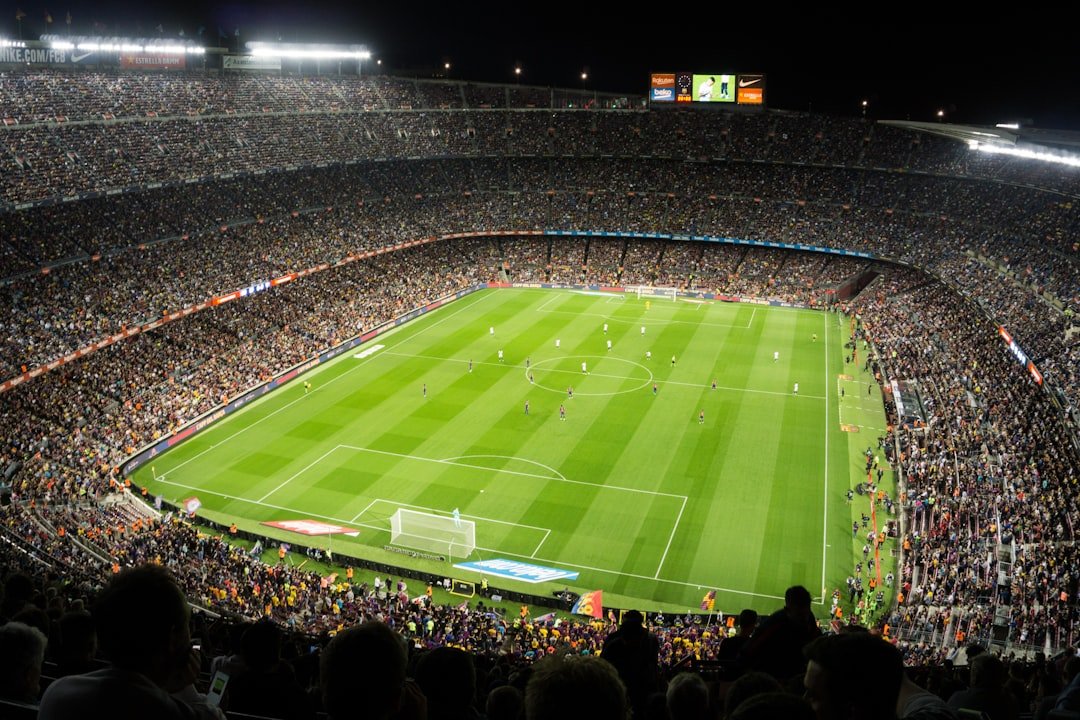
The World Cup final stands alone in the sporting calendar. No other single football match attracts as much global attention, emotional investment, and wagering activity. Every four years, the culmination of a month-long tournament produces a 90-minute contest that captures the world's imagination. For those who follow betting markets, the final represents a unique event where public sentiment, national pride, and enormous liquidity collide in ways that rarely occur during regular league football.
What makes the final so distinctive from a betting perspective is the sheer volume of casual participation. During a typical Champions League match or domestic league weekend, the betting market is dominated by experienced punters and professional syndicates. The World Cup final, however, draws in millions of people who may only place a wager once every four years. This influx of recreational money has a measurable effect on how odds are shaped, where value can be found, and how the market behaves in the hours and days leading up to kickoff.
Understanding the historical data behind World Cup finals is not about finding a guaranteed winner. No dataset can predict the future with certainty. But examining patterns across nearly a century of championship matches reveals tendencies that help separate reasonable expectations from pure guesswork. The scorelines, the goal totals, the tactical approaches, and the psychological dynamics all leave traces in the historical record that deserve careful examination.
2. A Walk Through Historical Final Scorelines
The World Cup has produced 22 finals from the inaugural 1930 tournament through 2022. Looking at the full record of results (counting final scores including extra time but excluding penalty shootout outcomes as the match technically ended in a draw):
1930: Uruguay 4-2 Argentina. 1934: Italy 2-1 Czechoslovakia (after extra time). 1938: Italy 4-2 Hungary. 1954: West Germany 3-2 Hungary. 1958: Brazil 5-2 Sweden. 1962: Brazil 3-1 Czechoslovakia. 1966: England 4-2 West Germany (after extra time). 1970: Brazil 4-1 Italy. 1974: West Germany 2-1 Netherlands. 1978: Argentina 3-1 Netherlands (after extra time). 1982: Italy 3-1 West Germany. 1986: Argentina 3-2 West Germany. 1990: West Germany 1-0 Argentina. 1994: Brazil 0-0 Italy (decided by penalties). 1998: France 3-0 Brazil. 2002: Brazil 2-0 Germany. 2006: Italy 1-1 France (decided by penalties). 2010: Spain 1-0 Netherlands (after extra time). 2014: Germany 1-0 Argentina (after extra time). 2018: France 4-2 Croatia. 2022: Argentina 3-3 France (decided by penalties).
What immediately stands out when you survey this list is the variety. Finals have produced everything from goalless stalemates to seven-goal spectacles. Yet within that range, certain scorelines recur more frequently than others, and understanding why requires looking at the structural dynamics of a World Cup final.
3. The Most Frequently Occurring Scorelines and What They Suggest
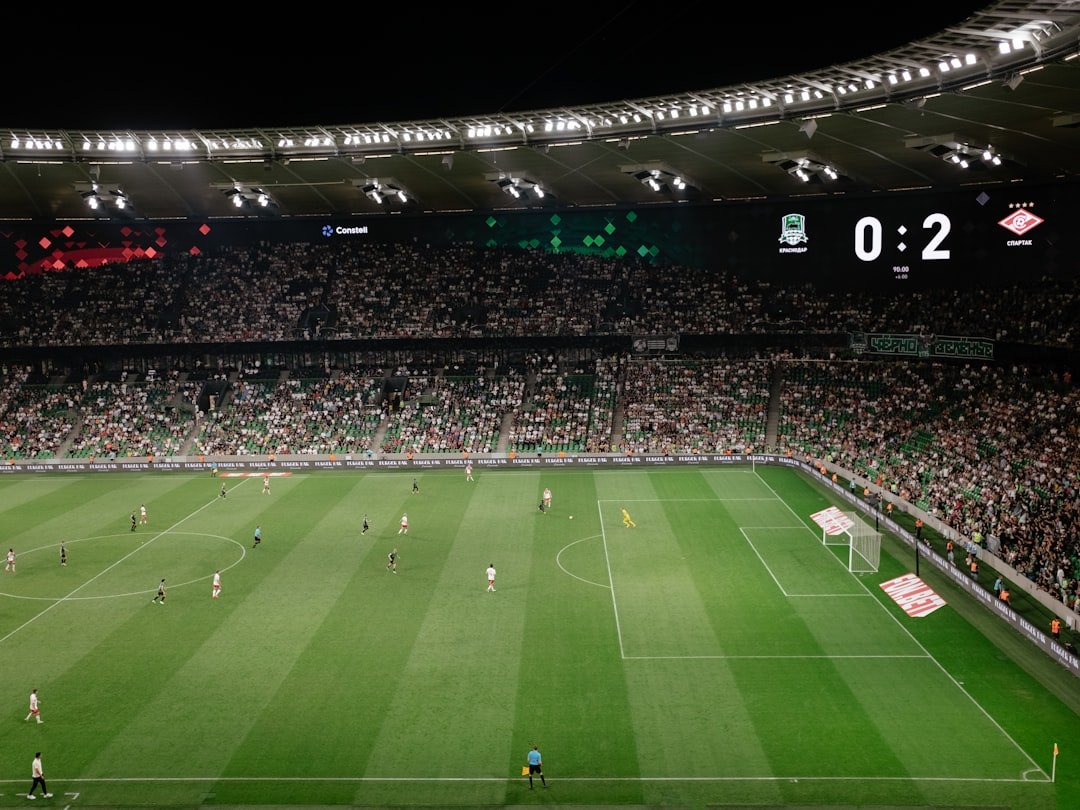
Among the 22 finals, the scoreline 3-1 has appeared four times, making it the most common result. It occurred in 1962, 1970, 1978, and 1982. Close behind are 1-0 and 4-2, each appearing three times.
The dominance of 3-1 makes intuitive sense when you consider the typical narrative arc of a final. In most cases, one team enters as a clear favorite. That team tends to establish control, build a lead, and manage the game. The trailing team, meanwhile, often finds a consolation goal through a set piece, a counterattack, or a moment of individual brilliance late in the match when the leading side has relaxed its defensive intensity. The 3-1 scoreline captures this dynamic perfectly: sustained dominance from one side, punctuated by a single response from the other.
The 1-0 result, appearing three times in finals since 1990, reflects a more modern trend. As tactical sophistication has increased and defensive coaching has improved, finals have occasionally become tense, cautious affairs where neither team is willing to commit numbers forward. When two evenly matched teams adopt conservative approaches, a single goal often decides the outcome.
The 4-2 scoreline, appearing in 1930, 1938, 1966, and 2018, represents something different entirely. These were matches where both teams attacked with ambition, producing open, end-to-end contests that have generally been remembered as among the most entertaining finals in history.
4. Goal Totals in Finals and the Over-Under Question
One of the most popular betting markets for any football match is the over-under on total goals, typically set at 2.5. Looking at the 22 finals, the data reveals that roughly 60 percent of World Cup finals have produced three or more goals. Only three finals finished with one goal or fewer in regulation and extra time combined (1990, 2010, and 2014 all ended 1-0, while 1994 ended 0-0).
The average across all 22 finals sits at approximately 3.4 goals per match when you count the full scoreline including extra time. This is notably higher than the average for most top-level domestic league matches, which tend to hover around 2.5 to 2.8 goals per game depending on the competition.
Several factors contribute to this slightly elevated scoring rate. First, World Cup finals tend to feature at least one team with exceptional attacking talent. The tournament format ensures that only the strongest sides reach the final, and those teams typically possess forwards capable of creating and converting chances at the highest level. Second, the stakes of the occasion can produce tactical gambles, particularly from trailing teams in the second half, which opens up space and creates opportunities for additional goals. Third, extra time is played in roughly a third of all finals, adding 30 minutes of football during which fatigued defenders become more prone to mistakes.
For those who follow the over-under market, the historical record suggests that finals tend to produce more goals than the average top-flight match. However, this comes with an important caveat: recent finals since 2006 have shown a somewhat bimodal distribution, with matches tending toward either tight, low-scoring affairs or dramatic, high-scoring encounters, with relatively few landing in the middle ground.
5. Common Betting Markets for World Cup Finals

The World Cup final generates a wider variety of betting markets than almost any other sporting event. While the basics of match result (home-draw-away or 1X2), correct score, and over-under goals are always available, the unique nature of the final produces several additional markets worth understanding.
The "both teams to score" market has historically paid out in the majority of World Cup finals. Looking at the record, both teams found the net in roughly two-thirds of all finals. This makes sense given that both finalists are, by definition, among the strongest teams in the tournament and possess the attacking quality to trouble any defense.
First goalscorer betting is particularly popular during the final because of the heightened attention on star players. Historically, a disproportionate number of opening goals in finals have been scored by players who were already the tournament's top performers. The pressure of the occasion tends to amplify the influence of elite talent rather than diminish it.
The "time of first goal" market offers interesting dynamics in finals. Many finals have seen relatively early opening goals, with the first goal arriving inside the opening 20 minutes in a significant portion of matches. The emotional intensity of the occasion, combined with the adrenaline of the opening minutes, can lead to early defensive lapses.
Half-time/full-time betting is another market where final-specific patterns emerge. The team leading at half-time has gone on to win the final in the majority of cases, though several notable comebacks have occurred. The 1930 final, where Uruguay trailed at the break before winning 4-2, and the 2022 final, where Argentina led 2-0 before France equalized dramatically, demonstrate that comebacks, while less common, are far from impossible.
Asian handicap markets, which give one team a notional head start, have become increasingly popular in recent decades. The handicap line for finals tends to be relatively tight, usually within one goal, reflecting the generally close quality of the two finalists.
6. How Bookmaker Odds Evolve During a Tournament
One of the most fascinating aspects of World Cup betting is watching how odds shift throughout the tournament. A team's price to win the competition can change dramatically from the group stage through to the final, and understanding these movements reveals much about how the market processes information.
At the start of a typical World Cup, the pre-tournament favorites tend to be priced based on a combination of historical pedigree, squad quality, qualifying form, and draw difficulty. As the group stage progresses, the market rapidly adjusts based on actual performances. A strong favorite that struggles in their opening match may see their odds lengthen, while a dark horse that impresses early can see dramatic shortening.
By the time the final is set, the odds for the individual match reflect not just the perceived quality of each team but also factors like accumulated fatigue, injury concerns, the emotional momentum of the tournament run, and the specific tactical matchup between the two sides. A team that has played extra time in the semifinal, for instance, may be slightly disfavored compared to a team that won their semifinal comfortably.
The liquidity in the final's betting markets is enormous compared to earlier rounds. This massive volume of money tends to make the final's odds more "efficient" in the economic sense, meaning that obvious mispricings are quickly corrected. However, the influx of casual bettors during the final can sometimes create temporary inefficiencies, particularly in exotic markets like correct score and first goalscorer, where public money tends to concentrate on popular players and familiar scorelines.
In-play betting during the final has become increasingly significant. The odds during the match fluctuate with every attack, every goal, every substitution. Research into in-play markets suggests that the pre-match favorite tends to be slightly underpriced once a match goes in-play, meaning the market may overreact to early events. A strong pre-match favorite that concedes an early goal, for example, may see their in-play odds lengthen more than the underlying probability shift warrants.
7. The Psychology of Betting on the Biggest Match

The World Cup final produces psychological dynamics in bettors that are quite different from regular-season wagering. Understanding these tendencies is valuable both for those who wish to bet more rationally and for those who simply want to understand why the market behaves as it does.
The most powerful psychological factor is national bias. Bettors from the two participating countries overwhelmingly back their own team, regardless of the objective probabilities. This creates a measurable skew in markets, particularly in countries where one of the finalists has a large and passionate fanbase. Bookmakers are well aware of this tendency and factor it into their pricing.
The "big occasion" effect also influences betting behavior. Many casual bettors are drawn to the final precisely because it feels like a momentous event, and this emotional charge can lead to overconfidence in dramatic outcomes. Exotic bets, longshot scorelines, and high-odds accumulators tend to attract a disproportionate share of money during the final compared to regular matches. Bookmakers generally welcome this activity because exotic bets carry higher margins.
Recency bias is another factor. Whatever happened in the most recent final tends to heavily influence expectations for the next one. After the dramatic 3-3 draw in the 2022 final, for instance, many casual observers might expect another high-scoring, chaotic match, even though the historical average suggests that kind of result is exceptional rather than typical.
The anchoring effect plays a role in correct-score betting. Bettors tend to gravitate toward scorelines they find psychologically comfortable, typically results like 2-1, 1-0, or 2-0 that reflect "normal" football outcomes. Less conventional scorelines like 3-1, which is actually the most common final result, may be underbet relative to their historical frequency because they feel less intuitive to casual punters.
Loss aversion, a well-documented psychological phenomenon, is amplified during the final. Bettors who have had a profitable tournament may become overly cautious, locking in their gains rather than placing informed bets on the final. Conversely, bettors who are down on the tournament may chase losses by placing oversized wagers on the final, hoping for a single result to turn their fortunes around. Neither approach is rational, but both are common.
8. Tactical Trends That Shape Final Scorelines
The evolution of football tactics over the decades has had a direct impact on the types of scorelines produced in World Cup finals. Understanding these tactical shifts provides context for why certain results have become more or less common over time.
In the early decades of the World Cup, from 1930 through the 1950s, tactical systems were relatively simple and attack-minded. Teams typically played with five forwards and only two or three defenders. This attacking orientation produced the high-scoring finals of that era, including the 5-2, 4-2, and 3-2 results that characterized the period.
The introduction of more sophisticated defensive systems in the 1960s and 1970s, including variations of catenaccio and the sweeper system, began to lower scoring rates. However, finals during this period still tended to produce goals because the best teams combined defensive organization with potent counterattacking ability.
The modern era, roughly from the 1990s onward, has seen a wider tactical range in finals. Some matches have been extremely cautious affairs, as in 1990, 2010, and 2014, where defensive discipline and risk aversion produced tight 1-0 results. Others, like 1998 and 2018, have seen the stronger team establish dominant control and score freely. The 2022 final, with its extraordinary 3-3 scoreline, showed that even in the modern era of sophisticated defensive coaching, a final can explode into open, dramatic football when the circumstances align.
The role of substitutions has become increasingly important in shaping final scorelines. Modern managers use their full allocation of substitutions to change the tactical shape of the match, introduce fresh legs, and alter the attacking dynamic. Several finals have been decisively influenced by substitutions, and the expansion of the substitution allowance in recent tournaments has added another variable that can affect how many goals are scored.
Set pieces have been a particularly significant source of goals in finals. The pressure of the occasion can make teams more prone to conceding fouls in dangerous areas, and the quality of dead-ball delivery at this level is exceptional. Historically, a notable proportion of final goals have come from free kicks, corners, and penalties, which is worth considering when evaluating how a specific matchup might unfold.
9. The Role of Extra Time and Penalties in Final Outcomes

Of the 22 World Cup finals, roughly one-third have required extra time, and three have been decided by penalty shootouts (1994, 2006, and 2022). The prevalence of extra time in finals is higher than in regular tournament matches, reflecting the tendency of closely matched teams to produce cautious, evenly balanced contests at this stage.
Extra time introduces unique dynamics that affect both the match itself and the betting markets surrounding it. Fatigue becomes a major factor, as players who have already completed 90 minutes of high-intensity football must find additional reserves of energy. Historically, the team that scores first in extra time tends to win the match, as the trailing side must push forward and leave themselves vulnerable to counterattacks while dealing with physical and emotional exhaustion.
Penalty shootouts represent a distinct phase that many analysts treat as essentially separate from the match itself. The outcome of a shootout is influenced by factors like the quality of the goalkeeper, the composure of individual penalty takers, the sequence in which they shoot, and pure chance. Some research has suggested that the team shooting first in a shootout has a slight statistical advantage, though this finding has been debated and the sample sizes are small.
For bettors, the possibility of extra time and penalties creates additional markets and strategic considerations. Some correct-score markets settle at the end of 90 minutes, while others include extra time. Understanding which version you are betting on is essential to avoid confusion. The "draw" result in the 90-minute market is a viable outcome in any final, and historically it has occurred in roughly one in five finals.
10. Country-Specific Tendencies in Finals
Certain nations have appeared in enough finals to develop identifiable tendencies, though caution is warranted in drawing firm conclusions from limited sample sizes.
Brazil has appeared in seven finals, winning five. Their finals have historically been characterized by attacking football and relatively high goal totals. When Brazil has been at their best in finals, they have tended to win convincingly, as in 1958 and 1970, producing some of the most memorable attacking performances in World Cup history.
Germany and West Germany have appeared in eight finals, more than any other nation, winning four. German teams have historically been associated with tactical discipline, physical resilience, and an ability to perform under pressure. Their finals tend to produce moderate goal totals, and Germany has been involved in several of the tighter, more tactically cautious finals.
Italy has appeared in six finals, winning four. Italian teams have traditionally employed a more defensive approach in finals, relying on organization, resilience, and clinical counterattacking. Two of their final appearances ended in penalty shootouts, reflecting their tendency to produce tight, low-scoring matches.
Argentina has appeared in six finals, winning three. Argentine finals have been among the most dramatic in World Cup history, with several producing emotional, high-stakes narratives. The 2022 final, widely regarded as one of the greatest matches ever played, was a fitting addition to Argentina's history of theatrical final appearances.
11. Variables That Data Cannot Capture

While historical patterns provide useful context, several factors make every final genuinely unique and resistant to pure data-driven prediction.
The specific tactical matchup between two teams matters enormously. A team that plays a high pressing game will produce a very different match when paired against a team that sits deep and counterattacks compared to when they face another pressing side. The historical average scoreline tells you nothing about this specific interaction.
Individual moments of brilliance or error can override any statistical tendency. A goalkeeper having the match of their life, a defender making a critical mistake, or a forward producing a moment of magic can swing the outcome in ways that no dataset can anticipate.
The emotional state of the players, the weight of expectation on their shoulders, and the specific circumstances of their tournament run all influence how a final unfolds. A team that has barely survived a dramatic semifinal may arrive at the final emotionally drained, while a team that won their semifinal comfortably may arrive with greater freshness and confidence.
Weather conditions, the specific venue, the altitude, the quality of the pitch, and even the time of day can all affect the character of the match. These situational factors are unique to each final and cannot be adequately captured by historical averages.
12. Responsible Gambling and the World Cup Final
The excitement surrounding a World Cup final makes it one of the highest-risk periods for problem gambling. The combination of intense media coverage, social pressure to participate, and the availability of numerous betting markets creates an environment where it is easy to wager more than intended.
Anyone considering betting on a World Cup final should approach it with a clear budget set in advance. The amount wagered should be money that the bettor can afford to lose entirely without any impact on their financial well-being. The historical data presented in this article is interesting and educational, but it does not constitute a prediction system or a guarantee of any outcome.
The concept of "value betting," where you attempt to identify odds that are higher than the true probability of an outcome, is intellectually appealing but extremely difficult to execute consistently, even for professionals. The margins in World Cup final markets are tight, and the bookmakers have access to sophisticated models and vast quantities of data. Casual bettors should be honest with themselves about their informational disadvantage.
If you choose to bet on the final, consider it entertainment rather than an investment. Set your stake, enjoy the match, and accept the outcome whatever it may be. The greatest World Cup finals have been memorable not because of what they meant for anyone's betting slip, but because of the drama, skill, and emotion that unfolded on the pitch.
13. Final Thoughts on What History Tells Us
The World Cup final is a match unlike any other, and the historical scoring data reflects its unique character. The prevalence of 3-1 as the most common scoreline, the relatively high average goal total, and the significant proportion of matches requiring extra time all point to a contest that combines tactical caution with the pressure to attack, producing outcomes that cluster around certain patterns but remain fundamentally unpredictable.
For those who enjoy analyzing the data, the record of 22 finals provides a fascinating window into how the world's biggest football match has evolved over nearly a century. For those who bet on the match, the data offers context and perspective but never certainty. And for those who simply love football, the numbers are just a framework for the stories, the moments, and the memories that make the World Cup final the most compelling event in the sport.
The next World Cup final will write its own chapter. Whether it ends 3-1, 1-0, or with some scoreline that has never before appeared, it will add to a historical record that tells us as much about the evolution of football itself as it does about any specific betting market.
FAQ
What is the most common World Cup final score?
Based on the record of 22 World Cup finals from 1930 through 2022, the scoreline 3-1 has appeared most frequently, occurring in four separate finals. This result tends to reflect a common final dynamic where the stronger team establishes clear control of the match while the trailing team manages to score a single response, often late in the game.
How many goals are typically scored in a World Cup final?
The average across all 22 World Cup finals is approximately 3.4 goals per match when counting the full scoreline including extra time. Roughly 60 percent of finals have produced three or more goals, which is slightly above the average for top-level domestic league football, suggesting that finals tend to be somewhat more open than many people assume.
Do World Cup finals often go to extra time or penalties?
Approximately one-third of all World Cup finals have required extra time, and three finals (1994, 2006, and 2022) have been decided by penalty shootouts. The frequency of extra time in finals is higher than in earlier tournament rounds, reflecting the tendency of two closely matched, high-quality teams to produce tight contests at this stage.
Which country has appeared in the most World Cup finals?
Germany (including West Germany) holds the record with eight final appearances, winning four times. Brazil has appeared in seven finals with five victories, while Italy and Argentina have each appeared in six finals. These four nations account for the vast majority of all World Cup final appearances throughout the tournament's history.
Is betting on World Cup final correct scores a good strategy?
Correct score betting on World Cup finals carries extremely high risk because the outcome of any individual match is inherently unpredictable. While historical patterns show that certain scorelines like 3-1 and 1-0 have occurred more frequently, past results do not guarantee future outcomes. Any wagering on the final should be treated strictly as entertainment, with stakes limited to amounts that can be comfortably lost.
📝 本文来自抖文 www.douwen.me ,转载请保留出处。
原文链接:https://douwen.me/archives/770/
💬 评论 (8)
Great analysis! I never realized how predictable World Cup finals actually are when you look at the numbers.|
This is fascinating but I wish the article showed the actual data breakdown. What ARE the most common scores? The excerpt cuts off right when it gets interesting!|
Been watching the World Cup since 1994 and honestly, the drama is what matters, not the statistics. Could care less about score distributions.|
Comparing it to Mount Everest is a nice touch. I'm guessing 1-0 and 2-1 finals are way more common than the wild 5-4 scorelines we see in group stages. Would love to see the full dataset.|
The phrase "interesting phenomenon" has me hooked. Please tell me the rest of this article explores WHY certain scores happen more often. Is it defensive tactics? Pressure? Fatigue?|
This is exactly the kind of deep-dive content I come to sports blogs for. Combining history with data science—chef's kiss. Subscribing now.|
lol why does anyone care about this? Just watch the games and enjoy them instead of turning everything into a math problem.|
The incomplete excerpt is frustrating, but the premise is sound. Final matches typically feature lower-scoring games due to balanced team quality and conservative strategies. Interested in seeing confidence intervals and statistical significance.|