Why Did This Emperor Have to Pretend to Be Mad to Live Long Enough to See His Son Become Emperor
Song Huizong's Power Dilemma: To Save His Son's Life, He Chose to Play the Fool
In Chinese history, there was an emperor who was so refined in taste and skilled in calligraphy and painting that these very talents became his greatest predicament. He was Zhao Ji, the eighth emperor of the Northern Song Dynasty, known as Song Huizong. This emperor's life experienced a bizarre reversal: first, he was forced to cede power to his son due to weak governing abilities, and subsequently had to feign even greater incompetence to ensure both his own and his son's survival through a smooth transfer of power. This story is far more complex, darker, and filled with genuine helplessness than we might imagine.
The Power Trap of a Talented Emperor
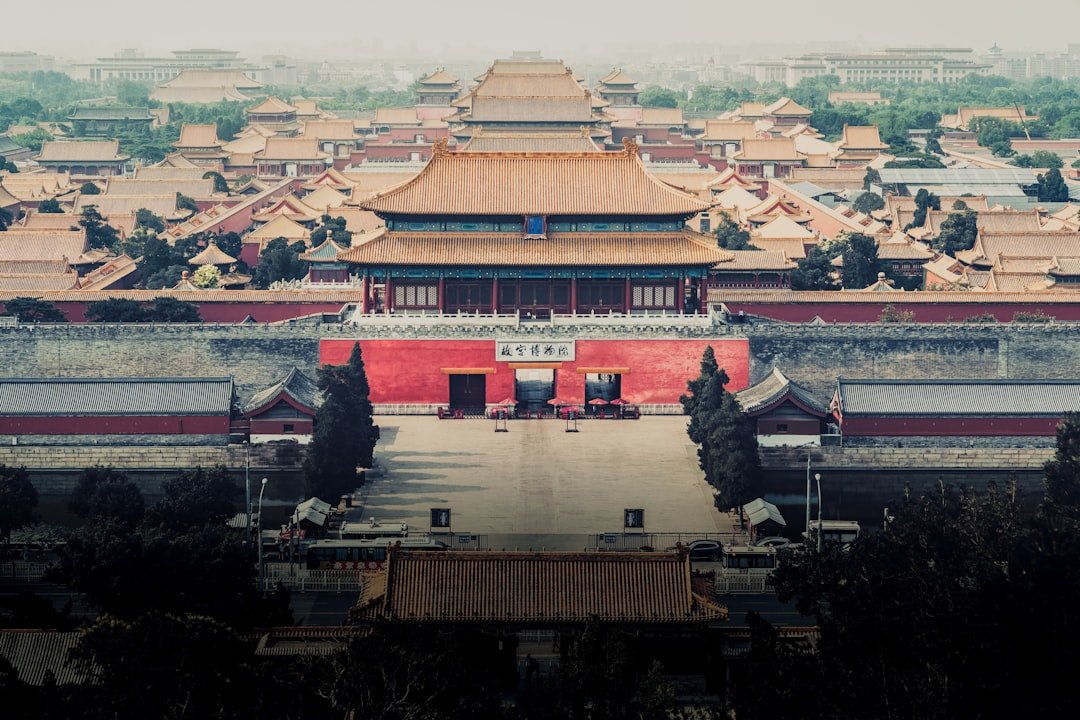
Song Huizong, born in 1082, was not originally in the line of succession for the throne. He was the eleventh son of Emperor Shenzong of Song. The original heir should have been his older brother, but after Shenzong's death, due to complex political factors, the twenty-year-old Zhao Ji was elevated to emperor. For a young, intelligent youth passionate about art, this was both honor and the planting of seeds for future tragedy.
From childhood, Zhao Ji demonstrated extraordinary artistic talent. He mastered calligraphy, painting, music, and poetry—a rare cultural and artistic genius. He created the "Slender Gold Script" in calligraphy, a unique style still revered by calligraphers today as a classic. His painting skills were equally exceptional; works like "Snow Bamboo" and "Hibiscus and Golden Pheasant" displayed superb technique. By modern standards, he should have been an outstanding artist. But the problem was that an emperor must first be a politician, not an artist.
Early in his reign, Song Huizong recognized his shortcomings in politics. He attempted to compensate by appointing capable ministers, most notably Cai Jing and others who supported Wang Anshi's reforms. Cai Jing was a talented political figure, but also an ambitious power-seeking official. Under Cai Jing's direction, the Northern Song undertook a series of reforms in finance, military affairs, and administration. These reforms achieved some success in certain areas but also intensified factional disputes and provoked fierce conflicts with conservatives.
Song Huizong began to realize he occupied an extremely dangerous position. He could not completely control the powerful ministers, and the ministers were scheming against each other. Worse still, he found himself increasingly unable to control the situation. Around 1100, he discovered that Crown Prince Zhao Huan's (the future Emperor Qinzong) position was becoming increasingly secure, and various factions were competing for influence over the heir apparent. Against this backdrop, Song Huizong made an astonishing decision.
Political Calculations in Power Transfer
In 1110, at only twenty-eight years old, Song Huizong took a shocking step—he actively announced his abdication, allowing his nineteen-year-old son Zhao Huan to become emperor while he retained power as "Retired Emperor." On the surface, this seemed a wise decision by an emperor ceding power to a more capable son, but in reality, it concealed deeper political calculations.
The situation at that time was this: the power of officials like Cai Jing was growing exponentially; they had accumulated extensive support throughout the court and among the people. If Song Huizong continued sitting on the imperial throne, he would face mounting pressure from these powerful ministers. But if he stepped back as "Retired Emperor," he would have a nominal retirement position, allowing him to distance himself from the center of factional struggles while still wielding influence at critical moments. More importantly, by placing his young son on the throne, he could claim to be a benevolent father, gaining the moral high ground in public opinion.
However, this plan did not initially proceed as expected. While Emperor Qinzong became the nominal ruler, he lacked the artistic talents or political acumen of his father. Worse, the powerful ministers began to split. The contradictions between Cai Jing and his opponents deepened; factional infighting in the court became increasingly severe. In such an environment, the hollowed-out power became the focus of competition among all sides.
Song Huizong soon realized that merely retreating to the background was insufficient. He needed to participate more actively in politics to ensure both his and his son's safety. But direct intervention would provoke the resentment of powerful ministers. At this point, Song Huizong adopted a strategy that seemed counterintuitive but was actually quite clever—he began to appear increasingly disinterested in politics, investing more time and energy into his greatest passion: calligraphy, painting, and architecture.
The Survival Wisdom of Playing the Fool
From the mid-1110s onward, Song Huizong appeared increasingly like a ruler obsessed with art in public. He spent vast amounts of time on painting and calligraphy, constructed the famous garden "Genyue," one of the most luxurious imperial gardens of its time in the world. He organized massive art collection activities, accumulating hundreds of thousands of ancient paintings, calligraphy, artifacts, and other cultural relics. He even established specialized institutions to manage these collections.
On the surface, this appeared to be merely an emperor indulging in luxury and art—the behavior of an "incompetent ruler." But from a political perspective, this was a sophisticated survival strategy. By doing this, Song Huizong achieved several objectives:
First, he created the illusion of "not caring about politics." When powerful ministers saw the Retired Emperor absorbed in painting and construction, they would not suspect him of manipulating power behind the scenes. Thus, the struggles among powerful ministers would not target him.
Second, through these seemingly wasteful artistic activities, Song Huizong was actually establishing his own support system. He gathered around him numerous artists, craftsmen, and intellectual elites who harbored strong personal loyalty to him. When needed, this network could become his political resource.
Third, by appearing even more "neglectful of governance" than his son, Song Huizong actually enhanced Emperor Qinzong's status. Powerful ministers and officials would perceive the ruling emperor as more rational and worthy of cooperation than the Retired Emperor, which paradoxically protected Qinzong's authority.
This strategy showed results around 1119. By this time, the power of Cai Jing began to wane, constrained by newly rising factional forces. Song Huizong and Emperor Qinzong maintained stable father-son relations and both achieved relative safety. Through this process, Song Huizong appeared increasingly like an "incompetent ruler obsessed with pleasures and neglectful of governance," which was precisely the image he hoped people would perceive.
Genyue and the Metaphor of Power
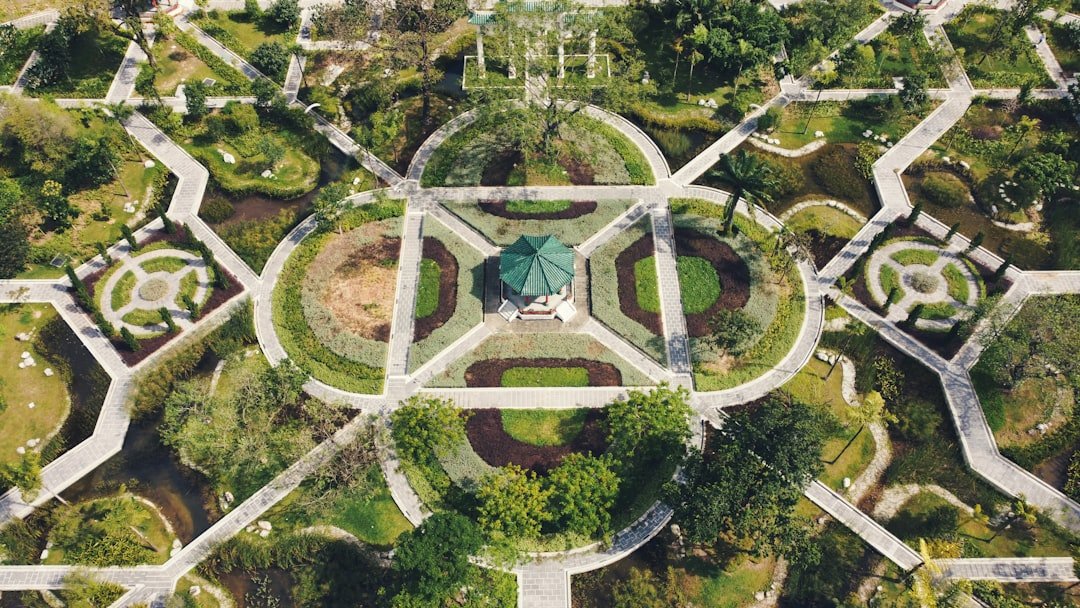
The Genyue Garden, into which Song Huizong invested massive resources from 1117 to 1125, appeared on the surface to be an extravagant construction project, but from a deeper perspective, it embodied Song Huizong's political strategy.
Genyue covered an enormous area and contained mountain peaks, lakes, pavilions and halls, ancient trees, unusual stones, and even zoological gardens and aquariums. This project mobilized thousands of workers and consumed enormous resources and materials. From the perspective of traditional historiography, it was cited as evidence of Song Huizong's extravagance leading to national decline.
However, from another angle, Genyue also reflected how Song Huizong, unable to directly control central power, built and maintained a power network through alternative means. Constructing Genyue required countless talented individuals—architects, painters, landscape designers, engineers. All served Song Huizong directly, forming a power system centered on him. Though nominally separate from court authority, this system could be mobilized in critical moments.
More importantly, through these projects, Song Huizong ensured he remained the center of attention and admiration. Even though he was no longer the nominal emperor, workers, craftsmen, and officials from all corners had to show him respect. This maintained his psychological superiority and practical sense of power.
Crisis and the Revelation of Truth
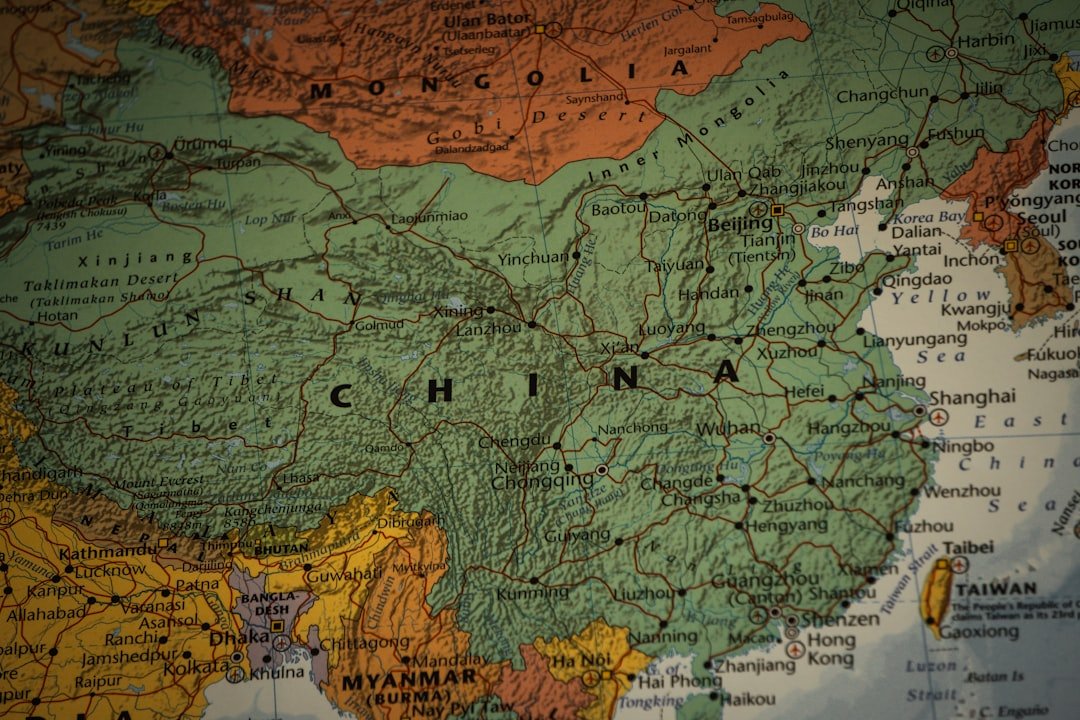
In 1125, a sudden historical event exposed the truth behind Song Huizong's foolish facade—the large-scale military attack on the Northern Song by the Jurchen Jin Dynasty. This historical event became known as the "Jingkang Incident."
When the Jin army marched south to attack the Northern Song, Emperor Qinzong revealed his typical incompetence. He made a series of failed decisions in military, political, and diplomatic matters. In this emergency, powerful ministers looked toward the Retired Emperor Song Huizong. They hoped this apparently art-obsessed elderly emperor could display some political wisdom or power.
But at this time, Song Huizong was already sixty-one years old. He had neither the ability nor the interest to handle such a crisis. In fact, he had become trapped in the snare of his own creation: he had played the fool for too long that he could no longer truly return to the center of power. Whether powerful ministers or officials, none any longer considered him a reliable leader. He had successfully retired, but at the cost that when truly needed, he had lost the capacity to act.
Even more tragically, in 1126, both Song Huizong and Emperor Qinzong were captured by Jin forces and taken north, eventually spending long years imprisoned by the Jin Dynasty, dying respectively in 1135 and 1161. The years he spent playing power games ultimately led to the destruction of the entire Northern Song Dynasty. His attempt to prolong both his own and his son's lives through feigned incompetence ultimately resulted in them both losing freedom and life.
Historical Irony and Deeper Reflection
Song Huizong's story is a complex fable about power, strategy, and human nature. He believed that by appearing uninterested in power, he could escape the whirlpool of power struggles. He believed that by investing in artistic pursuits, he could satisfy his need for control and influence. But ultimately, these strategies all failed.
The root of the problem lies in power itself being an inescapable trap. Once you have tasted power, you can never truly let go. Even if you claim indifference to power, others will not believe you. Powerful ministers will continue attempting to influence you; officials will continue seeking your approval; and you yourself will feel the impulse to intervene at critical moments. Song Huizong's tragedy lay in attempting to maintain two identities simultaneously—appearing incompetent while preserving the influence of power. These two objectives were inherently contradictory.
Another profound lesson is that when power cannot be stably transferred, playing the fool merely delays crisis rather than resolving it. Song Huizong ultimately chose abdication because he recognized his inability to completely control the situation. But he was unwilling to fully relinquish power, creating a power vacuum. In this void, powerful ministers schemed against each other, and the state's governing capability gradually declined. When genuine crisis—the Jin military invasion—arrived, a divided court could not effectively respond.
Song Huizong's lifetime revealed to us such a paradox: sometimes, attempting to use cleverness to solve power problems only leads to greater disaster. His artistic achievements are indeed treasures in Chinese history, but they were built upon the foundation of national political decline and ultimate destruction. This is a poignant reminder—wisdom and talent cannot substitute for moral courage and a sense of responsibility. Attempting to avoid political risk through feigned incompetence ultimately only creates a more incompetent situation.
📝 本文来自抖文 www.douwen.me ,转载请保留出处。
原文链接:https://douwen.me/archives/722/
💬 评论 (8)
This is fascinating! So Song Huizong had to feign madness to protect himself and his heir? It really makes you wonder how many historical figures we've misjudged because we only saw the surface of their actions.|
I've always admired Huizong's paintings and calligraphy—truly masterful work. But if this article is saying his artistic brilliance actually endangered him politically, that's tragic. Talent as a curse?|
Wait, I need more details on this. Did he actually go mad or was it purely an act? The title cuts off but I'm dying to know how long he had to maintain this facade and whether his son actually made it to the throne.|
Honestly this reads like a palace drama. An emperor pretending to be mad, political intrigue, a son's life hanging in the balance... better than any TV show lol|
The premise here touches on an interesting pattern in Chinese dynastic politics—how expertise in the arts could sometimes be perceived as weakness or distraction from governance. Would appreciate seeing the full article's analysis of this phenomenon.|
Such a sad situation really. To think someone had to hide their greatest gifts and talents just to survive. Makes me grateful for living in a different era where being skilled and cultured isn't politically dangerous.|
tl;dr - emperor good at painting, painting made him vulnerable, had to act crazy. Got it. 👍|
This raises profound questions about the intersection of personal ability and political survival. In a system where talent becomes liability, what does that say about the structure of power itself? Fascinating philosophical angle to explore.|