Where Exactly Is the Military Gap Between China and the US?
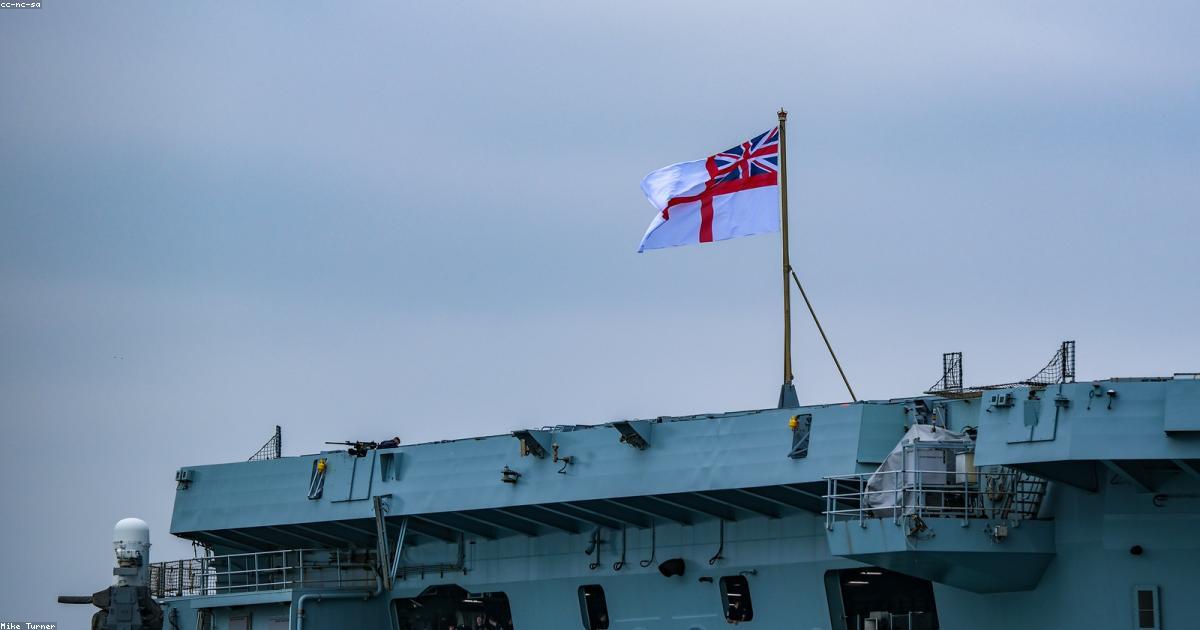
The Real Gap Between Chinese and American Military Power
Why can the U.S. military so easily flex its muscles at our doorstep, while we still have a long road ahead before achieving a genuine blue-water combat capability? The answer comes down to one thing: the ability to project power across oceans. What I'm about to say may stir something in you — maybe even unsettle you — but bear with me as I break it down.
Many people believe that as long as our missiles fly far enough and fast enough, and we have enough nuclear warheads, China's military could easily defeat the U.S. Others see a carrier-based aircraft successfully launched from a domestic carrier and conclude that our blue-water combat capability is already second to none. But is it really that simple? Today, let's set aside the emotions and take a clear-eyed look at what's actually going on.
I. Nuclear Weapons: The Iron Logic of Deterrence
A lot of people have only a vague grasp of how nuclear deterrence works, yet they love to talk about military conflict. In their minds, if China and the U.S. ever went to war, we'd just launch everything we have and America would surrender. That kind of thinking is dangerously naive.
If nuclear weapons were truly "all-powerful," why did the U.S. and Soviet Union spend trillions on a conventional arms race during the Cold War? Why not just drop nukes and call it a day? Yet even as the Soviet Union was ground down into collapse, it never dared use nuclear weapons. That smokeless Cold War still decided the fate of the world.
Look at the Russia-Ukraine conflict today. Russia has more nuclear warheads than anyone on the planet, yet under sweeping Western sanctions, it still hasn't pressed the button. That's not weakness — that's rationality. Nuclear weapons are indeed the ultimate weapon, but they come with one iron rule: you cannot use them lightly. The balance between nuclear powers rests entirely on the concept of mutual destruction. The message is clear: you can provoke me, but only so far. Push me to the edge, and I'll take you down with me.
It's like two giants facing each other on a cliff — neither dares to shove the other. And more importantly, using nuclear weapons doesn't just flip one country's table. It flips the table of all human civilization. That's why, in eighty years, no country has dared to use a nuclear weapon in actual combat. That is nuclear deterrence. That is nuclear balance. And it holds together a very fragile peace.
So even if China and the U.S. came into conflict, it would almost certainly be a conventional war, most likely confined to the Asia-Pacific maritime theater and surrounding islands. The U.S. wouldn't dare bring the fight directly to Chinese soil, because they know the consequences of pushing a nuclear power to its limits are something no one can afford.
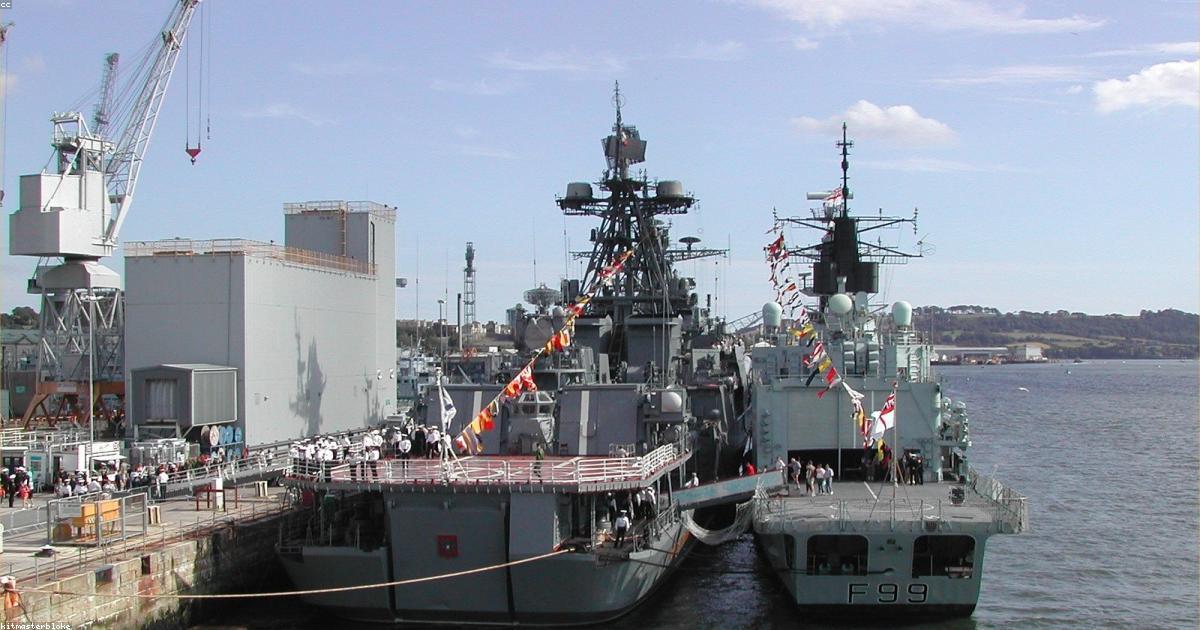
II. Blue-Water Warfare: The Gap in Systems and Support
Why can a U.S. carrier strike group sail right up to our doorstep without hesitation, while our carriers would struggle to project effective combat power near American shores? The gap here is worth thinking through carefully.
The core difference isn't the performance of any single carrier, the catapult technology on its flight deck, or the missile capability of its escort ships. It's the entire system and the support infrastructure behind blue-water operations. Think of it like a marathon — a fast start doesn't win the race. What matters is endurance and support over the full distance.
I'm well aware of how far China's military has come, and I'm genuinely proud of that progress. But we have to look at the gaps honestly — good is good, and a shortfall is a shortfall. Please don't get defensive when someone tells you the truth. I'm asking everyone to engage with this rationally, and to appreciate both the hardship and the achievement in our country's military development.
The gap between China and the U.S. in blue-water warfare comes down to three main areas:
1. Overseas Basing: A World Apart
The U.S. has hundreds of overseas military bases — from island chains in East Asia to Pacific archipelagos, from the Middle East to Europe and Africa — blanketing the world's major sea lanes. When a U.S. carrier departs the West Coast, it can pull into port along the way for resupply, crew rotation, and maintenance. It's like driving across the country with gas stations and rest stops every few miles.
Do we have anything like that global basing network? If our carriers were to sail toward American shores, there isn't a single port along the way where they could safely stop. Setting everything else aside, just the problem of refueling and rearming would be nearly impossible to solve. In an actual conflict, a carrier running low on fuel and ammunition isn't a warship — it's a target. This isn't just a military problem; it's a reflection of national influence. Our Belt and Road Initiative is moving forward, but building a military basing network still requires time and sustained diplomatic effort.
2. Alliance Networks: A Completely Different Scale
The U.S. military never operates alone. Behind every deployment are NATO allies, East Asian treaty partners, and Pacific partners — all ready to answer the call. These allies provide intelligence support, open their ports, and turn every American military operation into something close to a coordinated team effort. Even if a carrier takes damage, there are allies nearby to help.
If our carriers sailed to America's doorstep, we'd be going in alone — no allies, no support network — facing not just the U.S. but the entire Western system closing in around us. The difficulty isn't even in the same league. Alliances aren't built overnight; they take decades of sustained investment.
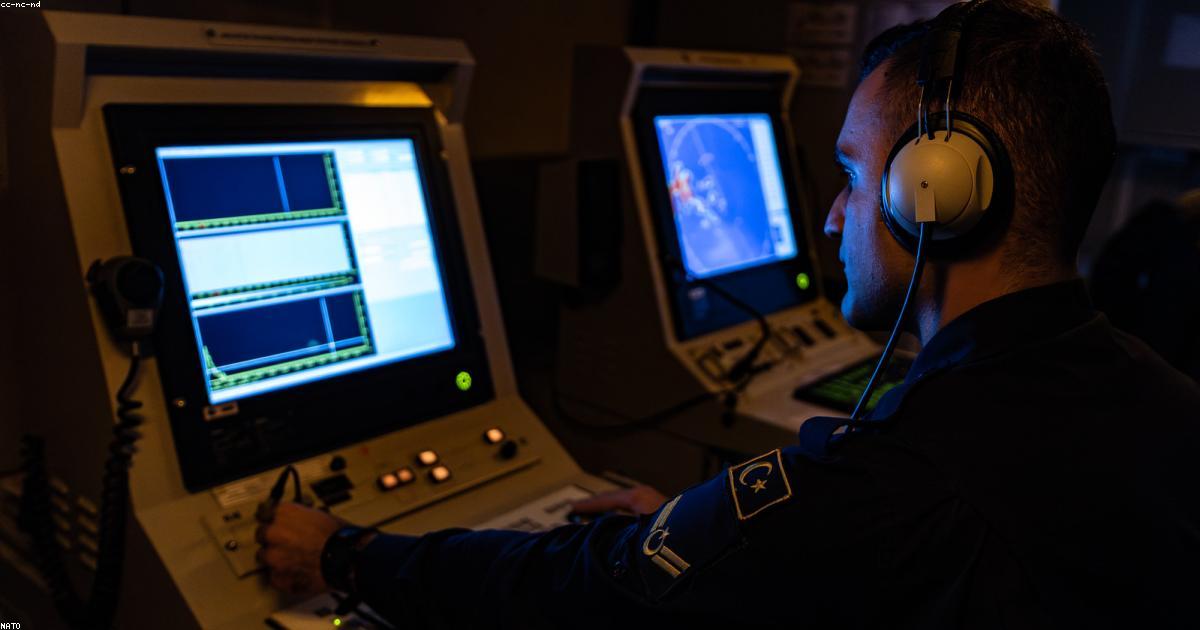
3. Information and Command Systems: A Significant Gap
Beyond America's global satellite network, the U.S. has deployed an enormous number of sensors across the world's deep oceans. Add in intelligence sharing with allies, and it's as if the entire globe is covered with American eyes and ears, providing real-time reconnaissance and command support for carrier strike groups wherever they operate.
One area where the U.S. holds a particularly commanding lead is global oceanographic data. Don't underestimate what that means. Oceanographic data isn't just a map of straits and channels — it encompasses water temperature, salinity, currents, tides, seafloor topography, and sound velocity profiles across different ocean regions. These factors directly determine sonar detection range, optimal submarine concealment depth, and whether torpedoes and sonar signals get bent and scattered by thermal layers.
Put simply: whoever controls the oceanographic data knows where to find the enemy, where to hide, and where to strike with precision. It's like fighting in the dark — whoever has the map wins. Decades of U.S. naval and oceanographic investment have integrated satellites, high-precision buoys, acoustic sensor networks, long-term measurement databases, and vast amounts of allied data into a system capable of near-real-time ocean environment and acoustic prediction.
In other words, the U.S. military knows exactly when and where underwater acoustic conditions favor detection or concealment, allowing them to position forces in advance and steer clear of dangerous areas. We've made rapid progress in recent years, and we're working hard to close the gap in data and equipment — but in terms of long-term historical databases and allied data sharing, the gap remains enormous. Building up oceanographic data is like compiling a thick encyclopedia of the sea. The U.S. has been reading it for decades. We're just starting to write ours. That takes time, investment, and international cooperation.
To fight a blue-water war across an ocean, you need massive amounts of real-time oceanographic data in unfamiliar waters and enough monitoring platforms deployed to collect it. Without that, submarines operate blind, anti-submarine effectiveness drops sharply, and the risk of deploying a carrier group skyrockets. This isn't just a technical challenge — it's a test of national strategy.
So for now, when a U.S. carrier operates in the Asia-Pacific, it's performing in its own backyard. For our carriers to reach American shores, it would be an extreme challenge across an unfamiliar ocean — like walking alone into unknown territory, where every step carries risk.
Even setting aside equipment comparisons, just looking at alliances and basing alone, our blue-water operational risk is far greater than America's. Any losses would leave us with no room to maneuver, and the political and military costs would be staggering. That demands caution. That demands clarity.
That's why I say: perhaps in another decade or more, through sustained accumulation of equipment and combat capability, China may finally have the opportunity to project striking power to America's doorstep and establish a meaningful military deterrent. And that's already an optimistic estimate — one that will require quiet sacrifice and patience across generations.
If someone wants to tell me I'm "not keeping up with the news," then please — show me the headline that proves China can effortlessly sail a carrier strike group across thousands of miles of ocean to America's shores, without overseas bases, without reliable blue-water logistics, without a complete intelligence chain, and sustain combat effectiveness over time. Show me the article that explains how carrier escorts, supply ships, fuel, ammunition, ship maintenance, defensive forces, oceanographic data, and intelligence — all of that — can be solved in one stroke.
This isn't pessimism. It's the reality we have to face. I'm asking everyone to be rational, to have a basic grasp of military fundamentals, and to stop treating a new catapult system, a new carrier aircraft, or even nuclear weapons as a magic key that erases the gap between Chinese and American military power. Real strength lies in systems. It lies in patience. It lies in time.
From a homeland defense standpoint, China's military today is formidable — anyone who dares to provoke us will be dealt with decisively. But in blue-water power projection, we have no allies and no overseas bases. For now, we're relying on building up equipment and pushing the technology frontier. It's a long and difficult road, and we have to keep our heads down and keep working.
Friends, there's no need for despair. The progress of China's military is plain to see — built from nothing, grown from weakness into strength, every step forward the product of countless people's dedication. But recognizing the gap is what allows us to move forward more effectively. Let's hold onto our confidence and keep supporting national defense — for the security of our children and grandchildren, for the great rejuvenation of our nation. This is a journey we are all on together.
📝 本文来自抖文 www.douwen.me ,转载请保留出处。
原文链接:https://douwen.me/archives/71/
💬 评论 (0)
还没有评论,来说两句吧 ✍️