The Mysterious Red Foot Sculptures on Chicago Streets, Public Art That Makes You Stop and Think
1. An Unexpected Encounter on a Chicago Sidewalk
Walking through Chicago on any given afternoon, it is easy to become absorbed in the rhythm of the city. The elevated trains rattle overhead, pedestrians move with purpose along the wide sidewalks, and the architecture commands attention at every turn. But occasionally, something small and strange interrupts the flow. Tucked between a church and its garden pathway, a reddish-orange sculpture no larger than two feet sits quietly on the ground. It resembles a human foot, yet it leaves the imprint of a boot. It was created by artist Mary Sefahi from cast iron and steel plates, drawing inspiration from the surrealist paintings of Rene Magritte. Unlike the monumental public sculptures that define Chicago's plazas and parks, this piece is deliberately modest, positioned where only those walking at the right moment along the right path might notice it.
The sculpture does not announce itself. There is no plaque visible from a distance, no pedestal elevating it above the sidewalk, no spotlight drawing the eye. On overcast days, it seems to materialize from the urban landscape itself, as though it had always been there and simply waited for someone to look down. The disconnect between the foot shape and the boot impression it leaves is precisely the kind of visual paradox that Magritte explored throughout his career, where the relationship between an object and its representation was never straightforward. Sefahi's piece carries that same unsettling quality into three dimensions and deposits it into the real world, where it exists not in a gallery but among fire hydrants, garden gates, and cracked sidewalks.
This is the kind of art that divides passersby into two groups: those who walk past without noticing, and those who stop, stare, and spend the rest of their afternoon thinking about it. Neither response is wrong, but the second one is what the artist almost certainly intended.
2. Chicago's Deep Relationship with Public Art
To understand why a small surrealist foot sculpture can exist on a Chicago sidewalk, you need to understand the city's long and layered history with public art. Chicago has been a city that takes its outdoor artwork seriously for well over a century. The tradition runs so deep that it shapes how residents experience the urban environment and how visitors perceive the city's character.
The story often begins with the 1893 World's Columbian Exposition, which transformed the city's relationship with monumental art and architecture. The exposition's White City, with its classical facades and grand sculptures, established an expectation that public spaces should be adorned with works of artistic significance. In the decades that followed, Chicago accumulated an impressive collection of outdoor sculptures, murals, and architectural ornaments that reflected the city's ambitions and cultural aspirations.
The modern era of Chicago public art arguably began in 1967 when an untitled monumental sculpture by Pablo Picasso was unveiled in Daley Plaza. The work was controversial at the time, with many residents unsure what to make of the abstract, angular steel form. Some found it ugly. Others found it baffling. But over time, the Picasso became one of the most recognizable landmarks in the city, a gathering point, a backdrop for photographs, and a symbol of Chicago's willingness to embrace challenging art in public spaces.
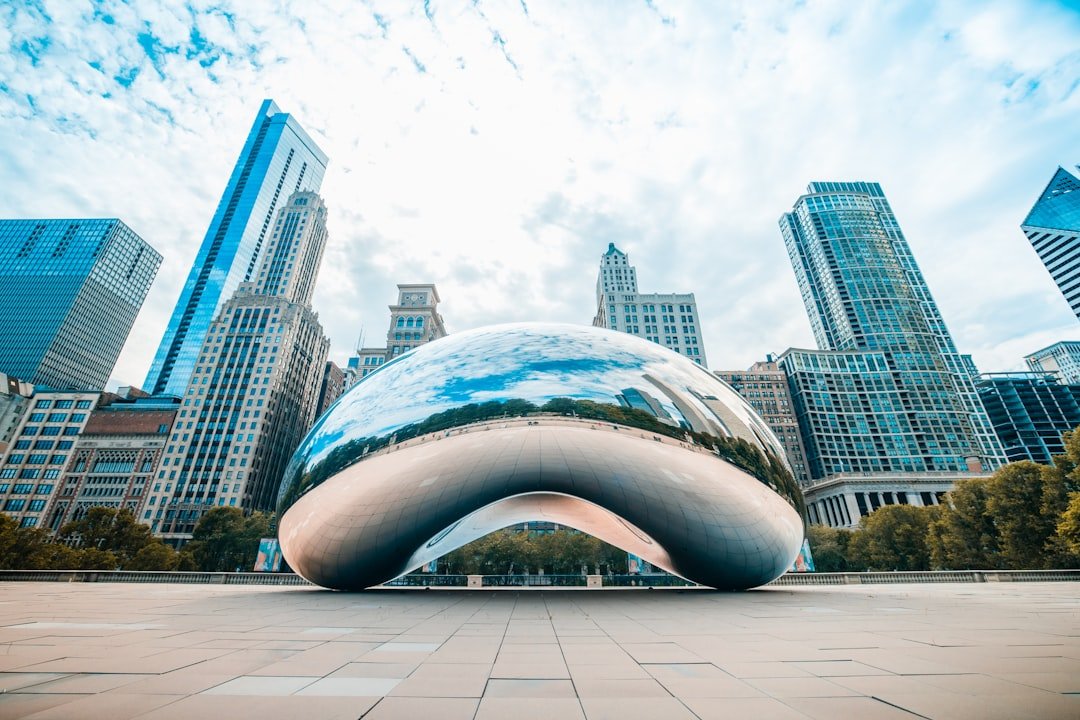
That willingness has continued and expanded. The city's public art collection now includes hundreds of works spanning every conceivable style and medium, from the reflective surface of the Cloud Gate sculpture in Millennium Park, designed by Anish Kapoor and universally known by its nickname, to the monumental Flamingo by Alexander Calder in Federal Plaza, to countless smaller works scattered through neighborhoods, parks, and transit stations. The city maintains a percent-for-art ordinance that requires a portion of the budget for new public construction to be dedicated to art, ensuring a steady stream of new commissions.
Within this context, a small cast-iron foot sculpture by a relatively lesser-known artist sits alongside works by some of the most celebrated names in modern art. The democratic nature of Chicago's public art landscape means that the sidewalk outside a church receives the same kind of artistic attention as the plaza in front of a federal building. Scale is not the measure of significance.
3. The Surrealist Thread from Magritte to the Streets
The connection between Mary Sefahi's foot sculpture and the work of Rene Magritte is not merely decorative. It reflects a deeper engagement with surrealism's core project: disrupting the comfortable assumptions we make about the relationship between objects and their meanings.
Magritte spent his career exploring these disruptions. His paintings consistently presented familiar objects in unfamiliar contexts or revealed contradictions between what we see and what we think we know. A pipe that is not a pipe, a man whose face is hidden by an apple, a room where everything is made of stone. These images work because they take the ordinary and make it strange, forcing the viewer to reconsider assumptions they did not even know they held.
Translating this sensibility into a public sculpture poses unique challenges. A painting exists in a controlled environment, hung on a wall at eye level with appropriate lighting and the implicit understanding that the viewer is there to look at art. A sidewalk sculpture has no such advantages. It must compete with the entire visual chaos of a city street. It must work on people who are not expecting to encounter art. It must be durable enough to survive weather, foot traffic, and the general indifference of urban life.
Sefahi's piece addresses these challenges by embracing smallness and subtlety. Rather than trying to dominate a space the way a monumental sculpture does, the foot settles into the ground-level visual field where most people simply do not look. The surprise of discovery becomes part of the artistic experience. You are walking along, thinking about your grocery list or your phone or the weather, and suddenly there is a red foot on the ground that is also somehow a boot. The cognitive dissonance of that moment, the brief flash of confusion followed by curiosity, is a tiny version of exactly what Magritte's paintings achieve in a gallery setting.
The fact that the sculpture is small and easily missed also creates a kind of social selection. Not everyone will see it. Those who do form an accidental community of observers, connected by the shared experience of having noticed something that most people walked past. This quality of selective visibility is itself somewhat surrealist, suggesting that reality contains layers and details that are available only to those who are paying attention.
4. Guerrilla Art Versus Commissioned Installations
Public art exists on a spectrum that ranges from officially sanctioned, government-funded installations to entirely unauthorized interventions placed by artists without permission. The distinction between these two ends of the spectrum shapes how we encounter and interpret the work.
Officially commissioned public art goes through a process that typically involves proposals, committees, community input sessions, budgets, contracts, and formal unveilings. The resulting work is sanctioned by authority, maintained by institutions, and protected by law. It carries an implicit endorsement from the civic establishment, which affects how viewers relate to it. A sculpture in a public plaza funded by the city government feels like an official statement about community values and aesthetic priorities.
At the other end of the spectrum, guerrilla art or street art appears without authorization, placed by artists who may or may not identify themselves and who operate outside the formal channels of approval. This kind of work carries a different energy. It feels transgressive, spontaneous, and sometimes explicitly political. Graffiti murals, yarn bombing, unauthorized sculpture installations, and wheat-pasted posters all fall into this category. The work is often temporary, subject to removal by property owners or city maintenance crews, and its impermanence is part of its meaning.
Between these poles, a large and interesting middle ground exists. Some works are authorized but placed in unconventional locations. Others begin as unauthorized interventions but are later embraced by the community and given official protection. Some artists work within formal commission structures but produce pieces that feel guerrilla in spirit, small, surprising, and positioned to disrupt rather than decorate.
Sefahi's foot sculpture occupies this ambiguous territory. It was created through a legitimate artistic process and placed with awareness of its location, yet its small scale, ground-level positioning, and surrealist content give it the quality of a found object or an unauthorized intervention. Encountering it does not feel like visiting a sanctioned public art installation. It feels like stumbling across a secret that someone left for you to find. This in-between quality is part of what makes the piece effective: it carries the intentionality and craft of a commissioned work while preserving the surprise and strangeness of street art.
5. How Urban Art Interacts with City Identity
Cities develop artistic identities over time, shaped by the accumulation of works in their public spaces, the traditions of their art institutions, and the values of their communities. Chicago's identity as a city of public art is one of its most distinctive characteristics, and understanding how individual works contribute to that identity reveals something about the relationship between art and urban life.
Public art does not simply decorate a city. It participates in creating the city's sense of itself. When residents walk past the same sculpture every day on their way to work, that piece becomes part of their mental map of the city. It marks a location, defines a neighborhood's character, and provides a shared reference point for community life. Over time, the sculpture becomes inseparable from the place. You cannot think of that corner without thinking of the artwork, and vice versa.
This dynamic operates at every scale. The most famous public artworks define a city's international image. Visitors come specifically to see them, postcards and social media posts spread their image worldwide, and they become shorthand for the city itself. But smaller, less famous works perform an equally important function at the neighborhood level. A mural on a side street, a sculpture in a community garden, or a painted utility box gives a neighborhood its own artistic identity, distinct from the city at large.
The red foot sculpture contributes to Chicago's identity in the second way. It is not a destination piece that draws tourists from around the world. It is a neighborhood piece that rewards attentive walking and creates small moments of wonder for those who encounter it. In doing so, it reinforces Chicago's reputation as a city where art is not confined to museums and formal plazas but leaks into the everyday fabric of urban life.
This leaking of art into ordinary spaces is particularly important in a city as architecturally dramatic as Chicago. The skyline, the historic buildings, and the grand public spaces can create a sense that artistic expression belongs only to large, impressive, expensive things. Small works like Sefahi's piece push back against that impression, asserting that art can also be quiet, modest, and almost invisible while still performing its essential function of making people see the world differently.
6. Notable Street Art and Unexpected Installations Across Chicago
The red foot sculpture is far from the only surprising artistic encounter available on Chicago's streets. The city has developed a rich ecosystem of smaller, less-publicized works that reward curious walkers with unexpected visual experiences.
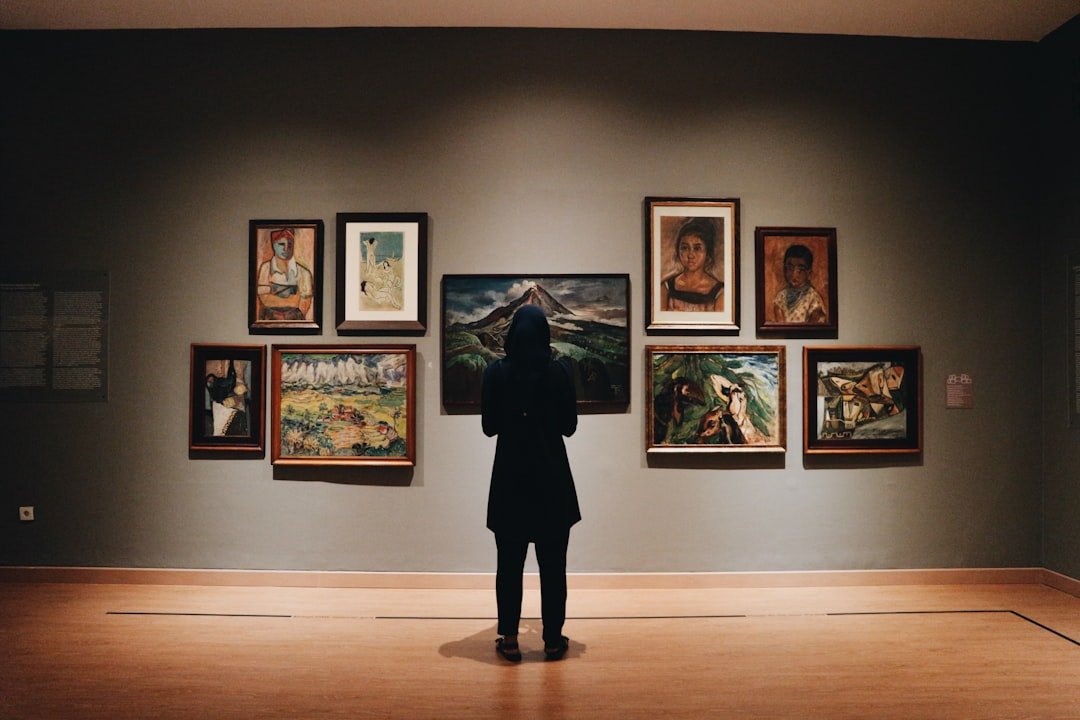
Chicago's mural tradition is particularly robust. Neighborhoods across the city feature large-scale painted walls that address themes ranging from community history to social justice to pure visual experimentation. The Pilsen neighborhood, on the city's Lower West Side, has long been recognized for its concentration of murals reflecting the area's Mexican-American heritage and artistic community. Wicker Park, Humboldt Park, and Logan Square also feature significant mural collections, each reflecting the distinct character of those neighborhoods.
Beyond murals, Chicago hosts a variety of three-dimensional street art that ranges from large-scale installations to intimate, easily missed pieces. Some of these works are part of formal programs, while others appear through less official channels. The cumulative effect is a city where attentive pedestrians can encounter art in unexpected places on almost any walk through almost any neighborhood.
Transit infrastructure has also become a canvas for artistic expression. Several elevated train stations feature commissioned artworks integrated into their architecture, and the city has periodically organized programs to bring art into the transit system. These works reach commuters who might not visit a gallery or seek out a public sculpture, democratizing access to artistic experience.
The lakefront, one of Chicago's most distinctive assets, hosts its own collection of public artworks that change with the seasons and respond to the unique character of the waterfront environment. Temporary installations, permanent sculptures, and seasonal exhibitions all contribute to the lakefront's artistic identity.
What unites these diverse expressions is a shared civic conviction that public spaces should offer more than mere functionality. A sidewalk is not just a path from one point to another. A train station is not just a place to wait. A neighborhood wall is not just a boundary between properties. In Chicago, each of these mundane urban elements becomes a potential site for artistic encounter, and the red foot sculpture is one small but perfect expression of that philosophy.
7. Public Art and the Gentrification Debate
Any honest discussion of public art in cities must acknowledge the complicated relationship between art and gentrification. This is a tension that plays out in Chicago as forcefully as in any American city, and it affects how different communities experience and relate to public artwork.
The pattern is familiar and well-documented in urban studies. Artists are often among the first to move into affordable, overlooked neighborhoods. They establish studios, create works in public spaces, and contribute to a sense of creative energy that makes the area attractive. Galleries open, coffee shops follow, media attention arrives, and property values begin to rise. Eventually, the very artists who helped define the neighborhood's character can no longer afford to live there, and the community that originally inhabited the area may be displaced by wealthier newcomers drawn to the creative atmosphere.
Public art intersects with this dynamic in complicated ways. On one hand, murals and sculptures can be genuine expressions of a community's identity, created by local artists working with local themes for local audiences. In this context, public art strengthens community bonds and provides visible evidence of cultural vitality. On the other hand, the same artworks can become marketing tools for real estate developers, used to signal that a neighborhood is "up and coming" and therefore ripe for investment.
Chicago has experienced both sides of this dynamic. Neighborhoods like Pilsen, which developed their rich mural traditions as expressions of community identity and resistance, have watched as those same murals became attractions for visitors and selling points for new development. The tension between art as community expression and art as gentrification catalyst is ongoing and unresolved.
For smaller works like the red foot sculpture, the relationship to gentrification is less direct but still present. A neighborhood that hosts interesting, quirky public art becomes a more "interesting" place to live, which can contribute to the broader forces that drive displacement. This does not mean that the art itself is harmful, but it does mean that public art exists within a larger economic and social context that cannot be ignored.
The most thoughtful approaches to public art in gentrifying areas involve the communities that already live there in decisions about what art is created, where it is placed, and what it represents. Art that emerges from and reflects a community has a different relationship to place than art that is imposed from outside, even when the aesthetic quality of both is high.
8. Why Small Art Sometimes Matters More Than Monumental Art
There is a tendency in discussions of public art to focus on the largest, most expensive, most famous works. The monumental sculptures, the landmark installations, the pieces that appear in guidebooks and tourism campaigns naturally attract the most attention and analysis. But there is a strong argument that small, quiet, easily missed works like the red foot sculpture perform an artistic function that their larger counterparts cannot.
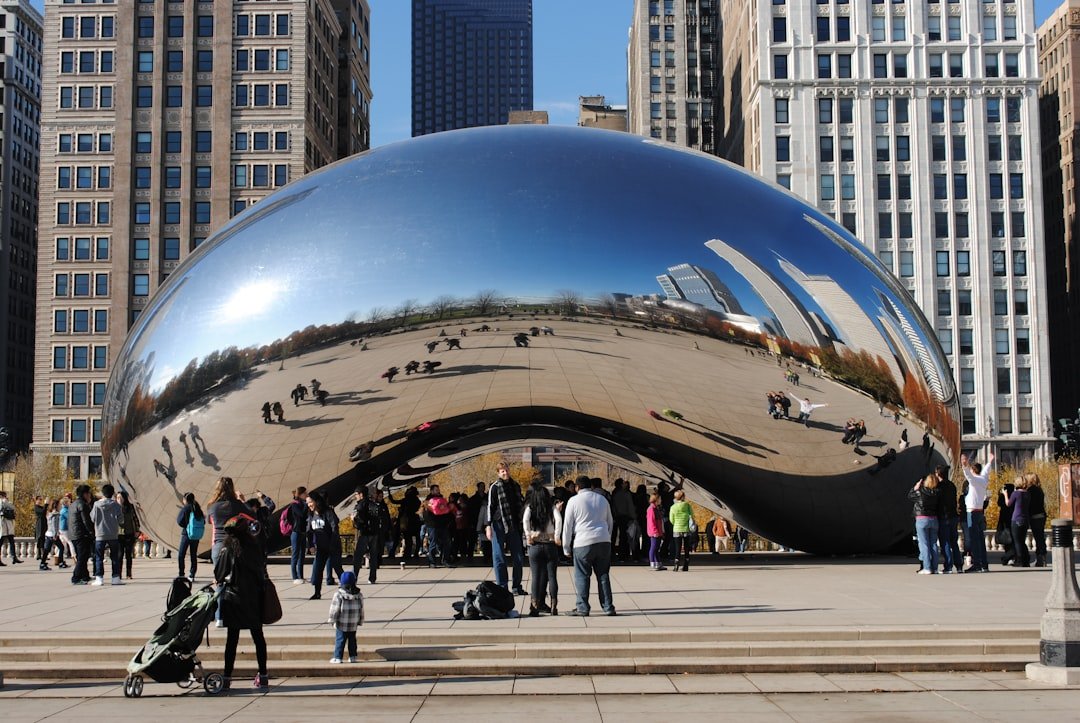
Monumental art is designed to be experienced collectively. When you stand in front of a massive sculpture in a public plaza, you are typically surrounded by other people who are also looking at it. The experience is social and communal, which is valuable but also mediated by the presence of others. You are aware of how you look while looking at art, of whether you are having the "right" reaction, of the expectations that surround the encounter.
Small art, by contrast, is often experienced in solitude. You notice the red foot while walking alone, and for a moment the discovery belongs entirely to you. There is no crowd, no audio guide, no informational signage shaping your interpretation. You are alone with the work, free to respond however you wish without social pressure. This privacy of encounter creates a different and sometimes deeper kind of artistic experience, one based on personal discovery rather than collective spectacle.
Small art also invites a different kind of attention. A monumental sculpture demands to be seen, and the viewer's response is partly shaped by the obligation to look. Small art, because it can so easily be missed, rewards only voluntary attention. The viewer who notices the foot sculpture has chosen to look closely at the ground-level urban environment, and that choice to pay attention is already an act of engagement that precedes the encounter with the artwork itself.
The element of surprise that small art provides is itself artistically significant. Surprise disrupts habitual perception, the automatic, unthinking way we process the familiar environments we move through every day. A monumental sculpture in a plaza is expected. A tiny red foot between a church and a garden path is not. The unexpected quality of the encounter shakes the viewer out of their routine mode of seeing and, for a moment, makes everything around them seem slightly more interesting, slightly more worthy of attention. This is arguably the highest function that public art can perform: not just to be beautiful or meaningful in itself, but to change how the viewer sees everything else.
9. The Artist's Intent and the Viewer's Freedom
One of the enduring questions in any encounter with public art is the relationship between what the artist intended and what the viewer experiences. With a small, enigmatic work like the red foot sculpture, this question takes on particular significance because the piece offers so few conventional clues about its meaning.
We know that Sefahi drew inspiration from Magritte, which provides a broad framework of surrealist intent. We know the piece is made from cast iron and steel, materials that suggest durability and permanence. We know it was placed between a church and a garden, a location that carries its own symbolic associations. But beyond these facts, the sculpture resists definitive interpretation.
This resistance is not a failure. It is a feature. One of the defining characteristics of successful public art is its ability to mean different things to different viewers while remaining coherent as a visual experience. A mother walking with her child might see the foot as playful and whimsical. A philosophy student might see it as a meditation on the relationship between objects and their representations. A construction worker might see it as a curious oddity that briefly interrupts the monotony of a lunch break walk. All of these responses are legitimate, and the sculpture's power lies precisely in its ability to accommodate them all without collapsing into a single, fixed meaning.
This openness to interpretation is especially valuable in public art because the audience is not self-selected. In a gallery, the viewers have chosen to be there. They arrive with expectations, art-historical knowledge, and a readiness to engage with challenging work. On a sidewalk, the audience includes everyone who happens to walk past: children, elderly residents, tourists, commuters, people who have never set foot in a gallery and people who visit one every week. A work of public art must be accessible enough to register with all of these viewers while being complex enough to reward sustained attention from those who choose to look longer.
The red foot sculpture achieves this balance through its combination of immediately recognizable form and conceptually puzzling content. Everyone knows what a foot is. Everyone can see that the object on the ground resembles a foot. But the boot impression, the unexpected material, the surrealist lineage, and the incongruity of finding such an object on a sidewalk all invite deeper engagement for those who want it. The sculpture meets you where you are, whether that is a quick glance of amusement or a prolonged contemplation of what it means for an object to leave an impression that does not match its shape.
10. What Public Art Asks of Us
Ultimately, a sculpture like the red foot does not ask much. It does not demand admission fees, advance reservations, or specialized knowledge. It does not require you to dress up, travel to a specific location, or dedicate a particular amount of time. It simply sits on the ground and waits for you to notice it.
But in that simplicity lies a genuine challenge. The foot asks you to look down, to pay attention to the ground-level reality of the city you move through. It asks you to tolerate ambiguity, to sit with the fact that something can look like a foot and leave the mark of a boot without resolving the contradiction. It asks you to accept that art does not always explain itself and that the absence of explanation is not a deficiency but an invitation.
These are modest asks, but they run counter to much of how contemporary urban life is structured. We are encouraged to move efficiently, to look at our phones, to treat the spaces between destinations as mere intervals to be minimized. Public art, even small and quiet public art, pushes back against this efficiency. It says: there is something here worth stopping for. There is something on this sidewalk that someone cared enough to make and place, and it is worth a moment of your attention.
Whether you give that moment is up to you. The foot will be there regardless, reddish-orange against the gray of the pavement, waiting for the next person who happens to look down at exactly the right time. And when they do, they will experience that small, surprising jolt of recognition that is the hallmark of art doing its work in the world: making the familiar strange, and the strange somehow familiar.
Chicago is full of these moments, large and small, famous and obscure. The red foot sculpture is just one of them, but it is a particularly good one, and it represents something important about what cities can be when they make space for art in unexpected places. Not every encounter with art needs to be monumental. Sometimes the most memorable ones happen when you are not looking for them at all.
FAQ
Who created the red foot sculpture in Chicago?
The sculpture was created by artist Mary Sefahi, who crafted it from cast iron and steel plates. The work draws direct inspiration from the surrealist paintings of Rene Magritte, translating the painter's characteristic visual paradoxes into a three-dimensional form placed in a public urban setting rather than a gallery environment.
Where exactly is the red foot sculpture located?
The sculpture is situated between a church and its garden pathway in Chicago. Unlike the city's more prominent public artworks, it is deliberately small and inconspicuous, measuring only about two feet in length. Its ground-level placement means it is easily missed by anyone not paying close attention to the sidewalk environment.
What is the connection between the sculpture and Magritte?
Rene Magritte was a Belgian surrealist painter known for exploring contradictions between objects and their representations. The red foot sculpture embodies this approach by resembling a human foot while leaving the impression of a boot, creating the kind of visual paradox that defined Magritte's artistic philosophy. The piece brings surrealist thinking out of the gallery and into everyday public space.
Why does Chicago have so much public art?
Chicago has a long tradition of placing art in public spaces, stretching back to the 1893 World's Columbian Exposition. The city maintains a percent-for-art ordinance that dedicates a portion of public construction budgets to artwork. Combined with a culture that values artistic expression in everyday environments, this has produced one of the most extensive public art collections of any American city.
How does public art affect neighborhoods and communities?
Public art can strengthen community identity by providing shared visual landmarks and reflecting local culture and values. However, it also intersects with gentrification dynamics, as artistic activity can contribute to rising property values and neighborhood change. The most effective approaches involve local communities in decisions about what art is created and where it is placed.
📝 本文来自抖文 www.douwen.me ,转载请保留出处。
原文链接:https://douwen.me/archives/289/
💬 评论 (0)
还没有评论,来说两句吧 ✍️